






Quests, questions, queries, and nearly all the Latin interrogatives, quis, quem, quando, quo, and one suspects, cur and cui as well, either point to a seeking, refer to a petition, or, as in the case of “quietus,” the object or desired state of our inquiet appetite. Referring back to St. Augustine’s salvo and salve from Book I, Chapter 1 of his Confessions, “Cor nostrum est inquietum donec requiescat in te,” the desired end of our heart is quiet, “inquietum” is a lack of requiesces, itself a resting back or resting again from the ill-wrought labors of our will and not His being done.

The fundamental nature of rest is not without dispute: whether it is a pouring out of the self, perhaps into the ground as with interment for a beating heart is necessarily inquiet, or the pouring out of the soul into its source, remaining distinctly individual in being and essence yet perfectly, in accord with our nature, satisfied. Are we but the Lucretian swerve? Are our quarrelsome quests and queries but a cascading, conglomerating glitch in a material matrix? Is “death nothing to us” at the expense of vacating the meaning and purpose of any underlying us? On the contrary, it does seem illogical, that is, inconsistent that the soul, as soul, if indeed it is merely an epiphenomenon of matter, to behave strictly materially. Would it not be more consistent for the soul, as soul, even as the result of amalgamated matter, to tend toward a spiritual, that is, an immaterial end and perfection? Furthermore, our experience of an animated intelligence is one of an insatiable appetite to know. We observe this quizzical, if not quixotic, appetite in children. We mourn its loss in adults, either partially or in toto. An adult man or woman without interests ceases to be interesting, both in the sense of being set apart from his or her peers and also in the sense of degraded life, mere life, apart from the good life and good living. Such stunted individuals, for rarely does this occur in vibrant community, such individuals often become modern Lotus-eaters.
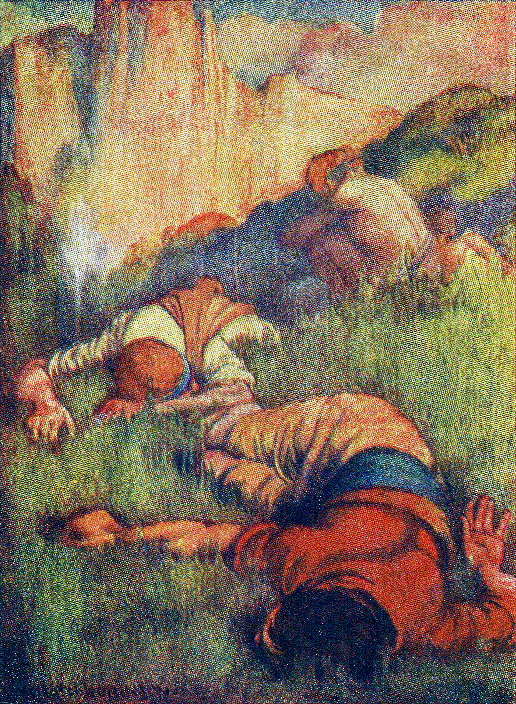
In antiquity, the Lotus-eaters gave into the temptation to chemically satisfy their unmet desires or queries by eliminating or reducing this appetite through the readily available φαρμακεία of choice. In our times, the phantasmorphic “doom scroll” or algorithmic queue animating screened-in life keeps all genuine queries related to our deeper satisfaction subdued. One paradigmatic result of this palliative decline is that rest or leisure is viewed as a cessation, a reprieve from our hustle, an idleness, which becomes an idol to the genuinely (or rather ingenuinely) inquiet slave. Such idleness is the fruit of ill-gotten, sub-standard pears, but the observation of our wretched state does not per se prepare us for the first fruit from the Father’s orchard.
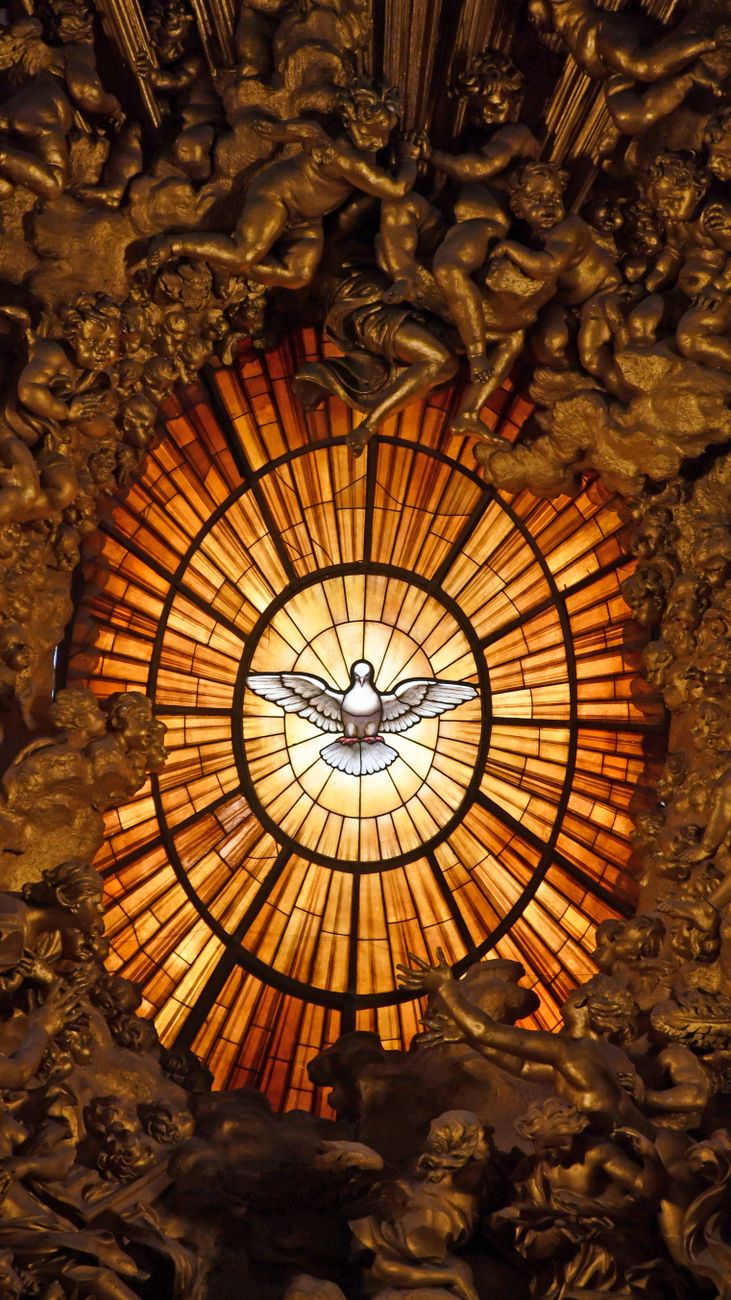
When we bid that the beloved dead may rest in peace, requiescat in pace, we must re-envision the reality of participating most fully in the God who is pure act. The Beatific Vision is not merely a beauteous vision but one in which we who are blessed to behold it become beautiful, that is, formed and hence the suffix “-fic.” This beauty so informed is perfectly in accord with the soul, that is, “to its cor,” and after the resurrection, the body, as well. To behold the Beatific Vision is to become in a perpetual state of becoming fully alive. The rest in His peace to which our restless heart, our cor inquietum quests, is not the sundrenched Floridian cabana but the burning Son Himself, His Sacred Heart, wed to our flourishing, quenching every query, every inquietude of our mind, heart, soul, and strength the moment it appears, living with the authority of the auctor of all creation.

Such peace, so real and hence regal, if we can envision it, if we can raise our standard as His, inoculates the paltry presentations of the World in the pejorative sense. The allure of satisfaction on demand both through technological means in the case of robotics paired with so-called artificial intelligence and furthermore through oppressive means in which the many are violently subjugated for the extreme benefit of the few, such allure falls short of drawing its beneficiaries toward the maximalization of their final end, the full flourishing of their human nature. The cracks in this faulty foundation are now revealed. Never more connected globally, we are lonelier than ever. Never more comfortable against the demands of nature, we have corrupted and jettisoned our own. Above the din, the cacophony of motors, machinations, and mood music, St. Augustine’s words resonate across the aeons and algos: “Tu fecisti nos ad te, et cor nostrum est inquietum donec requiescat in te.”

Support BetterPears Through
BetterPears Leaves
Click Here to learn more
Be the first to know when the next episode of The BetterPears Podcast arrives!
Subscribe to The BetterPears Podcast


