







Oft overlooked within his corpus in lieu of his Confessions or the monumental De Civitate Dei, St. Augustine’s De Magistro or On the Teacher is a subtle treasure, a dialogue between father and son, Aurelius and Adeodatus. The matter at hand, all prestidigitation aside, is whether knowledge can be taught. Without betraying the force and fitness of the work itself, two of its conclusions are fruitful for our present query into cryptography, composed of “writing” from the Greek “γράφω” and “to cover” or “hide” from the equally Greek “κρύπτω.” First, a distinction is made early in De Magistro among spoken words, written words, and what might be termed inner words, what some might term verbal thoughts. The second conclusion is that Christ is the true teacher of the inner word connecting for each person, in every instance of the intellect, the word as sign to its meaning and truth.
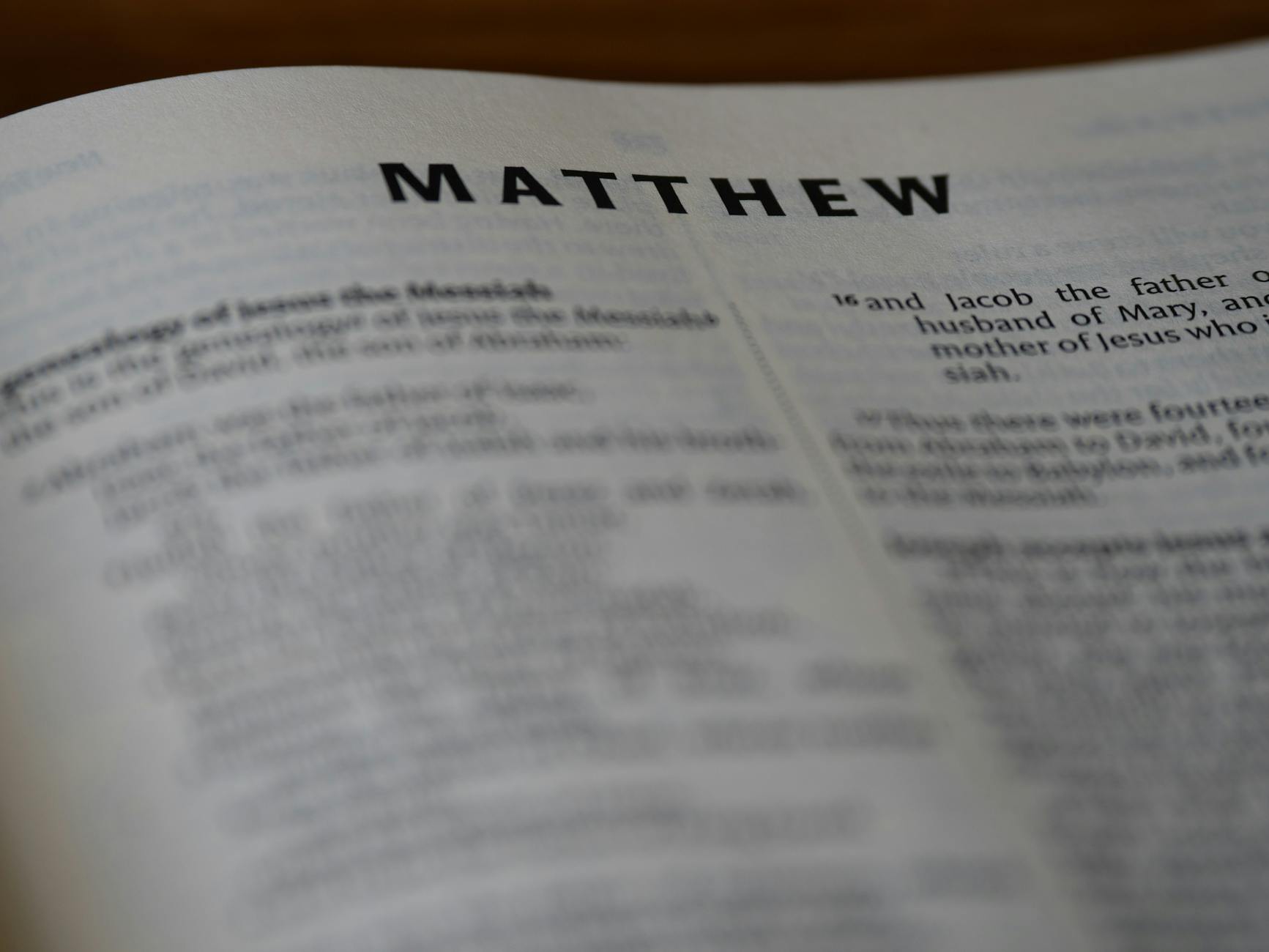
The evangelium or εὐαγγέλιον of the early Church grasped well the fluidity of these distinctions in that on account of the Christ, the Word Incarnate, the good news or Gospel advanced on the lips of the Apostles and, eventually, the script of their hands. The truth of the Gospel of Jesus Christ, the Way, the Truth, and the Life was offered to all and the early Church strove to make it thus accessible.

Sacra Scriptura, the biblical canon, became the regula fidei, the rule of faith, the measure against which sacred doctrine including the liturgical life of the Church could be measured. While still under persecution by the Romans, these sacred texts bore the patent expression of what Christians believed, while the Church’s arcana, the sacramental rites for which they maintained a duty to protect from profanation and sacrilege remained hidden from those not yet initiated. Signs on doorposts became the σύμβολα of the faith prior to the credo of Nicaea and conveyed the truth of the mysteries or sacraments to those without eyes to see and ears to hear.

Our topic at present, cryptography, is a juxtaposition of hiding or secreting and an act that is, at its core, communicative. Open writing is sufficiently difficult with the likes of Big Lexi, the lexicography cartel, stifling the connectivity of definitions. To make latent or hidden meanings for an act of writing which is fundamentally patent requires an overriding or overwriting purpose. While much could be discussed concerning the martial use of cryptography or cryptographic ledger technology for the securitization of assets and intelligence, our present focus remains on the use of cryptography in civil discourse, as it relates to both our present epoch and the early persecution of the Church.

When a society on the whole is seeking honor and promoting virtue, vices must be hidden. When a society has slid into open vice, thoughts virtuous and true tend to be hidden. The direction or misdirection toward these two foci, virtue and vice, are the great turning points of culture which have been cast and casted upon the stage of the West throughout its history. Perhaps we attend too much to the shock and horror of Nicaea and its aftermath, how the world awoke to find itself Arian, diverging from orthodoxy on the foundational matter of creation’s founder, the divinity of Christ. It was not as if overnight or in the expanse of a few years the faithful and their shepherds were turned away from the spiritual patrimony of Jesus Christ through the teaching of the Apostles. No, the Creed of Nicaea, reaffirmed at Constantinople, brought a preexisting disparity of belief to light, exposed a latent heresy by a public profession.
Herein lies the principal difference between the cult of the Church and the occult, which by name and practice has long sought to thwart the consummation of the great mystery between the Bridegroom and His Bride. The sacred secret, the sacramental mysteries of the Church find their end in claritas, the clarity of truth now and in its fullness on the Last Day. The occult, contrarily, can only obscure its defeat as fait accompli, present obstacles to the genuine culture and flourishing of the Genitor. In the end, the tentacles of tenebrae are overcome, in the language of St. John, by the light of the world.
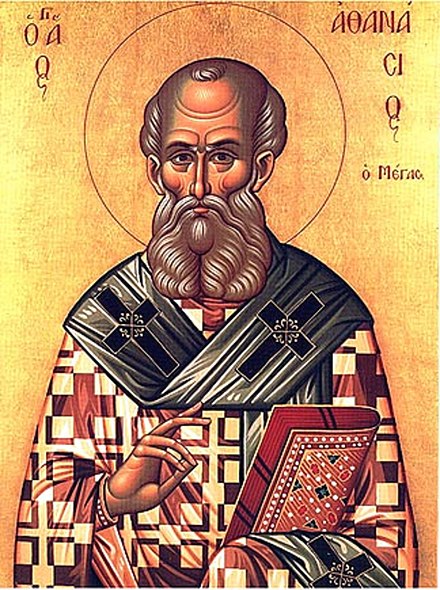
Yet the so-called illumination of the occult imperils souls. While some Arians perhaps knew no better, had never received the Gospel of Jesus’ divinity, many likely adopted the more palatable position of Jesus as a demigod within the pagan pantheon of the pre-Constantinian political circus. It was these latter players, both political and potentates, who pursued, that is, persecuted the patriarch Athanasius of Alexandria then. Persecutors now today likewise seek out our Christian “deathless” in the digital desert of ideas. Free speech is everywhere under attack. The spoken and written word is impugned as a proxy pugnation against the inner word and its Teacher, the Word Eternal. Once veiled in the flesh of a low-born babe, veiled under the appearance of bread and wine, veiled in the vellum of Sacred Script, the Word of Truth and Life is unveiled and thus revealed in the martyrs, the witnesses, whose baptismal candles are not found wickless as the light of baptism can only be self-extinguished, though the body may be silenced or severed from the soul for a time. May we live in interesting times. May that difference be the martyrdom of the faithful, though a third of the stars fall from the heavens, lest even the rocks cry out in our stead.

Support BetterPears Through
BetterPears Leaves
Click Here to learn more
Be the first to know when the next episode of The BetterPears Podcast arrives!
Subscribe to The BetterPears Podcast


