





Previously on The BetterPears Podcast, I promised to address the Eucharist, and so it is perhaps fitting to begin now with two reflections on the Thanksgiving Holiday or Holy Day as it is celebrated in these United States. As a professional educator engaged in a partnership with parents who are themselves the primary educators of their progeny, I have long taught the Justice of Thanksgiving Dinner. However troublesome a student is in the classroom (or parents in collaborations), it is the parental primacy which must either endure or delight in not only the full-grown child but his or her romantic partners throughout Thanksgiving dinners well past my retirement. This is the Justice of Thanksgiving Dinner and an admonition to cultivate children fit for pan and company.

The Injustice of Thanksgiving Dinner is the singular Thanksgiving visit in the life of a student who has gone off to college in the fall and has yet to be humbled by final exams. During this visit, he or she is, perhaps, the most brilliant that he or she has ever been. The Injustice exists between the student’s estimation of his or her intellectual acumen and the reality that one philosophy course does not a philosopher make—Deo gratias.

One contributing culprit in this disjunct between student and stupefaction is the seemingly innocuous word “hylomorphism” which was likely taught in the context of human nature composed of both matter from the Latin “materia” and Greek “ὕλη” and form from the Latin “forma” and Greek “μορφή”. Not just human nature but all material substances, that indeed exist, are composed of structure, that is, form, and stuff, that is, matter. “Structure” is a helpful term for our modern minds suited to think of building blueprints, 3-D printing schematics, and molecular manipulatives. “Stuff” is equally well suited for precisely the same reason why our grammar school teachers persuaded us from ever using the term as a descriptor. Stuff has no apparent structure. The burning bag left at your doorstep is full of stuff until your stomping clarifies the composition or decomposition there-in.

Just to be clear, unlike many a talented or talent-thrift college freshman, even though hylomorphic, that is, material substances are composed of matter and form, I have never properly seen or otherwise sensed one. I have only ever sensed their accidents, their phenomenal appearances. “Phenomenal” is derived from the Greek “φαίνω,” which in its active, passive, and middle voices, modulates the revealing and perceiving epistemological dance of object and subject respectively through the media of accidents. This distinction between accidents in the phenomenal realm and substances in the noumenal realm was all the rage in the early modern period by those such as Immanuel Kant, who among other things sought to end wars of religion by triumphing practical reason informed by the phenomenal over pure reason based on the noumenal but succeeded, instead, in ending insomnia. Kant possessed, no doubt, a first-rate intellect, but the subterranean radices of theoria cannot be extirpated from practica, even with great skill and nuance. For our present purpose, the distinct entitative realities of substances and accidents will be pivotal in our conclusory insights on transubstantiation. Before that, however, we must still consider matter and form, separately and in composition.

A signature feature of our denatured epoch has been the rise of various “Such and Such Lives Matter” organizations. The oxymoronic aspect of these groups and their underlying tribal movements is that life, the embodiment of the soul as the form indeed of the body, is not properly material, is not itself matter. The term “matter,” here, is being employed to signify something of the ponderance or moral weight ascribed to the health and continued existence of a certain people or demographic group. What we may comfortably assume was unbeknownst to such organizations is that the informing of matter, matter opening itself, in some sense under the accidents, to receive such differentiating formation is absolutely necessary for material existence. All matter, materia, and matres, for that matter, exist and come to be as the result of some pre-existing or concurrent structure or formation differentiating and idiomizing what followed. Matter holds, therefore, a history, a continuity between what was, is, and will be.
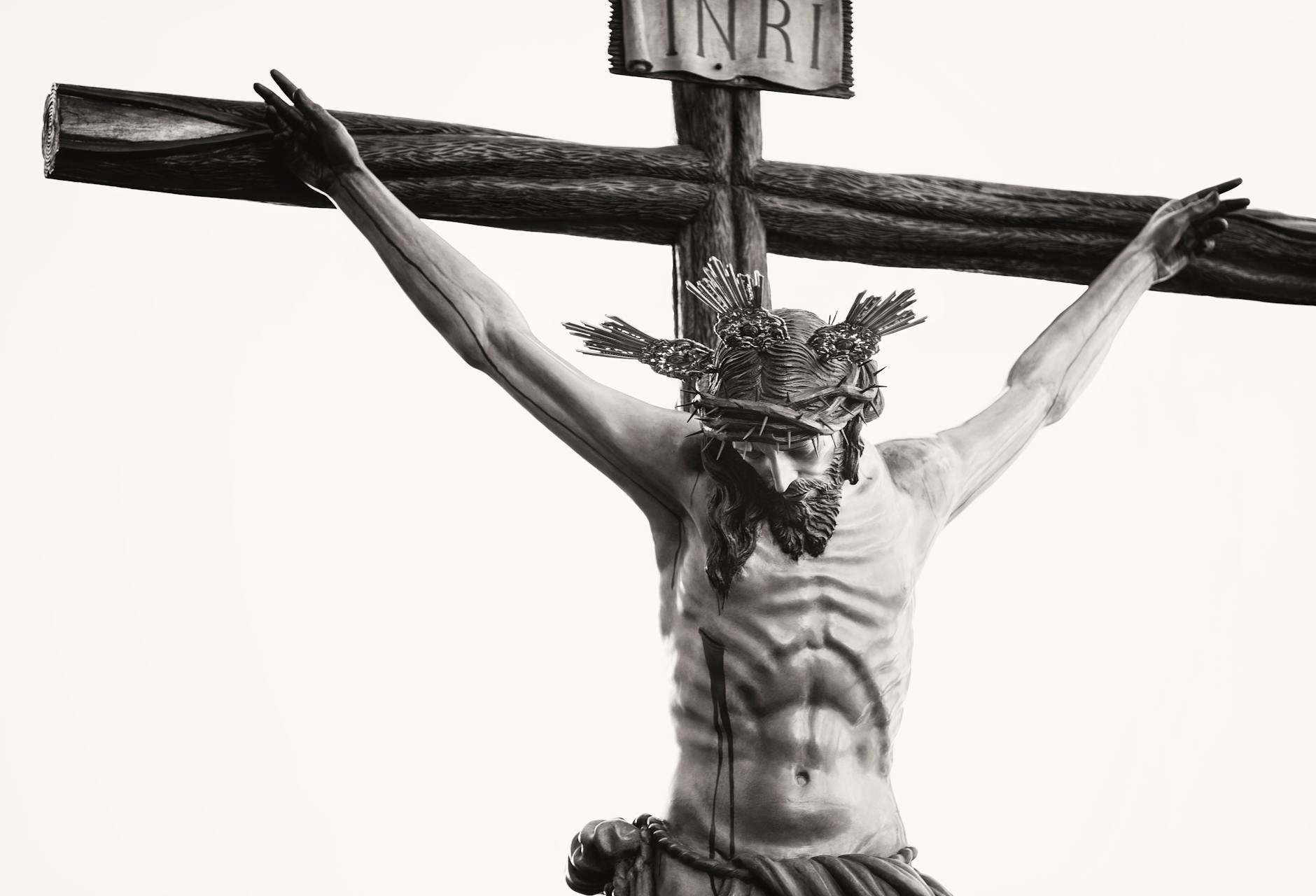
Form can be easily transmitted, reproduced, replicated. Wood turners the world around have fashioned axes for crosses and crucifixes, yet only the True Cross inserted long ago like a key into the earth once turned or, rather, returned the world to its Master. Despite the various formal combinations and recombinations of the double helix in the nucleus of human cells, there appears only one mitochondrial Eve whose material connections bind our fractured human family more than might often seem. Matter must receive its particular form, and yet a form, perfect and perfecting or defective and destroying, must in turn be given by something beyond what is itself material.

“Where does the form of Sacred Scripture most properly exist?” was a thought experiment pressed upon me by a learned priest in the course of my formal studies. The answer to the priest’s question, after much conjecture by the studentry, was the Mind of God, the Divine Ideas. This Divine Intellect was not merely the collection of the Bible’s form, nor even a collection of all various forms of existing and non-existing beings. No, the Divine Ideas is not a multiplicity as with Plato’s forms but rather the Divine Unity, the Divine Essence, undifferentiated from which all differentiated forms participate. The degree and perfection of this participation certainly varies within the subset of creation, but the divine source of all forms, structures, and natures is likely what Gerald Manley Hopkins meant when he penned, “The world is charged with the grandeur of God.” All of creation is teeming with God’s creative spark, His speaking forth into existence what once did not exist and would not persist in existence without the endurance, the patience, and, we would discover, suffering of His Word.
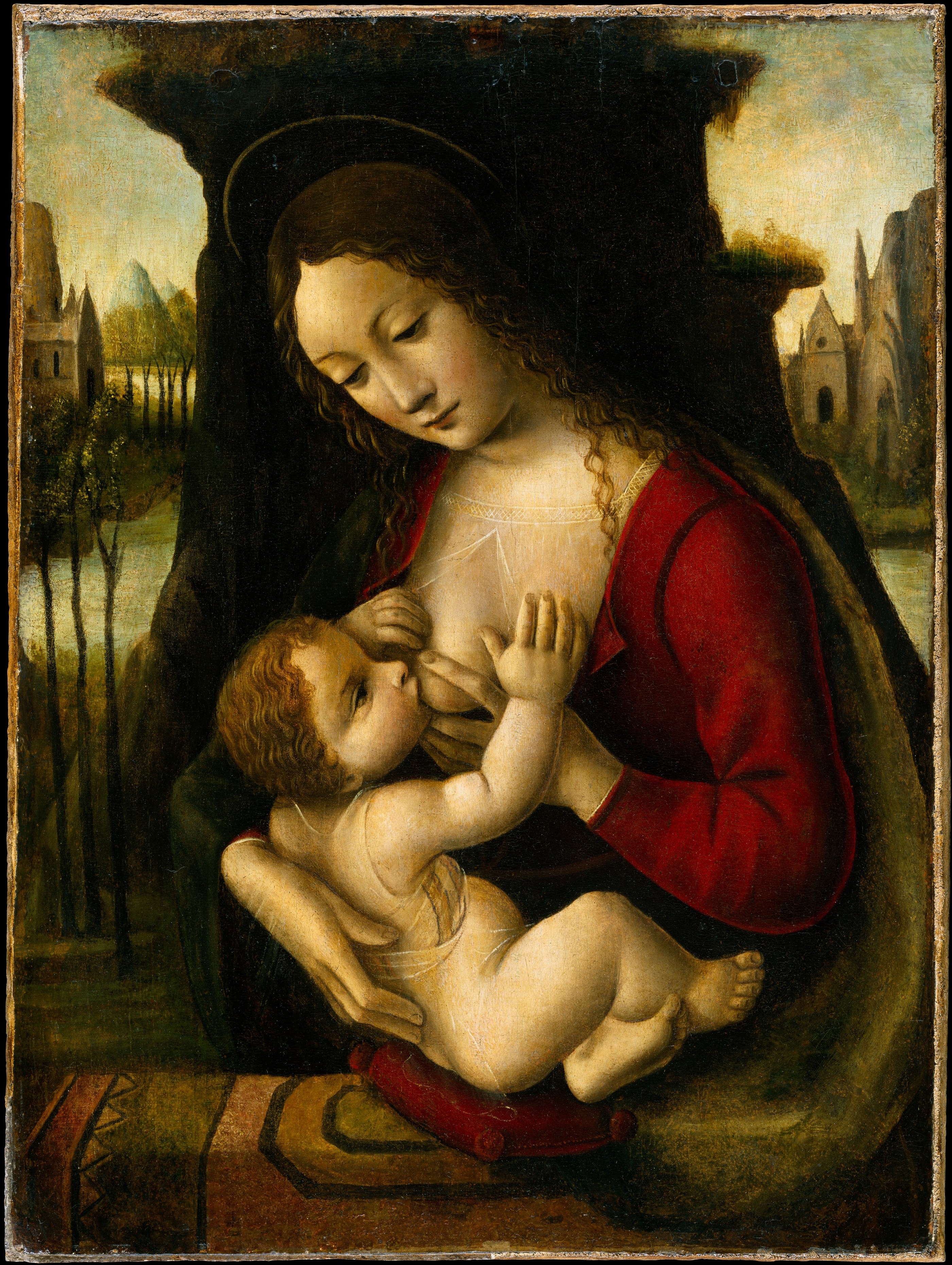
Human agency and instrumentation fall within this grand teleological design and Incarnational rescue mission. We are called to further participate in the repentant renewal of the human family and the restoration of all material creation. Matter and form exist, then, in the most foundational sense, not by any action of themselves but as the frontline enactment of God’s “plan of sheer goodness” (CCC, 1). The very scandal of the Incarnation cannot be understated here. As St. Augustine remarks on the Nativity that the uncircumscribed God became contained in swaddling clothes. He who fed from His Blessed Mother’s breast offers His own Body and Blood as wayfarer’s fare.
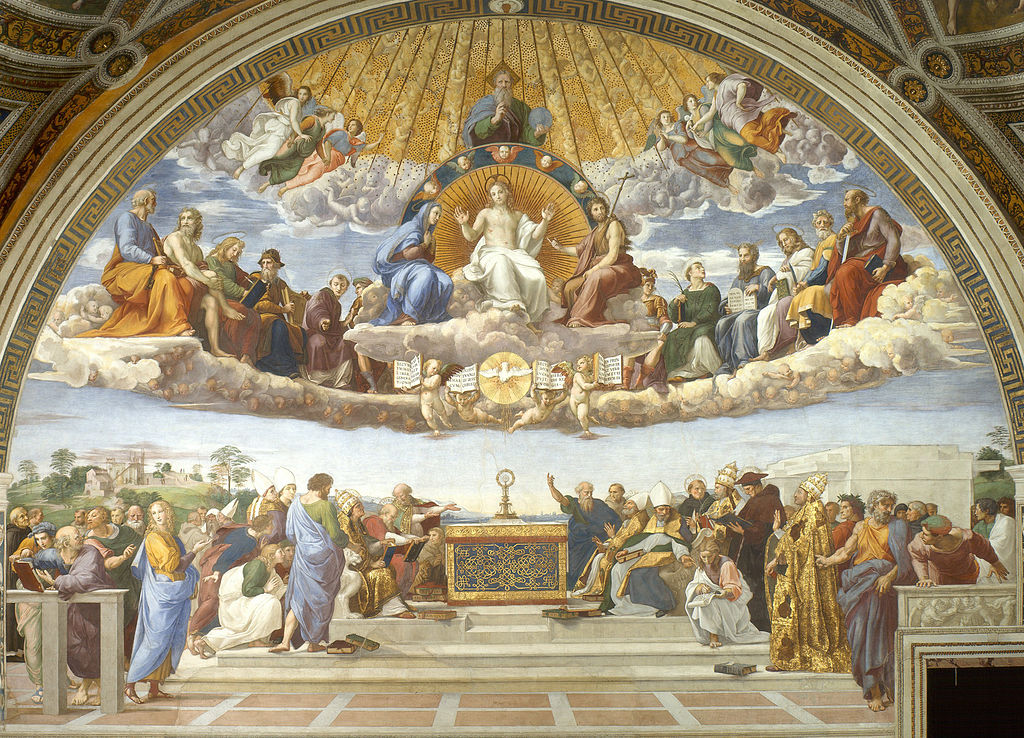
Now this food for this participatory pilgrimage, this counter-rebellion of the resurrected king is the Eucharist, in which Jesus Christ is truly present, Body, Blood, Soul, and Divinity. Our final task at hand is not to detail the various modes under which the whole of Christ is present in the sacrament but to focus on the “hoc est enim corpus meum” of this sacrament, that is, the transubstantial change resulting in the Real Presence of Christ.

Similar to the doctrine of the Trinity, transubstantiation, as the metaphysical explanation for the doctrine of the Real Presence of Christ in the Eucharist, enjoys the rhetorical advantage of not being the conclusion of focus groups or otherwise an attempt at a syncretic religion. Arius of Antioch’s errant claim of Jesus’s diminutive sonship relative to the Father is certainly more palatable to a Mediterranean world with a polytheistic pantheon. A Triune God revealing Himself as such to the one religious tradition in the ancient world zealously devoted, with good historical reason, to the Oneness of God can only be the result of marketing madmen or a proprium probatum.

In a similar way, transubstantiation will win no prizes for its ease of articulation or conformity to similar analogues. The change of bread and wine into the Body and Blood of Christ is not a transformation like an acorn becoming an oak tree with material continuity. It is also not a transmaterialization such as an oak tree becoming petrified over time, swapping lignum for inorganic sediment, while retaining the form of a tree. No, transubstantiation is the change of the entire substance of bread and wine into the respective Body and Blood of Christ by the power of the sacrament, specifically by the power of the words articulated in the sacrament and formally defining it.
Granted, this substantial change occurs under the veil of the accidents, which miraculously remain despite no longer adhering to their proper substances. Further, Christ’s Real Presence in the sacrament is not according to His proper nature but according to a sacramental mode, which is as metaphysically unsatisfying to the intellect as the sacrament is spiritually satisfying to the wayfaring pilgrim. The Eucharist strikes us as a rupture in the very rules of verity. The gift of table fellowship, the bonds of companions and comites is brought to bear, to bend, to break, even, over the concomitant presence of the giver of all gifts.

In choosing to address the rather normative, internal, composite causes of material beings, i.e. matter and form, through a discourse on the extreme case of transubstantiation in the Eucharist, I have sought to upset our collective and selective complacency with sustained existence. Pace Aristotle, no substance except God contains the principle of its own existence. Perhaps the constancy and benevolence of God, at times, lulls us into forgetting this grand theo-drama of salvation history, which cannot be separated from historical creation. God the playwright has now entered the play to mend it from within. He came not to fulfill merely the script or laws and commute a mutinous cast but also, in the finale, to refabricate the wardrobe, the skylights, and the entire earthen stage into a beauteous vision by His vision beatific.

Support BetterPears Through
BetterPears Leaves
Click Here to learn more
3 responses to “Matter Form (Season 4, Episode 3)”
-
This is my favorite episode, yet. Great job!
LikeLike
-
Thank you, Mandy. These first three episodes this season have been doozies, because metaphysics tends (for good reason) to be systematic and circumspect. My idea with the four causes was to conceptually “stand on my head” and relate these fundamental ideas from my unusual angle and perspective.
LikeLike
-
-

[…] swerve? Are our quarrelsome quests and queries but a cascading, conglomerating glitch in a material matrix? Is “death nothing to us” at the expense of vacating the meaning and purpose of any […]
LikeLike


Be the first to know when the next episode of The BetterPears Podcast arrives!
Subscribe to The BetterPears Podcast


This is my favorite episode, yet. Great job!
LikeLike
Thank you, Mandy. These first three episodes this season have been doozies, because metaphysics tends (for good reason) to be systematic and circumspect. My idea with the four causes was to conceptually “stand on my head” and relate these fundamental ideas from my unusual angle and perspective.
LikeLike