






One significant glitch in the matrices of meaning promulgated by Big Lexi, the lexicography cartel, is the definition of the Latin term “altum.” We the dictionary reading public are presented with two seemingly contradicting translations, both “high” and “deep.”
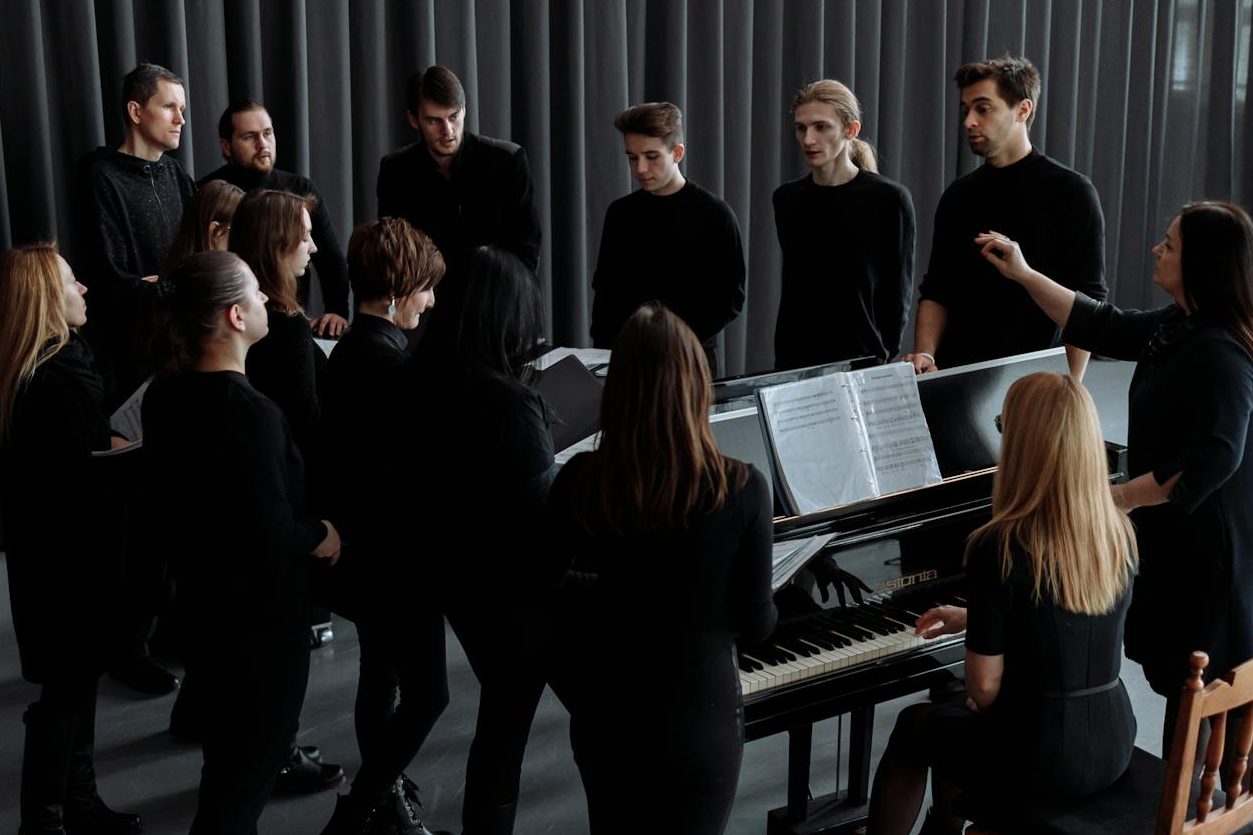
Perhaps to make sense of this disparity, we ascribe a shifting perspective or point of reference to this contradiction as in the case of musical voice ranges. An alto is high for a man and deep, or at least deeper, for a woman than soprano. This shifting scale, however, besides being historically inaccurate with respect to the development of vocal ranges, also misses the unifying idea or concept expressed by “altum.” It is derived from the irregular adjective “alter,” meaning “other,” manifesting in English as the adjective “alternative” and predicated of a musical style in the late 20th Century that no one could otherwise describe or enjoy. The idea of “other” and “otherness” points to the sense of extremity that conflicts with the mezzo status of the alto vocal range.

As either “high” or “deep,” “altum” expresses an extreme state or place. For humans prior to powered flight, this has meant mountaintops or the watery abyss opposed to intermediate terrains more hospitable and suited to human life and civilization. Inhabiting alpine heights required provisions of water, food, and perhaps even the acclimation of breathing. Exploring ocean depths required abandoning hope of ever seeing the surface again. The role of such “alta,” these polar extremes is maintained in the dramatic action of the Bible with a noted distinction. Mountaintops are intentional places for theophany, that is, a divine appearance. Wells, pits, and the chaotic sea depths are often unintended or involuntary destinations as, for example, in the voyage of Jonah. One must climb a mountain intentionally, although it does seem possible these days to fall up a single flight of stairs. Low places, unlike mountains, can be wholly descended, unwittingly in a matter of seconds. The use of intentionality and unintentionality here is more accurately a distinction of teleology, specifically whether one’s end conforms to God’s will, i.e. mountain, or one’s self-will, i.e. the abyss, which was addressed in the last episode titled “Perdition.” “Altum,” as “other” or an extreme, points to the dynamic aspect of the human condition. We cannot remain as we are in the earthly city. Whatever it is, the next life will not be the same as this one. We must attain our altum to our joy or despair.

Curious then is the command of Jesus to Peter after a frustrated night of fishing in the Sea of Galilee, “Cast into the deep” (Luke 5:4). The Vulgate translation reads, “Duc in altum,” with “duc” in the imperative meaning “lead’ or “guide.” After this, he is further directed by Jesus to “let down his nets for a catch.” The preposition “in” with the accusative form “altum” is an accurate witness of the original Greek “εἰς τὸ βάθος,” and something of a puzzle. Does it simply signify “lead or guide onto the deep” as if from the position of safety as the surface of the water is where the majority of breathable air resides, or perhaps into the region of the surface water under which the sea’s depth increases in magnitude? Instead, is it possible to interpret the accusative form as denoting movement “into the deep” as in an invasion of the very depths themselves, harnessing the fundamental force of the accusative case from either “ad + cuso” from which we get the English verb “accuse” or “ad + cussio,” a striking against the deep, more akin to Moses at the Red Sea than Xerxes at the Hellespont? At the Lord’s command, this future apostle and viceroy foreshadows the confrontation of Christians with chaos to save those captured within.
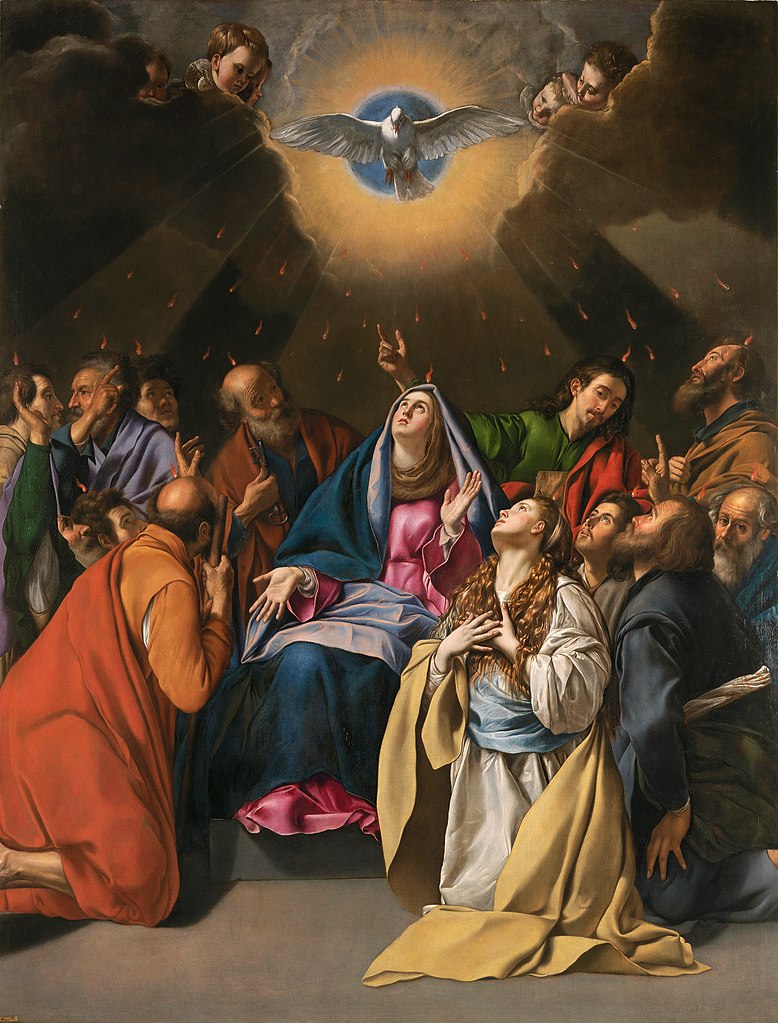
“Duc in altum” or what the kids sometimes call “Duc in A” is the second scandal of the Church. The first scandal is the Incarnation and salvific work of Jesus Christ, that the All-Powerful God became weak in our humanity and died to save the rebellious human family. To accept the truth of this salvation and by faith enter into Life in Christ through His sacraments is the great work of a life well lived. “Duc in altum,” however, reveals the mystery of the Church commissioned at the Ascension and infused with the Holy Spirit at Pentecost. The second scandal is that the God, who did not need me to save me, offers me salvation, which I freely accept, and then invites, indeed, commands me to bring Him to others still lost in the depths of their sin and suffering.

In this way, these polar alta align, the path to the heavenly Jerusalem passes through the slums of Calcutta, the bowels of the internet, and the intolerant “safe spaces” of the university. In the indigent and ignorant alike, we are called to see and seek out the face of Christ, for as with St. Dismas, the good thief, the pathway to paradise may include a harrowing of hell.


One response to “Altum (Season 2, Episode 11)”
-

[…] played a part in the mind of J. R. R. Tolkien at the bridge of Khazad-dûm in another Moria (cf. Season 2, Episode 11, “Altum”) when the grey servant of the secret fire cuts off the passage to all pursuers and costs the […]
LikeLike
Be the first to know when the next episode of The BetterPears Podcast arrives!
Subscribe to The BetterPears Podcast


 BetterPears
One thought on “Altum (Season 2, Episode 11)”