
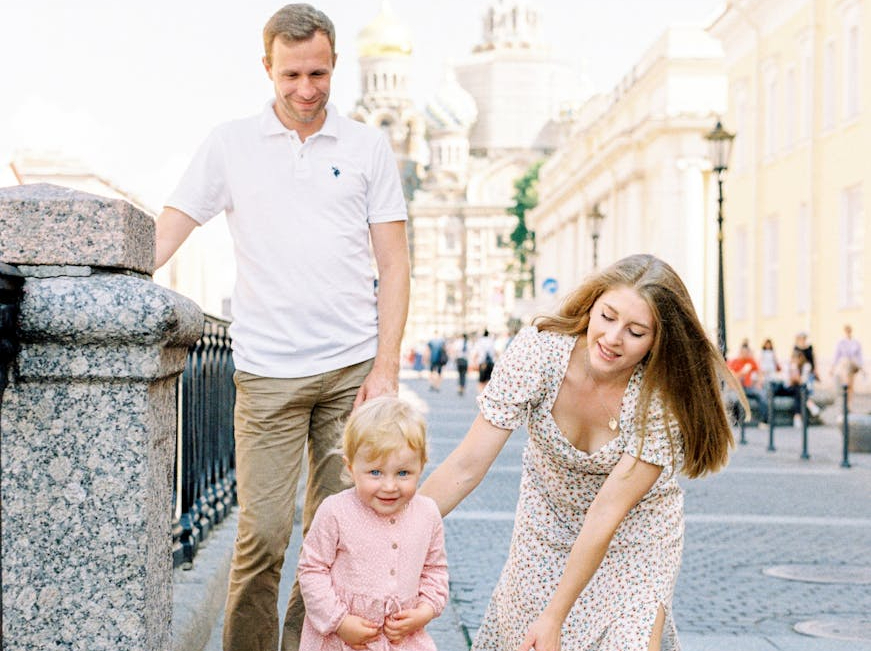






The word “father” strikes the anglophonic ear as a weary passenger along the historical train of language having undergone the great consonant shift explained by Grimm’s Law. This law is named after Jacob Grimm, the elder of the two Brothers Grimm of 19th Century folklore fame. In addition to capturing cultural lore as certain cautionary tales, Jacob was also an historical linguist and concerned with the phonetic shift of consonants over time and across what would eventually become new languages. Grimm’s Law organizes certain consonants into three major groups: labials (b/v, p, f) producing their sound in the front of the mouth at the lips, dentals (d, t, th) producing their sound in the middle of the mouth or near the teeth, and gutturals (g, k, ch) producing their sound at the root of the tongue and the throat. If you have never taken a moment to voice these sounds and sense where in you mouth the sound originates, the experience is worth a brief pause.

Technically, Grimm’s Law accounts for the First Germanic Sound Shift concerning stop consonants developing from Proto-Indo-European, the mother tongue of early civilizations, to early Germanic. This shift can be discerned by our audience in the consonant shifts between Latin and English, the latter being a grammatical descendent of German and heir to many common German terms which survived the influx of the Romance language French into English after the Norman Conquest.

The word “father” is one such example of this consonant shift. The labial “p” sound in the Latin “pater” arises as a “v” sound in the German “vader,” and the “f” or “ph” sound in the English “father.” Similarly, the dental “t” sound in “pater” arises as a “d” sound” in “vader” and the “th” sound in “father.” This polytropological linguistic account of the word “father” provides a segway into the heart of its meaning laid bare in the corresponding Latin verb to “pater,” that is, “pateo.” In the first season “Genesis” episode, I used the phrase “The pater becomes patent,” to describe what might be the fundamental act of the generational family whereby the father accepts the newborn child on his knees and establishes both his paternal rights and responsibilities. In the course of our fallen state, however, the case of dubious paternity and indeed hostile paternity has arisen and was culturally acknowledged by the ancient Romans who held that Jupiter retaliated against the murderous designs of his father Saturn causing the latter to hide (lateo) in an area of the Italian peninsula, which came to be known there after as Latium and peopled by the Latins (See Vergil, Aeneid, Bk. III, ll. 319–323).
There is something captured in the word “pater” or “father” that recalls deep in us the tension between a father’s strength which could be harmful to us and his strength as a shielding aegis. This tension between hiding and revealing ourselves to the father finds delight in the antics of a certain cartoon featuring Australian Blue Heelers. It is the source of a child’s wonder at the domestic threshold upon the father’s return be it from the high walls of windy Troy or simply his daily commute. As labial consonants, the sounds “p” and “f” require a slight outward puff of air that announces his presence but does not assume to draw near.
But while he was yet at a distance, his father saw him and had compassion, and ran and embraced him and kissed him
Luke 15:20
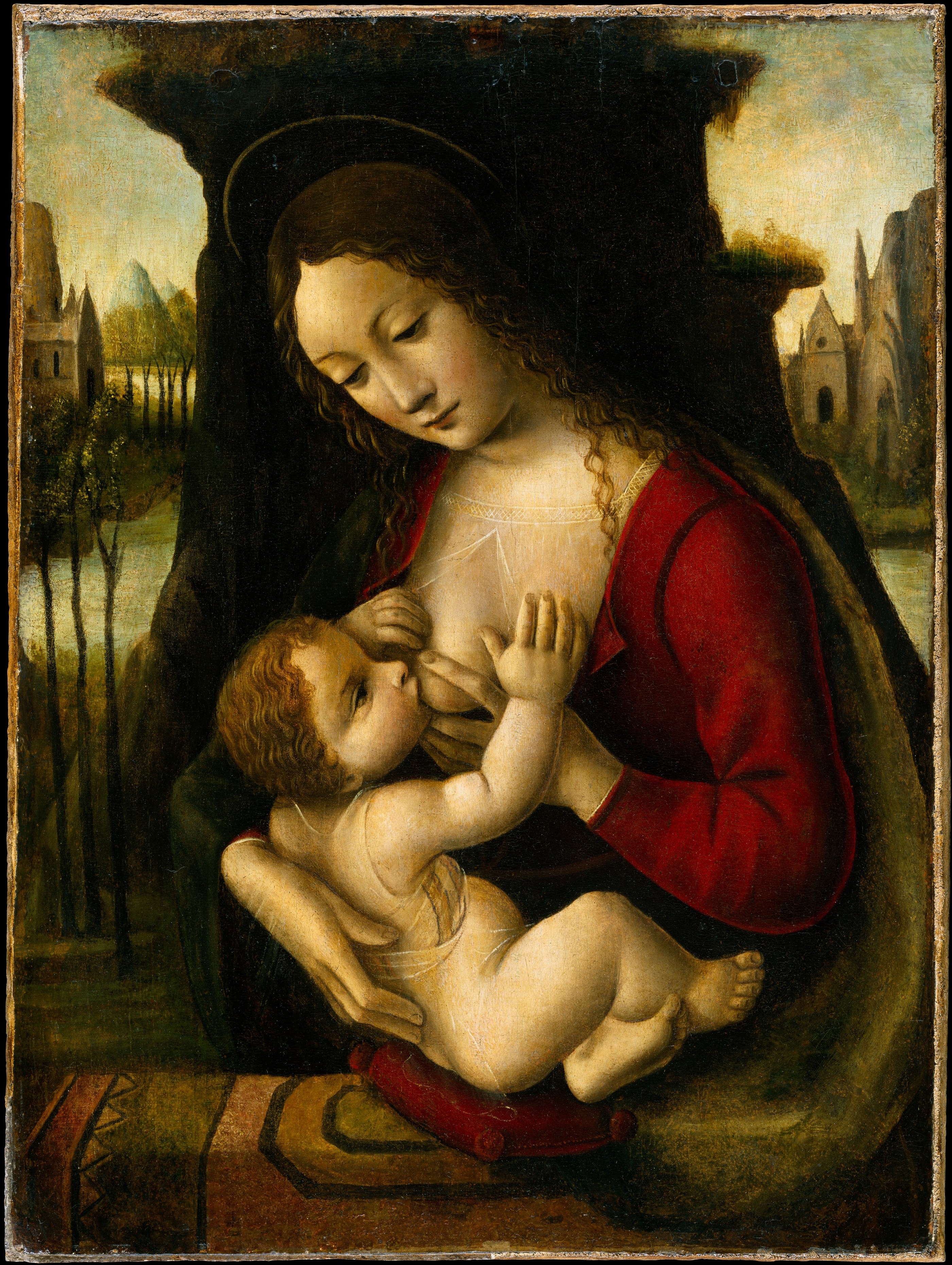
From the pneumatic “pa” and “fa” of “pater” and “father,” we turn to the inward draw of “mother” and “mater.” Unlike a father, the maternity of a child is revealed by the nature of human gestation. The connection of a child to the mother has a primordial language of its own, to the point that the initial syllable “ma” is the vocalization of the act of nursing at the mother’s breast. “Mama” is not only a name the child gives to his nurse but also his nourishment. It is an exhortation to renew the nutritive bond which began in the womb and continues through her succor. The sweetness of life, all sugar, sucre, zucchero, zucker, azúcar, is named after the first sugar, lactose, pooled as a biological lake in our mother’s breast for us from the very blood flowing through her whole being. Mother’s milk, lactose, pools in her not unlike her tears, lacrimae, pool in her as the age of nursing gives way to the dangers of a fallen world.

From mother, “mater,” we come to understand the maternal in “materia,” matter. A lesser blog or podcast would stop at the party line of Big Lexi, the lexicography cartel, and note that what is maternal in materia, matter, is based on a flawed understanding of genetics in which the mother only supplied the material aspect of offspring while the formal aspect was entirely determined by the father’s genetic contribution, his seed. With the discovery of double helix chromosomes resulting from the mutual contributions of both parents, it is easy to understand the abandonment of the connection between matter and mothers, despite the majority of every child in the womb receiving nutrients supplied directly and exclusively by the mother.
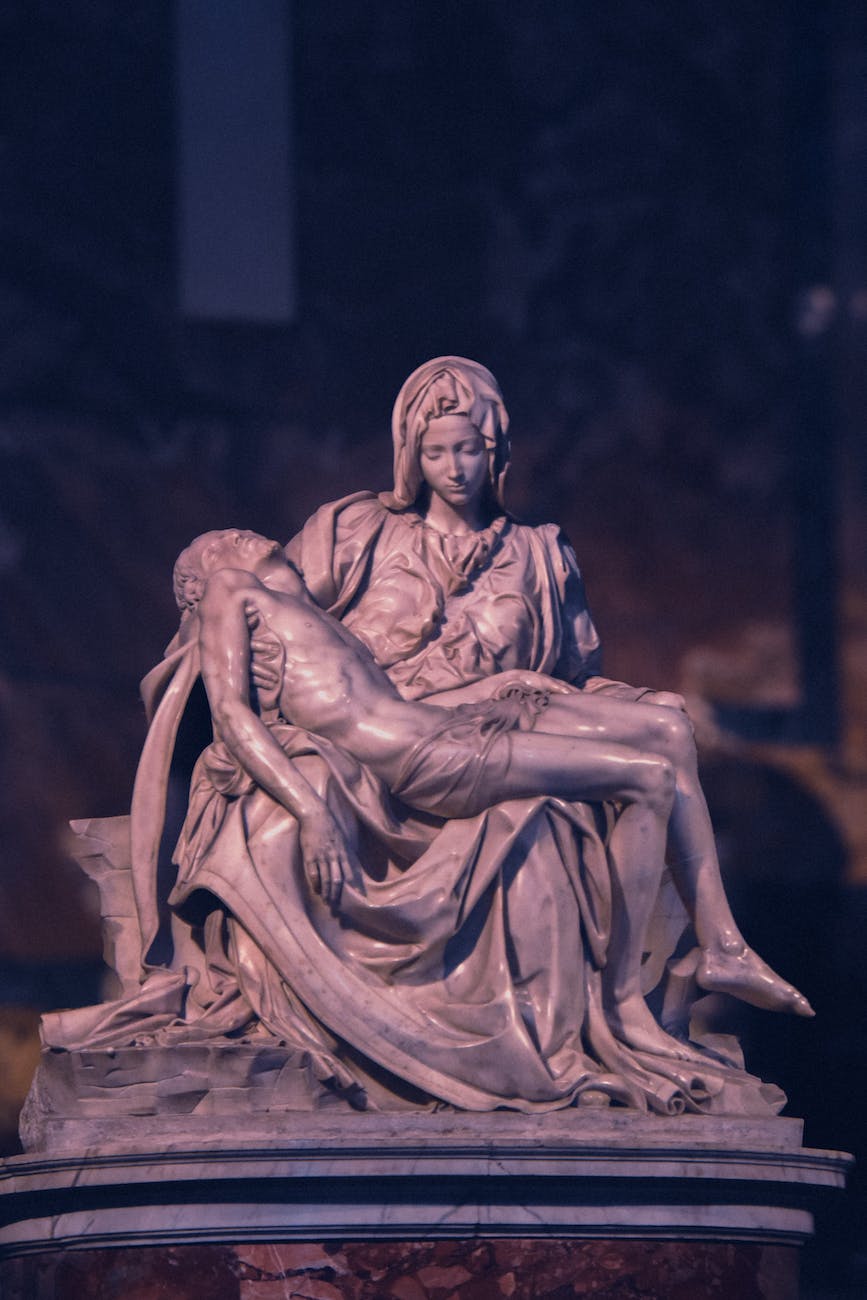
Instead of this dismissal, I suggest that there is some lingering fruition in the connection of mothers and matter. Before our modern eclipse of reason, there were understood to be four causes of all material beings: the material, formal, efficient, and final causes. The material and formal causes are considered intrinsic causes while efficient and final causes are extrinsic causes, although self-actualizing beings like humans can exert efficient and final causality upon themselves. The point of all this exposition on causality is that mothers by nature have an interest in the immediate state of their children. Her influence over the material and formal causality of her child begins with near totality at conception and progresses as a diminishing influence into the child’s adulthood. Mothers, in a strong sense of what is maternal, have a natural inclination to accept, heal, and nourish their children in whatever state they presently find themselves. It is unconditional in the way that matter exists, in potentiality to all forms.

Such unconditional love is not the same with fathers, who begin their paternity shrouded in distance and mystery to the child in the womb—a stranger in the technical sense. For fathers who are present to their children, that presence is occupied, in the literal sense, with informing the child’s matter with and to what is best in body, mind, and spirit. A father’s love is conditional not because his love must be earned but because his love seeks to build a fruitful life, the child’s life which enjoys both natural and supernatural fruition. Still as condition, from the Latin “con” meaning “together” and “do, dare” meaning “to give” signifies, this vision of a fruitful life must be one of cooperative giving and receiving. What might begin in parental despotism cannot end with it (See Episode 3, “The Three Pars”). The imperative “honora” of the 4th Commandment is tempered by the father and mother’s shared “onus” or burden of the child’s becoming thereby becoming shouldered by that same child, well yoked, for the next generation.


Be the first to know when the next episode of The BetterPears Podcast arrives!
Subscribe to The BetterPears Podcast


 BetterPears