






“That’s just semantics!” is a common counter argument volleyed against interlocutors prone to philosophic and philogistic accuracy. What remains unclear in such dialogues is whether “unjust semantics” would be more preferable. Semantics is often referred to as the “study of word meanings” by those in polite society who refrain from identifying it as the study of “semen,” or the plural “semina,” meaning “seeds.” Words are the seeds of linguistic expression, and intended communication harvests must begin with an intentional selection of seeds, that is, semantics.
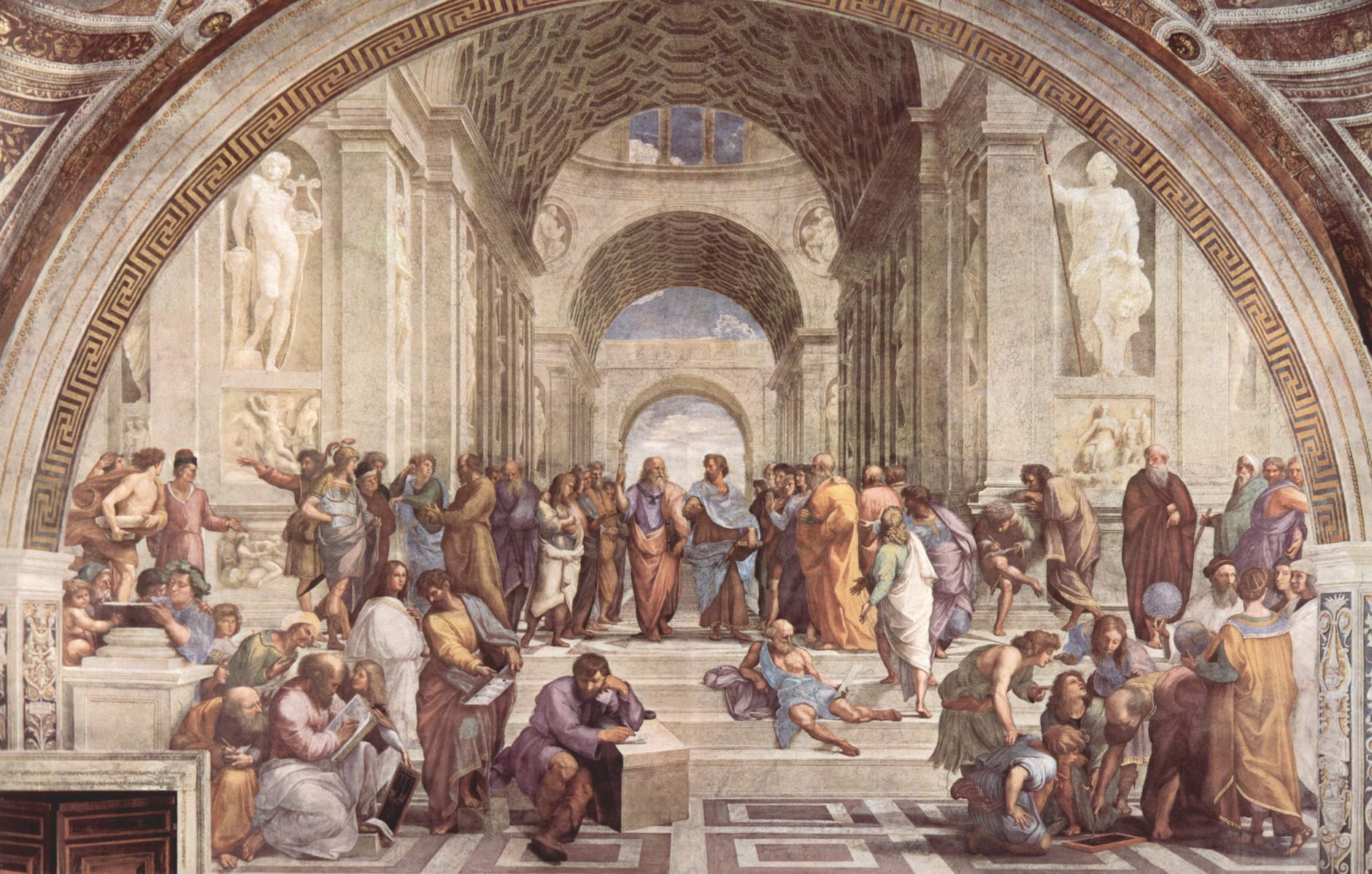
“Etymology” is a term often considered synonymous with “semantics,” however, its origin is more Hellenic than Latinate, from the two roots “ἔτῠμος,” meaning “true” and “λόγος” meaning, well, nearly everything under—and above—the sun, but more commonly it means “word, reason,” or “study.” Thus etymology is something like a study of the true meaning of words, and yet this explanation is unsatisfying over time. The exchange of seemingly arbitrarily arranged characters in English to more exotic but nonetheless equally arbitrarily arranged characters in Greek along with a defined meaning sprung forth like a magician’s rabbit from the lexicography cartel, or as I call it “Big Lexi,” is to trade linguistic servitude to Noah Webster for that of Liddell and Scott. What we desire is something that I call, “deep etymology.” Professional linguistics researchers might have a different name for this approach, but they tend to award tenure for neologisms, not conventional taxonomy. In any case, deep etymology seeks to consider meaning beyond the dictionary definition to the verbal roots which phonetically and orthographically connect us to earlier generations of the human family. In addition to this connection to those who spoke and wrote before us, this deep etymology grounds us in reason or “logos” and shields us from the potentially overwhelming influence of “ethos” or appeals from authority and “pathos,” or appeals to our emotions.
Arriving now at the human family, we encounter the deep etymological topic before us today. It seems that we have forgotten the essence of parenting. The use of the gerund “parenting” is intentional. Our problem is not specifically that we do not know “who” a parent is, although cases of dubious paternity exist and dubious maternity, far fewer by reason of umbilical cords. No, our problem concerns the nature of parenting. The question “What is a parent?” points to a reality which is presently not apparent, and this play on words nevertheless bears for us what is unknown.

Have you ever thought about the three “pars,” the three Latin verbs which have the root “par”? They are the 1st conjugation verb “paro, parare,” the 2nd conjugation verb “pareo, parere,” and the 3rd conjugation verb “pario, parere.” The question, then, is which of these verbs is the essence of a parent? The least likely candidate is the first, “paro” from the 1st conjugation. The morphological problem is that we are looking for the substantive participle “parens” and not “parans.” Still the root “par” in this 1st conjugation instance retains something of the essence of the root in that it means “to prepare, make ready, make suitable.”
I had a professor of a strong Thomistic pedigree in graduate school who persisted in using the Latin word “adequatio” in his explanations of cognitive theory, that is, how what is sensed in the world is made present in the intellect by a certain “adequation or adaptation” of sensation to idea. Since he spoke with significant alacrity, commonly engaged in Latin-English code switching, and had adopted an ecclesiastical Latin pronunciation, I heard three words instead of one. I heard “aede,” “quat”, and “sio.” This went on for over half the course. I was not yet the quality of student who asked those kinds of clarifying questions then. The point at present is that adequatio was precisely what was not happening every time I heard the word “adequatio,” that is, the sensation of hearing the spoken word was not connecting to its meaning in my intellect and fulfilling its purpose.
Furthermore, I think this “adequatio” is the real sense underlying the root “par” as all things prepared such as a guest room, gravesite, or a warm bath are made so by forming something material to be readily received by someone or something. “Paro, parare” seems also to affirm at a fundamental level the movement of beings toward their end, as all preparation is ordered to some actualization, some fulfillment of an end or purpose. As to the question of parenting, it is true that parents prepare nine months for their children in the womb and prepare the children themselves for adulthood after giving birth. Still, the essence of parenting remains more with the two remaining “pars.”
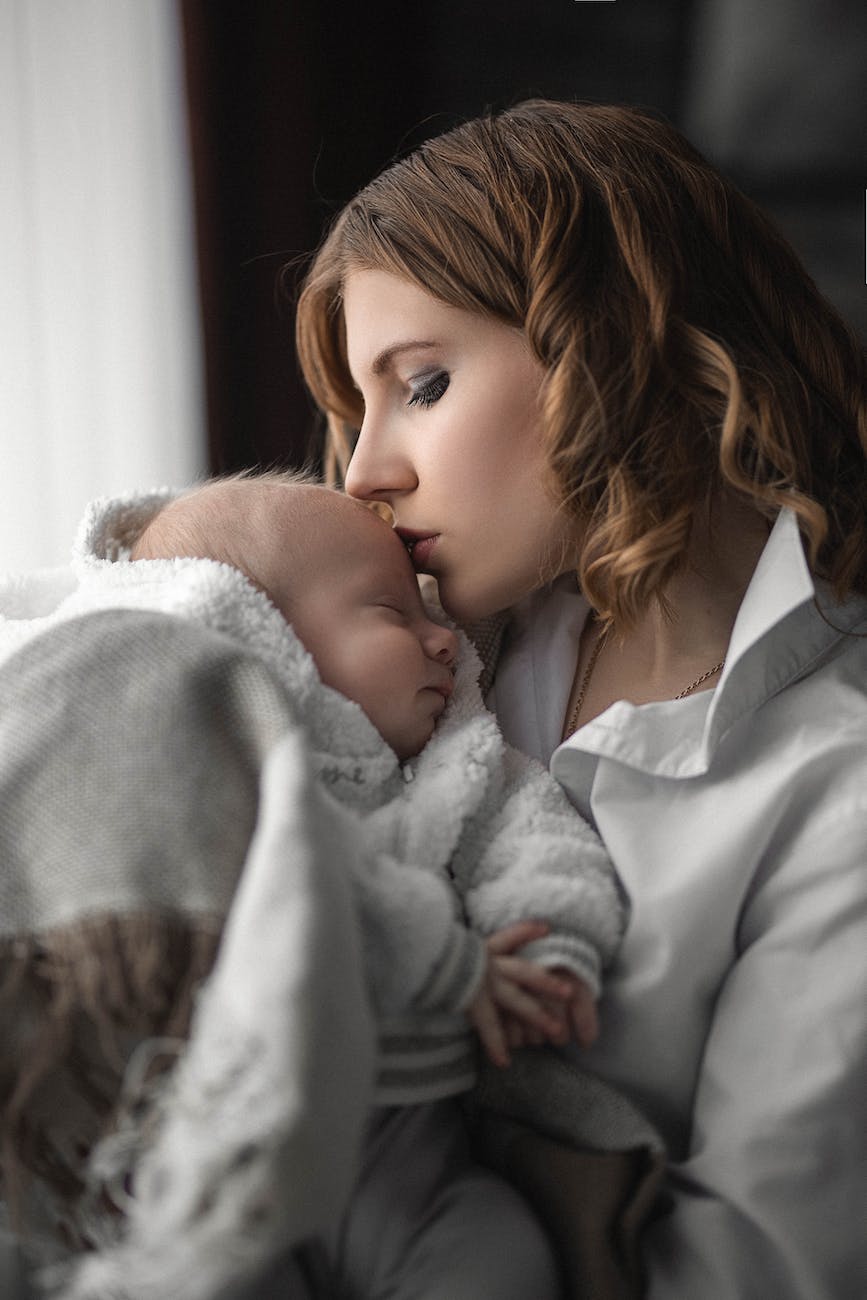
Deftly shifting to the 3rd conjugation “pario, parere” in a way that would make Monty Hall proud, it seems that we may have hit paydirt. This verb which means “to bear, give birth” is physiologically connected to the act which conventionally establishes parents. As with our first “par” above, there is this adequatio between the parents and the child, what the philosophers call univocal generation or like things begetting like things. Human beings beget human beings, not sea lions or random clumps of cells.
Nevertheless, we need to deal with that pesky “i” in the present participial form “pariens, parientis” not our desired “parens, parentis.” To be honest, we should be glad that this is the case as it is one of the great recurring tragedies of the current epoch that fatherhood and motherhood are equated with merely begetting and bearing a child respectively. While nearly all subsequent parental responsibilities and actions would remain contrafactual without such a genesis, the restoration of genuine fatherhood and motherhood for the human family is etymologically vindicated by that pesky “i”.
It might be helpful at this point to establish a counter argument, namely, that the heretofore “pesky ‘i’” is a vestigial morphology, that was elided, snuffed out over the centuries for the sake of pronunciation, i.e. when in doubt blame the French. Since the connection with parents and giving birth is so close, and what remains with the third “par” is a harder interpretation both in terms of meaning and moral response, could we not just remain here on this mountain and set up some booths?
At last we arrive at the third “par,” “pareo, parere” of the 2nd conjugation. This is a verb that seems, that is, “appears” to have two meanings. On the one hand, it has the meaning “to be evident, be visible, appear, be at hand.” On the other hand is the extended meaning “to obey, to submit.” At long last, parents or “parentes” are those who obey and submit to their children. It is either clearly evident that we did not truly understand who the real power brokers were in ancient Rome or perhaps there is need to refine this position.
What is the adequation here? A parent or “parens” is one who recognizes or is otherwise present to a reality which must be obeyed, or at least obedience is the proper response. What happens when a person becomes a parent, granting that it takes two to tango and that the activity of each dancer is distinct though complementary? What happens? The parent’s identity expands, that is, the number of “whos” benefiting from the highest degree of care and protection which were once only applicable to the parent himself or herself increases. A parent sees the child as an extension of self to be quite literally protected under the same roof, cared for against all worries, and succored with the sweetness of mother’s milk.

St. Thomas Aquinas notes this parental responsibility in his treatment of the precepts of the natural law (Summa Theologiae, I-II, q. 94, a. 2). Precepts operate like logical corollaries to principles. The first practical principle of the natural law is “Do good; avoid (and shun) evil.” The first precept logically derived from this for us humans is that our existence is good and we should seek to preserve ourselves. The second precept extends upon the first commanding the propagation of the species and the education of the young. This second precept of the natural law draws us beyond our own individual needs and extends our love, our desired good for another to the young entrusted to our care as parents. While the third precept of the natural law extends this self-identification beyond the household to broader society, it is to our present purpose to define parents as those who recognize the truth of their divinely instituted and natural responsibility to their children. Parenting is founded on prudence or practical wisdom, the habit or virtue of doing the right action according to right reason. Definitions of parenting founded on productivity, propagation, or even power err in mistaking what is only a part for the for whole, and the “par” of “part” is a “par” for another parley.


So what thoughts came to mind concerning the episode?