






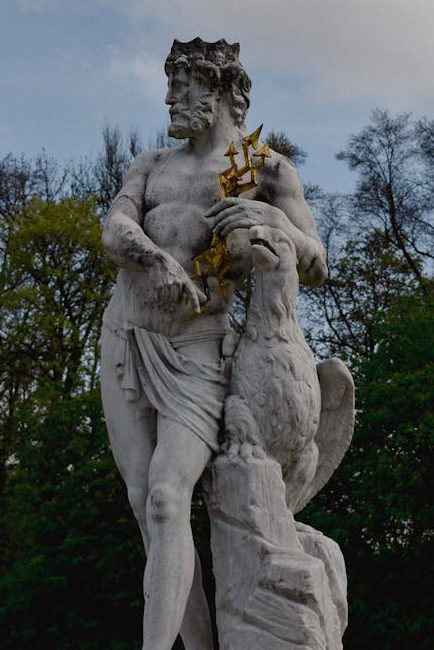
“All the world’s a stage, / And all the men and women merely players; (Jacques, As You Like It, II, vii, 139–140))” hypocrites every last one. Aristotle’s word for dramatic actor in his Poetics is, surprisingly, “ὑποκριτής,” which is not so much a comment on their moral rectitude but rather their status generally as human beings. The actors in ancient dramas portrayed pagan gods and potent monarchs. The actors, often behind the masked visage of their characters, had not the potency in their dicta. The strength or κράτος (expressed here as “κριτής”) thus lacking results in the prefix “ὑπο,” in English, “hypo.” Might and strength, like that sought by so many a tragic protagonist, is still sought on worldly stages both great and small, wielded under the guise of criticism and the modifier “critical.”

Proponents of critical thinking believe that the ability to dismiss or disregard data and arguments which are faulty, irrelevant, or unduly biased is a liberating process for minds young and old. What remains to be proven is that such a process of critical thinking is distinct from the pursuit of truth by thinking generally understood. Is the championing of critical thinking a pyrrhic victory reducing the essence of thinking in general, just as justice has been diminished by the pleonastic modifier “social”?

Does the rise of critical thinking correlate to a decline in intellectual traditions, thinking in common, thinking in which κράτος, the cudgel of private judgment, asserts free will at the cost of isolating ideas and siloing discourse? Notably, the modern Discourse on Method is conducted by Descartes in the solitude of an empty, stove-heated room while the ancient writings of Plato are pitched in open dialogue, the teachings of Aristotle are strewn as a diligent pupil’s lecture notes.

Critical thinking as a solitary endeavor in the court of personal bias (Greek βίη for “force”) and opinion opined without certitude is as fruitless as solitary prayer, that is, prayer to no one. While the spiritual masters of the Christian world have at times sought the solitude of the desert, their prayer, unlike Descartes “Cogito,” was never solely their own. Like the broader intellectual tradition in which they participated, the truth of their thoughts, the interlocutor of their prayer was always a “Who” more so than a “what.” “Who is Truth” is always the arbiter of thoughts and thinking. Whatever power, force, or κράτος is brought to this thinking must come from Him, remain grounded in Him, if we are to become anything more than hypocrites.

So transducive is the accurate disposition of κράτος in all things critical. The art critic must articulate correspondence to the order and form of transcendent beauty and not the aberrations of fallen sense and sensibility. The critic of public policy, of leadership, and the man in the arena must remain grounded in what is true and good, from which authentic criticism finds its source and summit, its origin and end.
What then of thinking since its modifier must remain in this manner grounded. What of the mind and its manner of operation which seems so vital to life—examined or otherwise? Perhaps two distinctions among many possible will best benefit our present inquiry. The first distinction is between two verbs “scio” and “nosco,” a distinction more noted among speakers of Romance languages, though still expressed in English between knowing and recognizing. This distinction is expressed by Blaise Pascal’s famous couplet, “Le cœur a ses raisons que la raison ne connaît point,” “The heart has reasons that reason does not know.” Our hearts are tied to recognition and perhaps even cognition in which the cumulative prefix “cog” assimilated from the Latin preposition “cum”is graphed onto “nosco.” “Scio” and its derivative “scientia” or “science” is the knowing of sensible signs and logical notions. “Scio” is our window into the world in which we found ourselves as infants. A window, so it seems, separated by glass to the point that even the conglomerations of science or “conscience” remains, to an extent, notional, its logic verbally explicable. “Recognosco,” however, is the home and hearth worn smooth by repetition, habit, and repose. I think of my mother not as the composite result of her genetic markers relative to mine nor even the logical conclusion of my familial arrangement. She is recognized as the home and succor I will never outgrow, who by repetition and resolve has consistently willed my good in all life’s stages. Thus, thinking can express by this admittedly broad distinction both knowing of (scio) and knowing through (nosco).
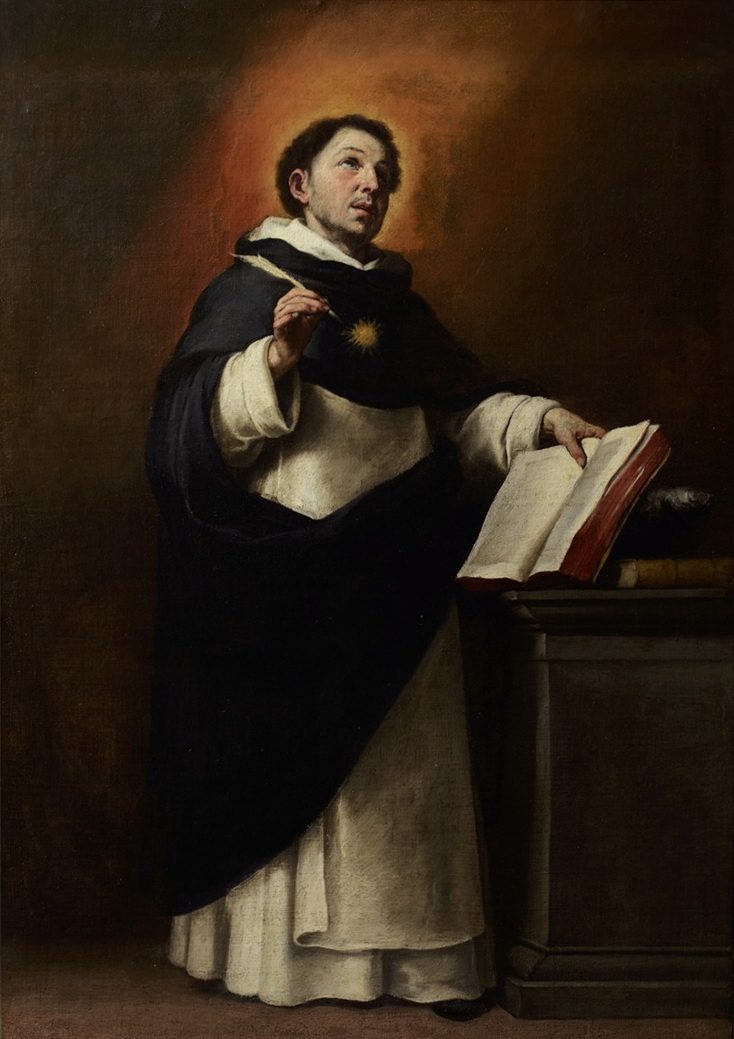
The second distinction is in our understanding of the acts of the mind itself. St. Thomas Aquinas among others in his day held that there were two distinct acts of the mind, intellegere and judicare, that is, understanding and judgment. Understanding, intellegere, answers the question “What is it?” If we imagine a figure approaching us from a distance, our first thought is the question “What is it? Is it a person? A man? My best friend?” and so on with greater specificity. The second act of the mind, judicare, is the judgment of the truth of the first answer, “Is it so?” This question admits of three answers: yes, no, and maybe, if the information remains insufficient.

The ordered beauty of this bifurcation between understanding and judgment is that judgments can be changed as understanding improves or is corrected. The danger lies in the conflation of these mental acts into one, as offered by Bl. Duns Scotus, a subsequent thinker to St. Thomas Aquinas. Scotus presents a simplex apprehensio in which judgment immediately arises from understanding in a unified act of the mind. In this way, seeing really is believing. The problem here in the realm of rather abstract θεωρία is the same in our current epoch of public discourse. There is no space for incorrect judgment, since judgment is grafted to the entire intellectual apparatus. The modern problem is that if I am wrong, my entire intellect (and me as a purported Cartesian intellect trapped in a bodily machine) is wrong. Such people cannot have erroneous ideas. They can only be erroneous people. Pitched in such a battle, λόγος gives way to κράτος and critical thinking becomes the watchword and currency of thought oppression.
The way out of the critical thinking arms race is not by more impressive credentials, bigger megaphones, or higher speaking platforms. It is rather a radical realism rooted in regal authority founded by the actor or auctor who is not acting yet pure act. Critical thinking or what our betters termed simply “thinking” must begin at the beginning and discover again the worth of words, that is, their truth, even if that requires casting one step, one foot, one pod at a time.

BetterPears Market Mug Giveaway
Click Here to learn more
Be the first to know when the next episode of The BetterPears Podcast arrives!
Subscribe to The BetterPears Podcast


