







The Latin adjective “honestus” bears a primary meaning of “honorable” and only perhaps by extension that trait “honest” in the way the English cognate conveys the teller of truth. “Honestus” seems, to one who would dare, a perfect passive participle lent by some verb or action involving “honor” or “honos, honoris.” The passivity of the word seems appropriate for the honorable is so honored by another external to him or herself. Self-honor is fashioned proud, hubristic, contrarily as the Christian vice and even self-interest forfeiting pagan magnanimity, pegging itself below its one-time pinnacle.
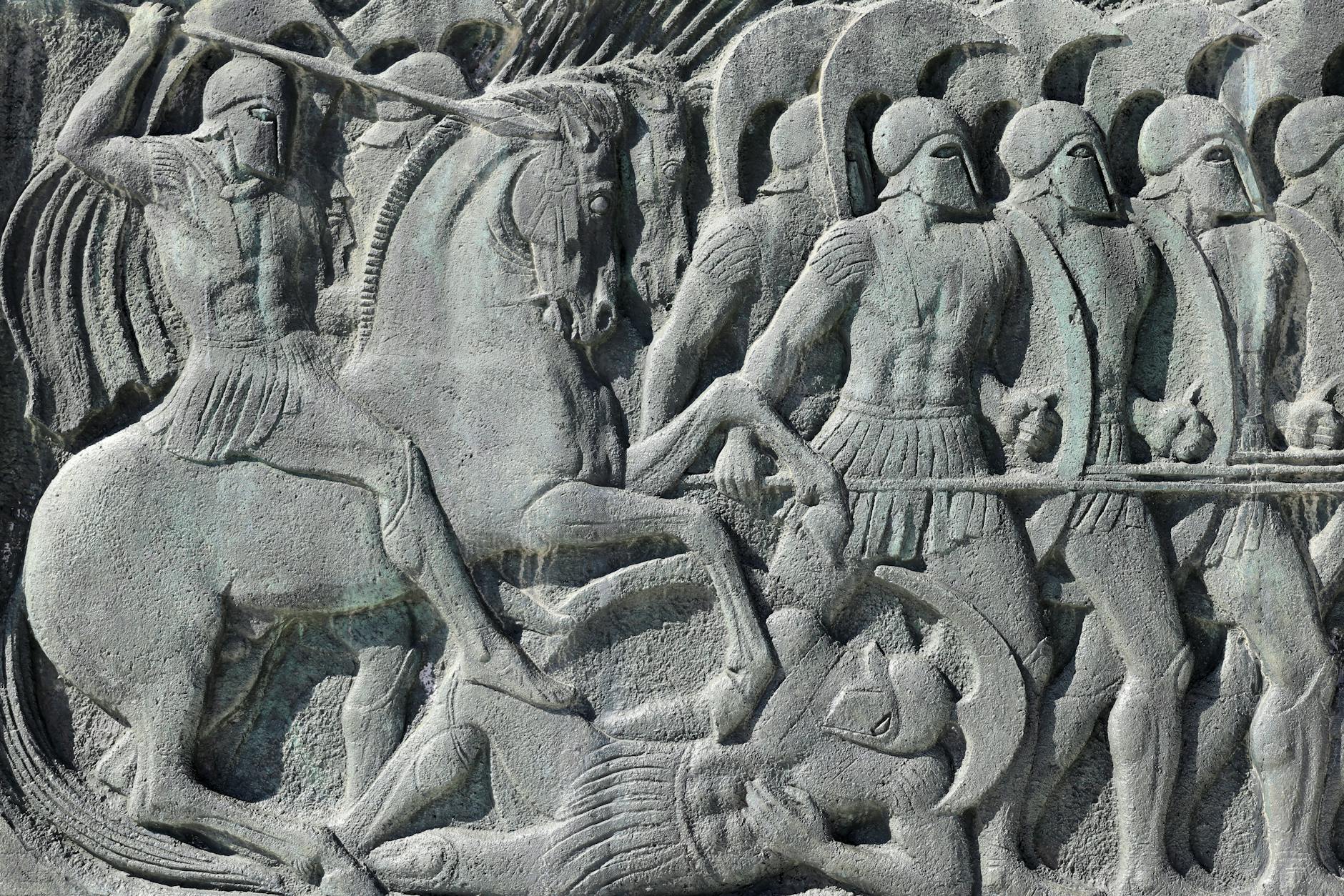
The Hellenistic perspective on the matter is rather entwined with “κλέος” meaning “glory” and “renown” centered on the duty or responsibility to carry forth the name of one’s father as in a patronymic such as Achilles Pelides or “son of Peleus” and Odysseus Laertiades after old Laërtes. The names Patroklos and Cleopatra are both compounds of this pursuit of paternal glory and honor. Surnames and cognomen now occupy this fastidious fashioning. Τιμή understood as honor is the dignity or recognition bestowed on one in response to extending well the κλέος of one’s house—a kindness to one’s kin woven by good works and knit neat in Penny’s funeral pall.
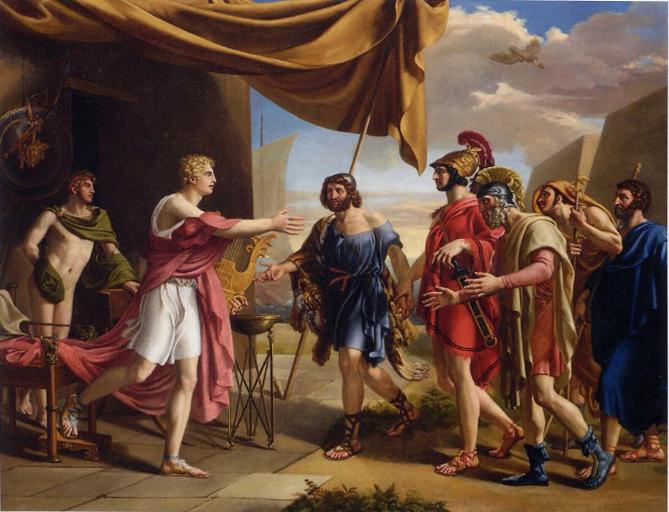
τιμή as an abstract quality was often manifested in the bestowal of tangible gifts of great worth or scarcity. Such τιμή or its slighting is the fulcrum upon which the wrath of Achilles tilts in the first book of Homer’s Iliad. The chieftain Agamemnon’s claim to Briseus, previously allotted to Achilles as a spoil of war is triggered by Agamemnon’s own loss of outward esteem before men in the likewise brokered return of Chryseis. Again, for the great heroes of the Achaeans and the Trojans at the onset of the epic poem, all κλέος and τιμή, governing and ordered by the status of each man was signified externally by wealth from the division of spoils, the very supplies, armament, and labor which perpetuated their campaigns and alliances. The complaint of Achilles and his subsequent protestation by disengagement invites the listener or, indeed now, the reader to consider glory, renown, and the more Latinate honor beyond dependency on the caprice of others including the Olympian gods and even one’s self.
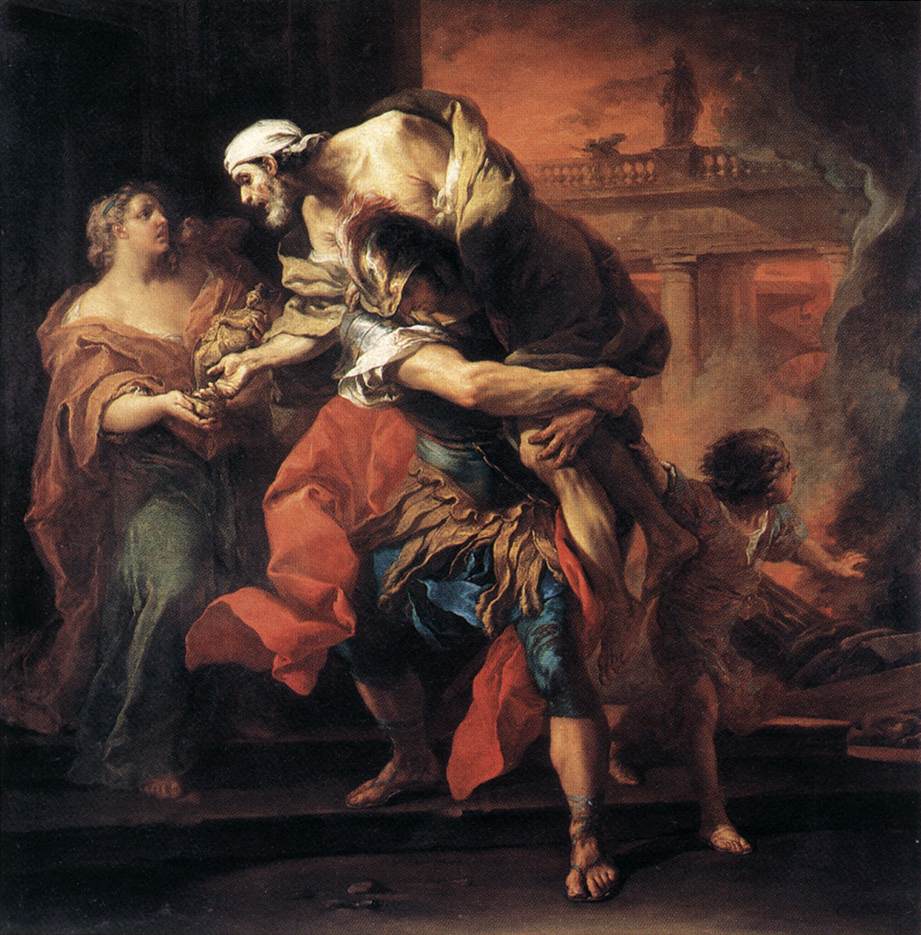
Is honor necessarily, that is, essentially something given or can it exist and be enjoyed by some other operation or act? Perhaps a solution of sorts is to be found in a connection between “honor” and “onus,” the latter being the Latin word for “weight” or “burden.” In this view, truly heavy is the head which wears the crown, bears the burden of state with due honor. That which is honorable is oft burdened with resistance from what is alternatively more expedient or acceptably sub-optimal. Crafty counselors perceive the honorable prince a fool or, worse, weak. The burden of honesty is a tell-tale heart, the weight of the Tempter now found Accuser spewing fork-tongued fallacies and the father’s faults detracting from the forgiveness offered by the fallen yet risen Lord. As Aeneas ferried father Anchises beyond the wreckage of windy Troy and bore the household gods into Latium, so too do children bear the weight, the regrets, the resentments of their fathers still today. Yet not all these burdens are worth their berth. Contra the Bard’s Antonius, it is the evil not that good which must be interred with the father’s bones by those who live on after them, for the propagation of the good is burden enough.
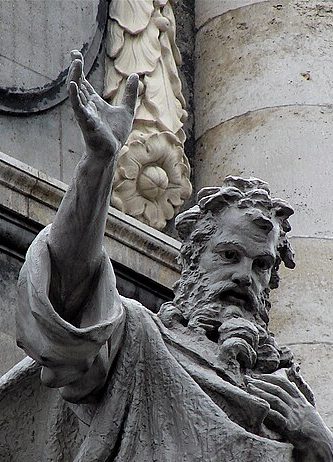
Still what discernment of τιμή remains possible? Perhaps Timothy, Τιμόθεος, the honor of God, can, as St. Paul suggests, serve as more that a guide (See 1 Cor. 4:17). What is the honor, the glory of God, for it seems that good Christians everywhere are set on magnifying this glory? Yet the magnification cannot be required by God and its lessening considered a deficiency in He Who is the Creator of all things. No, as St. Irenaeus of Lyons offers, “The Glory of God is man fully alive,” a common embellishment of “Gloria enim Dei vivens homo.” At its core, the idea is that the glory of God is His creation in conformity to His Will and precisely that rebellious creature Man repenting, being renewed in intellect and will and even the body as living sacrifice, a living being no longer profane but made holy (See Romans 12:1–2).

This conformity of wills, this perfection of God’s order and justice will occur, in truth, at the end of all things, on the Last Day without end, and so there is nothing lacking to His glory which was not preordained. Still, we are called to participate in this glory, lowly though we are, by taking up the burden of the cross in this life. The Christian cursus honorum or “course of honors” turned on its Petrine head passes through the ignominy of the world to enter one’s name in the Book of Life of the world to come.
In Memoriam
Leslie Mamoru Fugikawa
1944–2026

Support BetterPears Through
BetterPears Leaves
Click Here to learn more
Be the first to know when the next episode of The BetterPears Podcast arrives!
Subscribe to The BetterPears Podcast


 BetterPears