






Modern readers of Sacred Script seeking both timely and timeless wisdom in their native tongue can, with well-founded faith, trust that their translations and the translators behind them will fail to capture much of the weight and wonder present in the original Hebrew or Greek. Given this context, the maligned status of “traduttore, traditore,” that is, “the translator, traitor,” it is no little wonder that the diction of Luke 23:43 has, for the most part, been presented quite faithfully in the Anglosphere. From the Cross, Jesus consoles the repentant thief, whom the tradition identifies as St. Dysmas, “Today, you will be with me in paradise.” The Greek witness here is “ἐν τῷ παραδείσῳ,” which the lexicography cartel or Big Lexi will spin as synonymous with “heaven.” Precisely at this moment in salvation history, however, Jesus, with respect to His human nature will not be in heaven as heaven is more broadly understood. His soul and His body will be rent apart by His death on the Cross. His body, though still united with His Divinity, will be entombed. His human soul, also united to His Divinity, will, by the time of Easter Sunday, have harrowed hell and rescued the righteous who died before His advent.
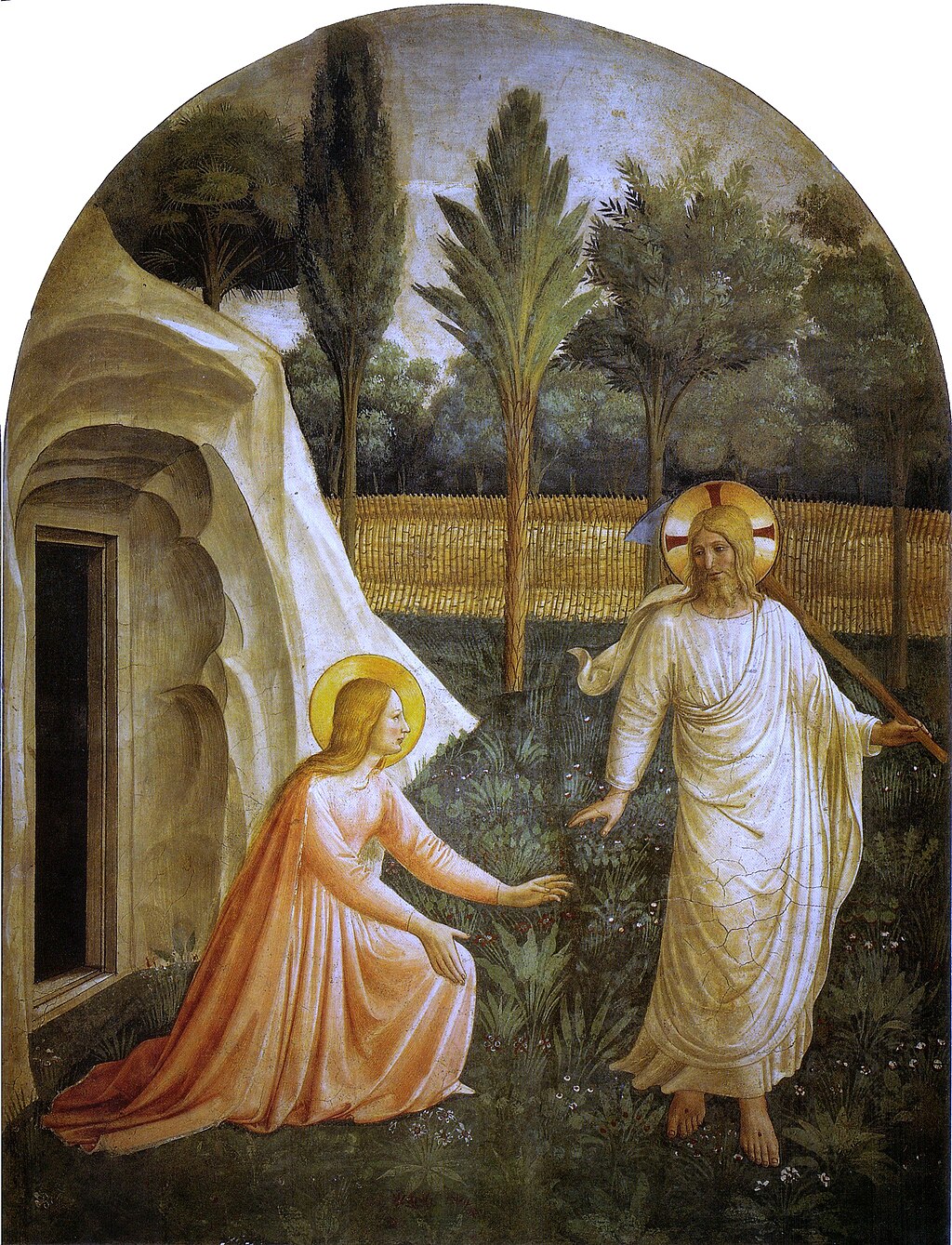
The Lenten longing of Isaiah’s messiah awaited for centuries of woe and wrath is fulfilled between a darkened Friday afternoon and the rolling stone of the week’s first day. What a wonder to see something new under the Sun’s Day, a New Adam, a restored Eve, untouched in a garden, “noli me tangere” (Jn. 20:17). What a wonder that at least in Luke 23:43, the translators do not ruin the scandal of the Cross.
Broadly speaking, the scandal is that the God of Life allowed Himself to die to save us, His creatures. More acutely here, the scandal is that Christ’s words are true in the very telling. Paradise is a para-dise, or to be alongside God. The path from the Greek “παράδεισος” to the Latin “Para Deum” heads east to the Persian “pairidaeza” meaning “walled park” or “enclosed garden” reserved for nobility. Such nobles have this exclusive land on account of their wealth. In Latin the adjective for wealthy or fertile, “dives, divitis” was later shortened to “dis, ditis,” and became caught up in the confusion over whether Pluto is rich, perhaps from the wealth of the dead, or rather whether there exists yet of another pagan god of the underworld, Dis, which is also the name of the infernal city in Dante’s Divine Comedy encompassing the sixth through ninth rings.

In any case, the association of the Greek “παράδεισος” with heaven seems fundamentally connected to the wealth and abundance which only God, in this case, the true God become true man can provide. Heaven is specifically paradise because it is where God and not merely His wealth abides, affirmed by the frequent use of the Greek verb “μένω”in Jesus’s Last Supper discourse recounted in John 15.

“Para,” it should also be mentioned, signifies being “alongside” something such as with a parabola, that is, being alongside the motion of ballistic flight and a paragraph being the ¶ symbol alongside a block of manuscript text which alerted the typesetter of bygone years to make an indent. “Para” as a word coming to us from both Greek and Latin may be related to the Latin root “par” meaning “equal” or “even,” hence people alongside each other or abreast are considered equals.
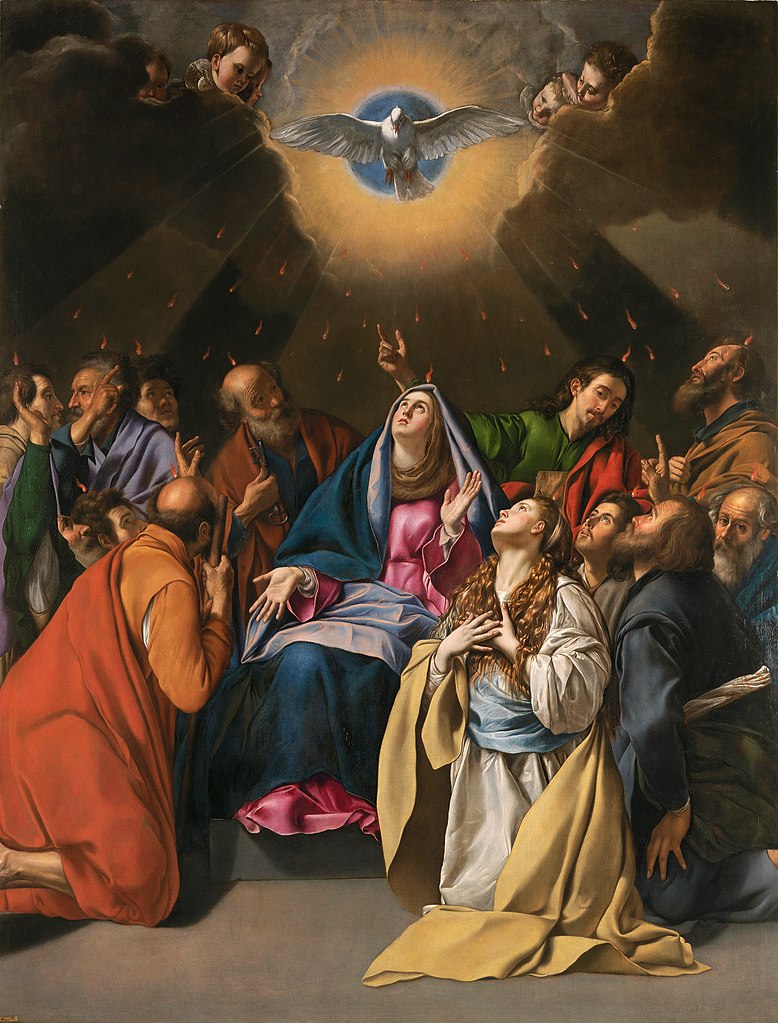
Such was the case on that small hill outside Jerusalem and fittingly so. To enter into Christ, to become a Christian is to endure the death of the Cross, not alone, but alongside Him who suffered for us, before us. To become a Christian is to harrow hell or at least those enslaved to hell on earth, to make fertile infernum, a harvest of those hopeful souls packed down, otherwise lost, perditi (See Season 2, Episode 10 “Perdition”), save for the grace of God. To become a Christian is to believe that death can no longer obliterate the bonds of family and fellowship. My intercessory prayer that God’s Will be done for those sick and dying in my life does not efficaciously end at the mere circumstance of their death. My love, my desire for their good, their highest good, refined, purged of all hinderances, rightly persists after death. Indeed, it is death which will be forgotten, that is, obliterated, and lost by perdition on the Last Day. To become a Christian means never having to leave His side, to remain, in this sense, through all the hardship and toil of a life yet to be lived in paradise. We pray for the courage to so abide.

Support BetterPears Through
BetterPears Leaves
Click Here to learn more
Be the first to know when the next episode of The BetterPears Podcast arrives!
Subscribe to The BetterPears Podcast


 BetterPears