







Ask the rara avis of our modern epoch, the well-catechized Catholic, concerning the meaning of that identifier and Third Mark of the Church, Catholic, and you are likely to hear how the Catholic Church is universal. This is generally understood in spatial or geographic terms complementing the temporal claims of the Fourth Mark, apostolic. Perhaps the more subtle of respondents will note that while historically the Church began in Jerusalem on Pentecost and, therefore, was not accessible to those, who would believe upon hearing the Gospel, until the feet of those carrying the εὐαγγέλιον reached them, yet in principle and potency the Catholic Church remained open and eager to welcome them into God’s grace.

There is, however, that other and more fundamental meaning of Catholic or καθολικός befitting its canonization in the Creed of Nicaea. The word “creed” is derived from the Latin “credo,” the “I believe” at the beginning of such a profession of faith. The Greek term for such a profession is “σύμβολον,” which we recognize as “symbol” as in the Symbol of Faith in English. To the ancient Greek practice and imagination of the 4th Century A.D., the σύμβολον was a token such as a coin, or ceramic object that had been broken in two and distributed to members of the underground Church. By producing and pairing or throwing “βάλλω,” together “σύν” or here “σύμ-” these pieces held by strangers to a particular community could prove their authenticity of belief as the many irregular fractures and curves of the broken edge met their complements. This is not unlike the pairing of public and private keys on the Bitcoin Ledger which are needed to access and direct encrypted wallets.

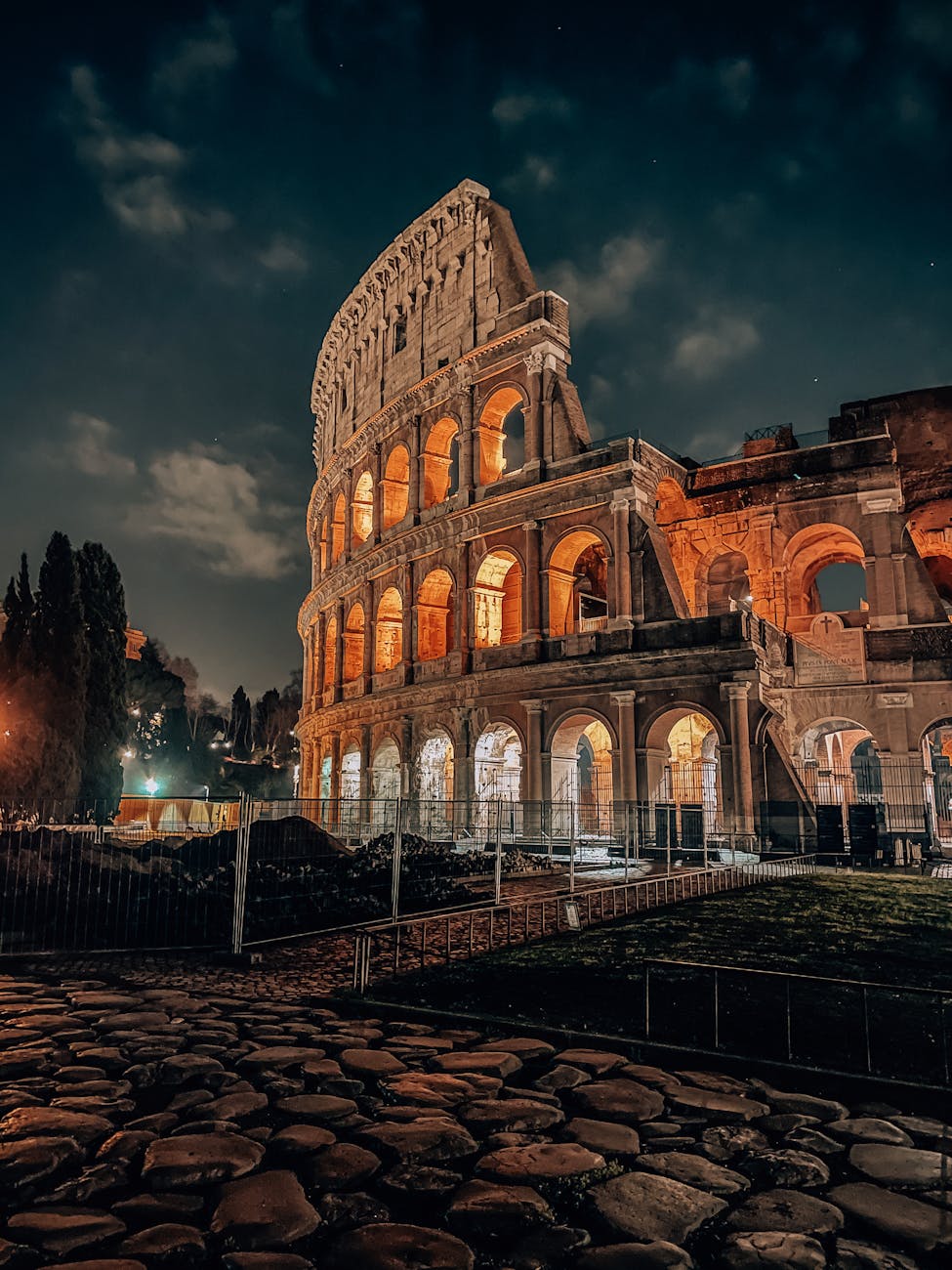
The Catholic σύμβολον or Creed was a list and profession of the core beliefs that all Christians held καθολικός or “according to” from the Greek “κατά” or here “καθ-” and “the whole or entirety” from the Greek “ὅλος.” On this account of core Christian belief complete fidelity was and is required. The modern 80/20 rule of business or even Meatloaf’s “Two Out of Three Ain’t Bad” would not suffice for the Church of the catacombs and Colosseum. In horror, then, did the Church arise from the catacombs after the Edict of Milan in the year 313, and realize that there were Arians in their midst and a confrontation with the Trinitarian Heresies upon them.
Heresy strikes the ear as a charged word despite functioning as an arbitrary phonetic construct for most. Culturally it bears with it a pejorative connotation, something accusatory to make the hair on your arms stick up, and yet sticking in the other sense is more on the mark and yet off this Third Mark. “Heresy” is derived from the Greek “αἱρέω” meaning “to take, seize, or grasp” and the nuanced Latin “haereo” meaning “to stick, cling, or attach oneself to.” Heresies from a doctrinal or credal perspective are adherences to certain doctrines to the exclusion of others. Arius clung to the Unity of God to the point of denying the full Divinity of Jesus Christ. Later the Docetists would stick to the Divinity of Christ to the point of denying His Passion and full humanity, teaching that He only appeared to eat, walk among us, suffer, and die. The Montanists would focus entirely on a singular baptism for the forgiveness of sins and ignore the reconciliation of Peter to Christ after the former’s denials, his dramatic, if not formal, apostasy, (cf. John 21:15–19) and the authority to forgive sins bestowed upon the Apostles in the Upper Room (cf. John 20:19–23).

Christian heresy cannot exist in isolation. It can only exist as a part to a greater whole. The doctrines and sacraments form a festal feast for Catholics arising from a fixed menu of courses, distinctly above particular devotions, in which all offered is tasted and received. The tenets of such a faith are not an al a carte buffet of disjointed dishes connected more by the fear of dining alone than as the curated nourishment which has been preordained and revealed to us in and through Jesus Christ. Furthermore, those not purporting to be Christian cannot be Christian heretics. To present no symbol of the Christian faith is distinct from presenting one incomplete or erroneous. To believe in the entirety of the Catholic faith and to hold as mandatory additional beliefs is to transgress the authority of the Church, becoming one’s own magisterium or teaching authority either individually or in conspiratorial communion.

What then is the earnest Catholic Christian to do when orthodoxy is pain, that is, a cross and everyone telling us otherwise is trying to sell us something? We ardently desire the peace that only Jesus Christ can give, yet He informs His disciples in Mt 10:34 that he came to sow or literally throw, here “βάλλω,” not peace but a sword. The unity of the Symbol of Faith is achieved through the division apart from what persists contrary to its fullness. The arbiter of this division, however, is The Way, The Truth, and The Life, not a collection of doctrines but a Person who founded and sustains His people as their priest, prophet, and king. Further, He has initiated all the baptized into these offices or munera (See, Season 1, Episode 6, “Community”), and to a distinct degree those men anointed into His ministerial priesthood, beyond the fruit of theological pundits and their punditries. In the oft overlooked 1 Corinthians 4, St. Paul remarks how the Church of Corinth has many podcasters, or rather guides, but that they have few spiritual fathers, for which he, Paul, is sending them Timothy at significant personal sacrifice. Ours is the age of clinging to spiritual fathers, a new Patristic Age late born. Such pastors of the Good Pastor give pasture through the Pasch. Ours is the age of prudence in probity, of cruciform trust entrussed to proven men, of grave burdens and enlightened yokes, that become a certain surprising, jocund levity.

Support BetterPears Through
BetterPears Leaves
Click Here to learn more
Be the first to know when the next episode of The BetterPears Podcast arrives!
Subscribe to The BetterPears Podcast


 BetterPears