





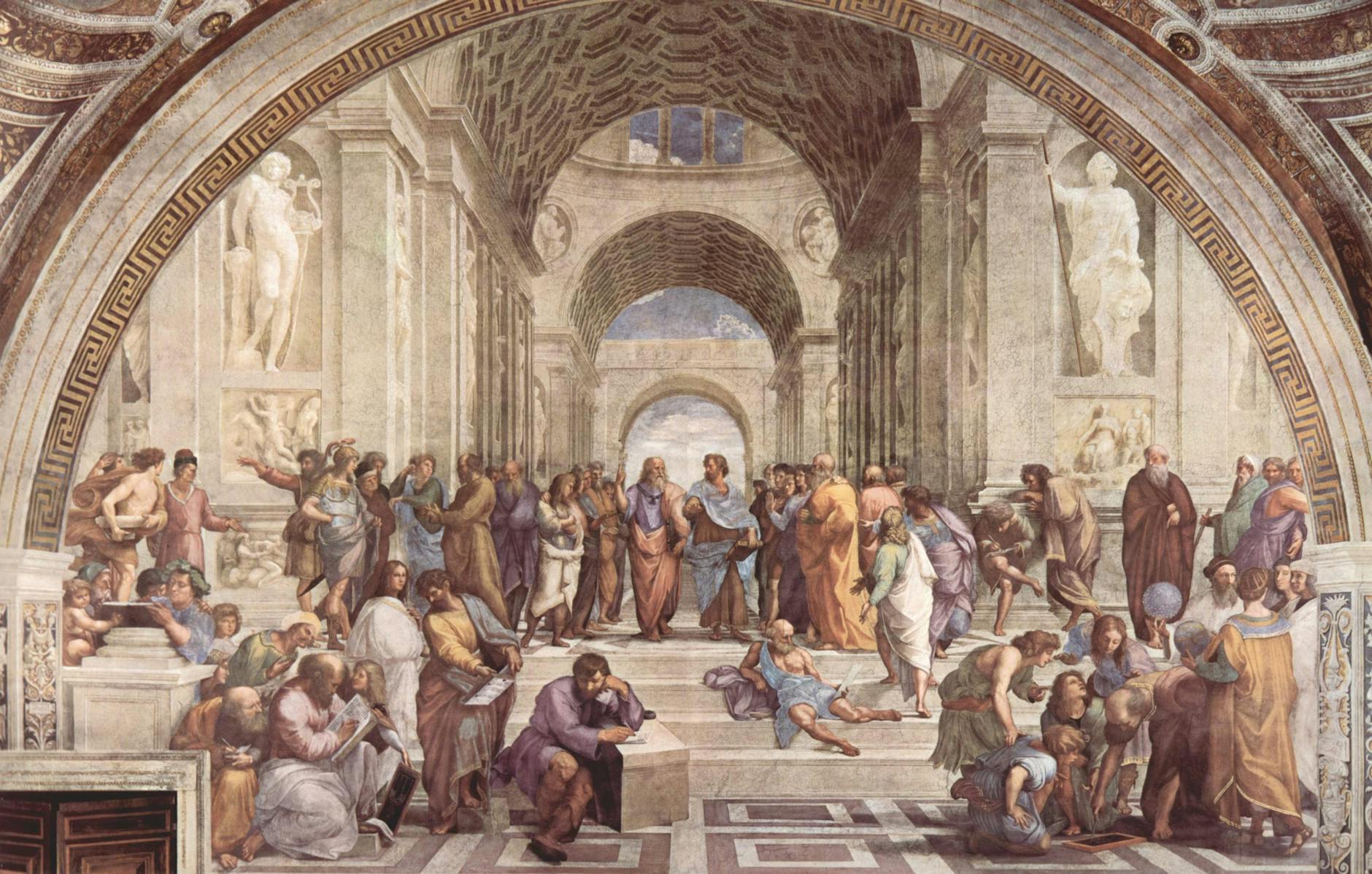
The confrontation of complex topics offers solace in an enfolding mental labyrinth. We, along with the devil, often hide our vulnerabilities in the details. Casting off complexity, at least for a time, we now proceed to address what are known as the four causes in three episodes. The two intrinsic causes, matter and form, will be treated last. The final cause as both end and origin will be addressed presently. In the interim, characteristic of its essence will be agency or efficient causality. The task at hand is not to give the most practically proficient definition of these limit resisting causes but to plumb their foundations, altering and, we hope, ameliorating the source code of your grasp of reality as effect follows cause.
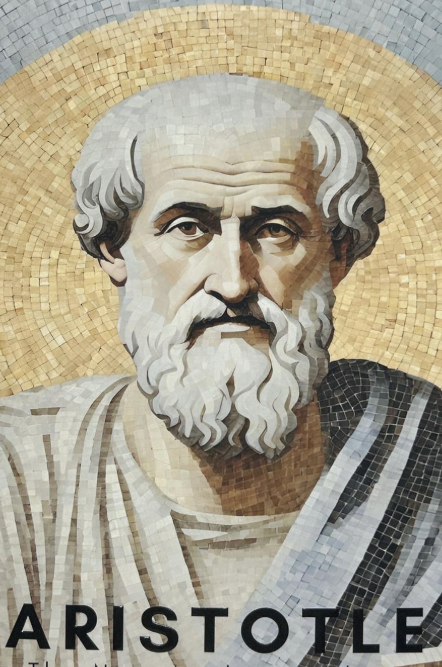
We begin then with final causality and Aristotle’s scandalous assertion at the onset of his Metaphysics:
ἀρχικωτάτη δὲ τῶν ἐπιστημῶν, καὶ μᾶλλον ἀρχικὴ τῆς ὑπηρετούσης, ἡ γνωρίζουσα τίνος ἕνεκέν ἐστι πρακτέον ἕκαστον: τοῦτο δ᾽ ἐστὶ τἀγαθὸν ἑκάστου, ὅλως δὲ τὸ ἄριστον ἐν τῇ φύσει πάσῃ. ἐξ ἁπάντων οὖν τῶν εἰρημένων ἐπὶ τὴν αὐτὴν ἐπιστήμην πίπτει τὸ ζητούμενον ὄνομα: δεῖ γὰρ ταύτην τῶν πρώτων ἀρχῶν καὶ αἰτιῶν εἶναι θεωρητικήν: καὶ γὰρ τἀγαθὸν καὶ τὸ οὗ ἕνεκα ἓν τῶν αἰτίων ἐστίν. (Aristotle, Metaphysics, I, 982b.4–10)
Which for the anglophonic audience, may be translated as:
And that science is supreme, and superior to the subsidiary, which knows for what end each action is to be done; i.e. the Good in each particular case, and in general the highest Good in the whole of nature. Thus, as a result of all the above considerations the term which we are investigating falls under the same science, which must speculate about first principles and causes; for the Good, i.e. the end, is one of the causes.
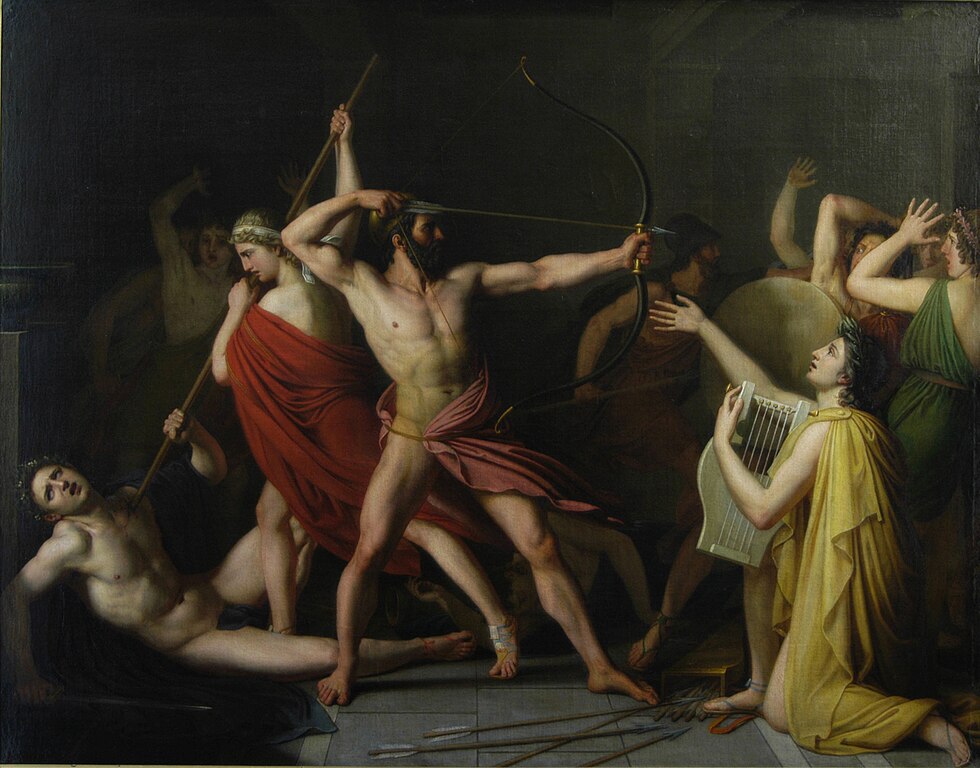
The “highest good in the whole of nature” is that to which all action, including existence, moves as a cause. We are positively immersed in a world of teleology, of beings moving toward their τέλος (Greek), finis (Latin), or purposed end. Some beings such as an archer intend the locomotion of their limbs toward the ballistic flight of an arrow to a target. Other beings such as the arrow or target are moved by the intention of the archer external to themselves. The Latin “telum” meaning, “missile,” for example a javelin or arrow, is perhaps etymologically related to the Greek “τέλος” for this reason. The Greek adverb and prefix “τῆλε” signfying “far off distance” is more familiar to us and common in such things as the telegraph, telephone, or the polytropic archer’s son Telemachus. Final causality and teleology as an application of λόγοςto intended ends (τέλη) is a causal long game, be it a twenty-year Odyssey or the entire expanse of creation. Aristotle’s bold claim is that everything, all beings, are ordered to ends intended either intrinsic or extrinsic to themselves. In either case, these ends are ultimately and fundamentally ordered to the highest good.

Still, missiles often miss their mark; the first casualty of every battle is the plan. The τέλος of every sea turtle clawing across the perilous beach to the safety of the waves is not its ἔσχᾰτον or terminus. What we intend is not always where we end up. We overshoot; we fall short—fault or sin as excess or defect.

Whatever consolation might be assumed by the prevenient systematic chaos of Billy Joel’s We Didn’t Start the Fire is extinguished by this cosmological claim of ordered ends. Nothing happens without cause, even if that cause illudes the intelligibility of an action’s recipient as a certain victim or even supposed neutral observers. Final causality is acutely focused on an end and yet it comes to be as a cause prior to all other causes in the absolute sense of primacy save, perhaps, efficient causality. The scandal of Aristotle’s claim is that a system of so teleologically ordered beings could not bring itself into existence but requires a cause that is not itself some prior effect. His conclusion is to posit an uncaused cause, a god of his natural theology from which the material world emanates unintentionally, not unlike cosmic dandruff, which somehow retains the teleological governance of The One, which cannot be defiled by our faults and finitudes.

Final causality, teleology, is fundamentally a question of origin. Why something and not nothing? Why anything at all? A helpful insight on the matter is found in a lesser read paragraph of the second universal Catechism of the Catholic Church, the first paragraph of the work. For those uninitiated in the Catholic Catechism, in addition to cataloguing by paragraph number, how your former friends and estranged relatives are failing at life, the summary doctrinal work is a well-structured manual for understanding both God and our relation to Him. The first paragraph begins:
God, infinitely perfect and blessed in himself, in a plan of sheer goodness freely created man to make him share in his own blessed life. For this reason, at every time and in every place, God draws close to man. He calls man to seek him, to know him, to love him with all his strength (CCC, §1.)
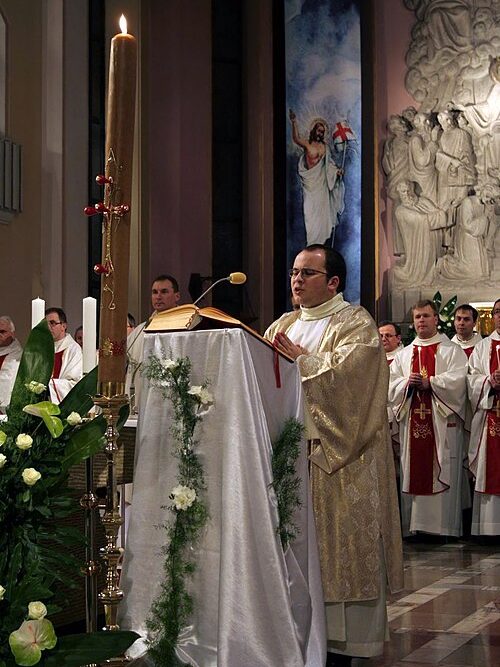
The “felix culpa” of “happy fault” of the Exsultet chanted at the Easter Vigil affirms that the salvific work of Christ is not a mere contingency plan of a divine Victor Frankenstein engaged to address an unforeseen Promethean monstrosity. The case is rather that this divine plan of creation, this “plan of sheer goodness,” exists in the unity of the Divine Act, the very existence of the Triune God, while nevertheless remaining eternally a free, intended act of creation, yes, a plan of sheer goodness in the final and primordial analysis.
The metaphysical implications of intentional creation are often overlooked. Our desire to know causes, from the newly verbal child asking incessantly, “Why?”, to the forensic “cui bono?” and the algebraic fixation on the variable value of “x,” these pursuits are desires rooted in knowing the fullness of this “plan of sheer goodness,” insofar as it approximates knowing the Mind of God.

How curious then is the doctrine of the general judgment. As Westerners predisposed perhaps for the past few centuries to be individualistic opposed to communitarian in our perspectives, personal, particular judgment seems sufficient for assigning the smoking and non-smoking sections of the life to come. The general judgment is not merely a postmortem to handout special awards and build up team morale. The revelation of God’s plan of sheer goodness, the created system of teleological causes and effects drawn-out over all creation, all space and prior time, will be an increase in the participation of the elect in the Divine Life, a particular grace, and an affirmation of the judgment upon the damned. The dissimilarity of “τέλος” and “ἔσχᾰτον,” or “terminus,” of where we intend to go and where we end up, is ultimately a matter of perspective, the inconformity of human knowing to divine wisdom, ever driven to converging effect in this life and the next, ut unum sint.

Support BetterPears Through
BetterPears Leaves
Click Here to learn more
2 responses to “Τέλος Terminus (Season 4, Episode 1)”
-

[…] agency and instrumentation fall within this grand teleological design and Incarnational rescue mission. We are called to further participate in the repentant renewal of […]
LikeLike
-
[…] of the few, such allure falls short of drawing its beneficiaries toward the maximalization of their final end, the full flourishing of their human nature. The cracks in this faulty foundation are now revealed. […]
LikeLike
Be the first to know when the next episode of The BetterPears Podcast arrives!
Subscribe to The BetterPears Podcast


2 thoughts on “Τέλος Terminus (Season 4, Episode 1)”