






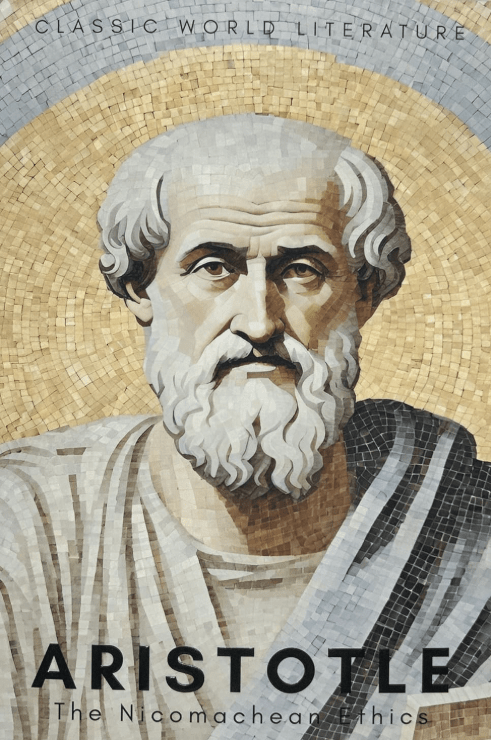
Aristotle addresses the topic of friendship in the eighth book of his Nicomachean Ethics. The most salient paradigm therein presented is the trichotomy of utility, pleasure, and, for lack of a better term, true friendships. This distinction delineates those in our lives who offer simple utility or usefulness toward some further end, those who offer simply some delight or pleasure either by their presence or activity, and this third type of friend which is rooted in a mutual pursuit of the true and subsequently the good and the beautiful. Utility and pleasure are simple in that their purposes with respect to friendship are fundamentally and respectively use from the Latin deponent verb “utor, uti, usus sum,” and enjoyment from the equally deponent “fruor, frui, fructus sum.”

The matter becomes complicated, however, in two aspects. First, the use derived from the friend of utility is external to the friend and, indeed, the friendship, as utility among creatures always points to an end or purpose beyond itself. Similarly, the friend of pleasure provides or otherwise is a condition for an experience to be enjoyed which remains, as an emotion or feeling, distinct from the friend who elicits this response. There becomes at times even a utility in having the friend of pleasure as a mood regulator, a personal court jester, to dissociate all disorientation of a life lived on and to its own terms.

The second complication arises with the end or purpose of the third type of friend, the true friend, rooted in this mutual pursuit of the transcendentals. Are such friends, few in number, distinct from the prior two types or simply a consistent amalgamation of utility and pleasure? Is there any human relation beyond use and enjoyment?

St. Augustine of Hippo, the patron saint of BetterPears, addresses the matter of use and enjoyment in his work, De Doctrina Christiana, sometimes translated as On Christian Teaching. In the work, he argues that what is enjoyed must be enjoyed for its own sake and thus only the ultimate final end, God, is to be properly enjoyed. Everything else is to be used for the attaining of this final end. Improper use or abuse, then, would be the disordered use or improper enjoyment of something or someone in relation to the final end, and therefore is to be avoided.

The topic was taken up in our epoch by St. John Paul II in a work written prior to his papal reign titled Love and Responsibility. Keenly aware of the abuses consequent to the rise of national socialism, communism, and capitalism in the mid-20th Century, then Karol Wojtyla wrote that people and specifically marital lovers should conform to the “personalistic norm,” which admits of a negative aspect, “that the person is the kind of good which does not admit of use and cannot be treated as an object of use and as such the means to an end.” There is also a positive aspect, namely, that “the person is a good towards which the only proper and adequate attitude is love” (Love and Responsibility, 41). The dissonance between St. Augustine and St. John Paul II on the matter of uti and frui in human relations is grounded in St. John Paul II’s interpretation of St. Augustine’s treatment of these two terms. St. John Paul II writes,
St. Augustine differentiated in this way between two attitudes. One of them is intent on pleasure for its own sake, with no concern for the object of pleasure, and this is what he calls uti. The other finds joy in a totally committed relationship with the object precisely because this is what the nature of the object demands, and this he called frui. The commandment to love shows the way to enjoyment in this sense—frui—in the association of persons of different sex both within and outside of marriage (Love and Responsibility, 44)

It remains unclear as to how St. John Paul II misinterprets St. Augustine in De Doctrina Christiana or whether he is drawing from somewhere else in the Doctor of Grace’s writings. The careful reader or listener might, nevertheless, detect the influence of the deontological ethics of Immanuel Kant in St. John Paul II’s teaching on the personalistic norm, particularly the 2nd formulation of Kant’s categorical imperative: “Act in such a way that you treat humanity, whether in your own person or in the person of any other, never merely as a means to an end, but always at the same time as an end” (Groundwork for a Metaphysics of Morals, 30). Although the future pope was well aware of Kant’s ethical project and its failings, there is something in the language and orientation of Kant that finds resonance in St. John Paul II’s philosophical personalism. Kant himself was directly responding to the unsavory ethical conclusions of the utilitarian philosophies of Jeremy Bentham and John Stuart Mill.
Whereas the utilitarians failed to grasp utility beyond the sweet hedonic, calculated or otherwise, the deontological ethicists such as Kant failed to ground their duty ethics in the Deus of ontology and in so doing deified man, however universalized, by making man an end in himself. In other words, both modern ethical systems fail to improve the clarity and realism of St. Augustine’s teaching on uti and frui, use and enjoyment, relegating enjoyment only to God as final end.
This teaching did, however, find root in the First Principle and Foundation of the Spiritual Exercises of St. Ignatius of Loyola and yet stands as a North Star for the renewal of the Society of Jesus. St. Ignatius writes:
God created human beings to praise, reverence, and serve God, and by doing this, to save their souls. God created all other things on the face of the earth to help fulfill this purpose. From this it follows that we are to use the things of this world only to the extent that they help us to this end, and we ought to rid ourselves of the things of this world to the extent that they get in the way of this end. For this it is necessary to make ourselves indifferent to all created things as much as we are able, so that we do not necessarily want health rather than sickness, riches rather than poverty, honor rather than dishonor, a long rather than a short life, and so in all the rest, so that we ultimately desire and choose only what is most conducive for us to the end for which God created us.

These words are as liberating to the Jesuit novice as to the patriarch, politician, and παρθένος. We are not bidden to take everything with us as our goal is heaven. Still, we do draw upon everything and everyone with us in the process of seeking heaven. We are tasked in a manner similar to “shooting the moon” in the card game of Hearts, and so by enduring all things with indifference seek to gain everything at its completion, embracing the great spiritual paradoxes to which St. Iñigo remained ever docile. In this life we are called to take unto ourselves and make use of all things necessary: the Queen of Spades, black in sorrow, who buried her only Son in the earth; the Son who examines every corner of our restless heart, exposing every wound and corruption to His healing physic.

If we succeed in this grand undertaking, subsuming and using, when necessary, our fellow creatures, the whole of the created order, part by part, resurrects and rises bodily through us—the animals, plants, fungi, and inanimate things of this world doomed to dust arise through our dust renewed. God draws all things and specifically all material things through us to Himself—ut unum sint. God uses us but does not exploit or abuse us. Our use requires our consent and brings about our flourishing to fruition. God enjoys us, not as ends in ourselves, for He alone is the final end and first beginning. He enjoys us insofar as we participate in Him, seize, as it is, a part of His existence, partake in His Divine Life.
Cleansed in this light, our enjoyment and delight in our fellow pilgrims be they spouses, spawn, or special guests must needs remain viewed in this participatory gaze—the love of others for the love of God, His love inspired in and inspiring me and my love for Him present in them. In this way, the disorder of the three goods of the fruit from the forbidden tree in Genesis 3 is reordered and renewed as rightly pleasing, good, and useful.

BetterPears Market Mug Giveaway
Click Here to learn more
Be the first to know when the next episode of The BetterPears Podcast arrives!
Subscribe to The BetterPears Podcast


 BetterPears