
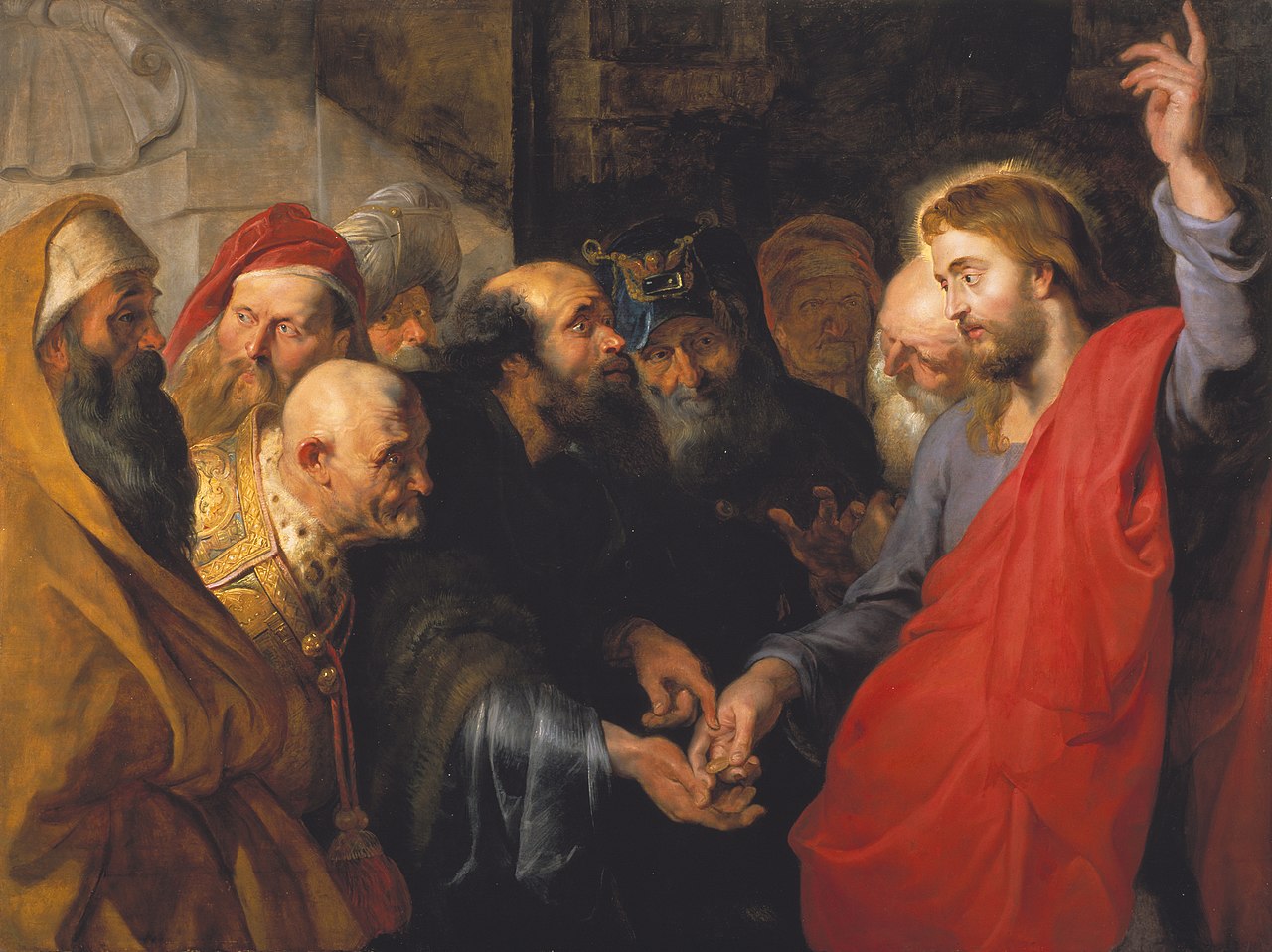






There are two ubiquitous similes which wind their way into the theological discourse of the early Church Fathers. The first is that the hypostatic union of the two natures of Christ is like a red-hot knife which cuts the wood with respect to its sharpness and burns the wood with respect to its hotness. While it remains doubtful that this practice of heating knives to cut wood was more common than the apparently modern practice of heating knives to cut butter, the image remained fixed in the minds of these doctrinal luminaries of the Patristic era.

The second simile related to the acquisition of Greek philosophy into the early theological discourse of the Church. Such rational wisdom so wedded to revealed wisdom was considered like Egyptian gold despoiled from their captors by the Israelites during the Exodus. Some of this gold fashioned, perhaps originally, to honor pagan gods would eventually be melted and reformed into the Ark of the Covenant. In this way, the intellectual distinctions of the Greeks, who once persecuted God’s chosen people, could be refashioned providentially for the good of His Church. This refashioning or reforming, the removal of excess reminds us that not all the Egyptian gold that left in the haste of the Exodus went to a holy purpose. Some of that gold, in Latin “aurum,” was formed under the direction of Aaron upon Moses’s absence into the golden calf.
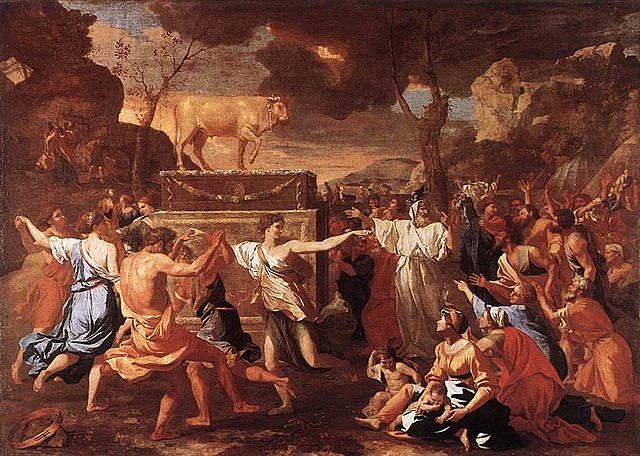
In addition to this idolatrous episode recounted in Exodus 32, providing commentary on the meaning of the 5th Commandment, at least relative to the 1st, this scene of lasting consequence provides the close reader with the problem of gold’s permanence. Gold is literally appreciated; its “pretium” or price is established on account of its scarcity. Here is a case, however, in which a large quantity of gold, an idol’s worth in weight, needed to be separated from those survivors who might be tempted to perform the same sacrilege yet again. In the open desert you cannot bury the gold with sufficient secrecy nor assurance that it will not be readily exhumed. Gold cannot be alloyed with other metals without the possibility of being yet again refined. Gold will not rust. It is the closest we get to permanence in this life as it was formed long ago through the heat of an exploding star. While frankincense and myrrh correspond to the prophetic and priestly offices of the once swaddled Christ, it is inorganic, timeless gold that corresponds to his royal governance which precedes all thrones and dominions both human and angelic.
Returning to the Exodus, the great prophet and judge of Israel, Moses, had the golden calf ground into a powdered dust and ingested by the penitent idolators (Ex. 32:20). While the gold would pass through them without decomposition, it would inevitably require reclamation from the camp latrine—effectively ending this episode of idol worship, for who could offer fealty to a fecal lord?

Perhaps we can view gold’s permanence relative to its elemental status, number 79 on the periodic table of elements. While malleable and conductive, the shiny, yellow metal resists corrosive reactions and maintains its consistent qualities of conduction and durability across its industrial and mercantile applications. One unique quality of gold is the frequency at which the metal resonates when struck. Although distinct from the resonating frequency of silver, both precious, monetary metals exhibit this quality over the base metals in our present coinage. Big Lexi, the lexicography cartel, will attempt to convince you that the expression “sound money” developed simply in contrast with fiat currencies which are liable to the inflationary effects of central banks. While monetary metals, gold and silver, are scarce and their supply increases only through the mining process, this sonic quality of gold and silver remains, like so much jewelry, captivating the ear. The purveyors of financial products will say that this ring test is too simple despite its resistance to deception to be the arbiter between real money and mere currency credits. Big Lexi will never tolerate the connection between “aurum” and “aures,” the connection between “gold” and “ears” that extends beyond mere earrings.

As a textual and therefore visual society, the import of ears in the process of receiving knowledge, wisdom, or truth otherwise manifested has declined. Jesus through the Parable of the Sower (Mt 13:1-23) commands “he who has ears, let him hear” (Mt 13:9), a certain anglophonic pun given that 100, 60, or 30-fold harvests of grain or corn do, indeed, sprout forth in ears. Furthermore, St. James commands us “be doers of the word, and not hearers only” (James 1:22), such was the gospel first on the lips of the apostles and in the ears of converts before filling the scripted page. Ears hear the ring of truth, detect sarcasm, uncover inauthenticity which remains obscured in texts, transcriptions, and even emojis. Littera scripta manet, the written word remains, and yet the ring of truth be it revealing the purity of gold or the exhalations of the heavenly host lingers still, not so in the resonating air but in the mind, the heart, the ever-enduring soul so clearly and cochlearly moved.

Just as precious gold can be debased through alloying with base metals, so too can the gospel be debased, adulterated from the scripture and tradition handed down from Jesus Christ and His Apostles. In such a case, in such a time, the Magisterium and the sensus fidei must return to the voice of the Good Shepherd, must purify at the pyre as through fyre that which hinders His call and our answering.
We must combat Gresham’s Law which states that when debased or inflated money appears, good money goes into hiding. The truths we have heard have been hiding too long from the naked public square, and it will take the free and open exchange of such intellectual and spiritual treasures to restore and readorn those who, for a time, have forgotten who and whose they are.

Financial Education Links
- Mike Maloney, Hidden Secrets of Money (10 Part Video Series): Link
- Robert Kiyosaki, Rich Dad Poor Dad: What the Rich Teach Their Kids About Money That the Poor and Middle Class Do Not!: Link
- Lynette Zang, 5-Minute Shareable Videos: Link
BetterPears Market Mug Giveaway
Click Here to learn more
Be the first to know when the next episode of The BetterPears Podcast arrives!
Subscribe to The BetterPears Podcast


 BetterPears