
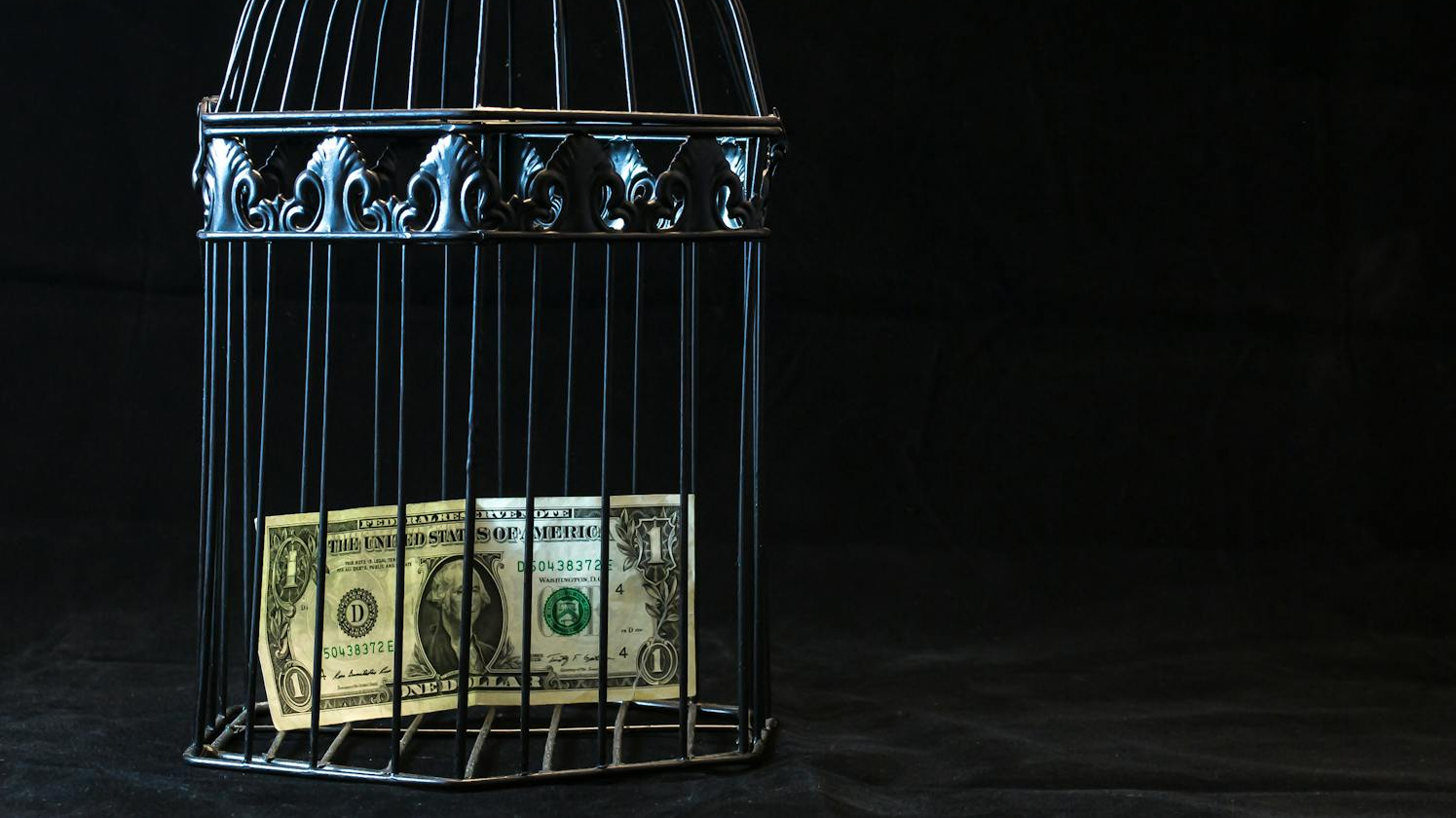






The historical context of monetary and currency life cycles from ancient times onward can easily bewilder the casual reader of classical texts. As a result, modern translators sometimes advert to an account of wealth in terms of so many “day’s wages.” This expression invites the reader into a fiction in which the worth of a day’s labor was both in some sense universalized and that monetary debasement and currency inflation did not occur in the course of history. If one reflects on the matter, the distinction between skilled and unskilled labor and the many favorable and unfavorable aspects of tasks within those two subsets would account for variance in a day’s payment for labor limited only by the ability to subdivide the monetary unit—be it a drachma, denarius, or shekel—and the ability to compel labor against a free market of trade, that is, the presence of slavery or otherwise compulsory service. Insofar as compulsion neither acute nor chronic was the motivator for ancient labor, the monetary recompense for labor served to accomplish the digging of ditches as well as the designing of aqueducts. Such recompense could afford the sustenance of daily bread, the salt of salary with which to eat such quotidian fare, and the domicile under which to eat, rest, and recreate.

The modern “dollar” finds its etymological roots, according to Big Lexi, the lexicography cartel, in a German town named after St. Joachim, that is, Joachimthal. The silver coin there mined and minted became known as the “thaler” or “taler” The suffix “-thal” signifies the vale or valley in which the town was set, perhaps as a mere circumstance of history, and yet the later pronunciation in Romance languages shifting the “t” to “d” and the “a” to “o” resonates in meaning both with “dole” and its rooted meaning in the Latin “dolor.”

Before the analytic path through “dole” or “dolor” is taken, perhaps the distinction between money and currency will be of greater assistance to clarity. For such a distinction, one need not look too much further than J.P. Morgan, who in 1912 before a U.S. Congressional sub-committee meeting concluded, “Gold is money, and nothing else.” While much can be said for the addition of silver as a monetary metal and while gold can also function as currency for exchange as it once did in every society including our own late-born constitutional republic, the distinction between monetary metals originating from the formation of the earth itself and currency originating by mere fiat of a treasury or central bank is pivotal in correctly asserting financial freedom both individually and collectively.

If “nothing else” is money, then we are left to consider credit. For every credit, there must be a corresponding debt. The dollar is fundamentally a debt instrument. Its appearance onto the scene included its transferability for a stated weight of gold, a debt of the treasury to be paid upon demand. If you have examined your wallet since 1971 and happened to find a paper bill, you would have seen that it identifies as a Federal Reserve Note and not a U.S. Treasury Note or debt. The currency, whether paper or electronic, which we are tempted to believe, with full faith and confidence, is money, is indeed a debt instrument issued by a private corporation owned by and profiting the largest private banks. It is a corporation holding a federal charter for the privilege of conducting monetary policy affecting every living person on earth.

This is not strictly a financial or monetary education blog and many fine resources already exist on this matter which have been included as links below and in the description. What is pertinent to our present discussion is the linguistic and anthropological connection between the fiat dollar prestidigitated into existence by keystroke as if from a magician’s hat and the effect of the dole public upon our human nature regardless of whether such a handout is given directly by the political regime or masked by the funding of loans, loan forgiveness, or government grants to private companies or charitable organizations.
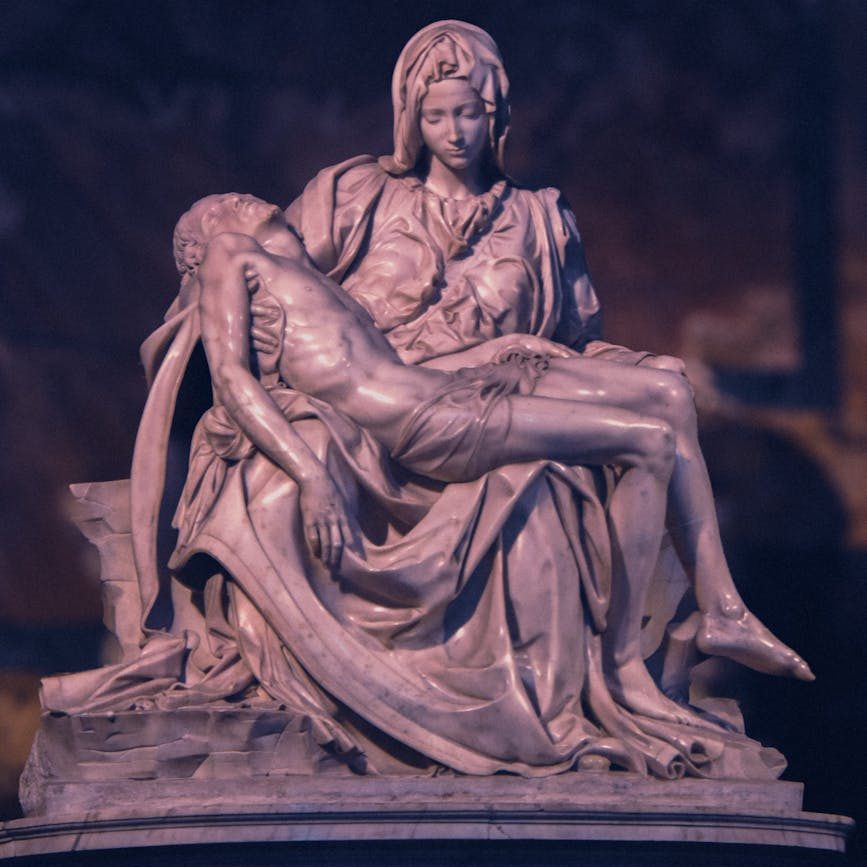
Big Lexi, the lexicography cartel, will never connect the dollar to the dole, for any dole, public or private, was traditionally the result in charity of some sorrow or grief, in Latin a “dolor,” such as the untimely death or dismemberment of a husband or provider. Indeed, the Via Dolorosa, the Via Crucis, ends with Our Lord entrusting the temporal care of His mother to the Beloved Disciple. Such was the necessity to care for widows and orphans throughout most of human history. In pagan societies, this was accomplished through the magnanimity of the wealthy for the commonweal and, some might opine, for the solidification of a certain pride in performing such noted good works. Within Christendom, magnanimity was reordered, granted not perfectly, to the virtue of charity, that is, love of neighbor for the love of God, adhering to both senses of the ambiguity of the expression “love of God.” Charity in this sense loves the neighbor on account of the love one has for God and on account of the love God has for me, His beloved. Such charity infused within a Christian society could entwine both “For he to-day that sheds his blood with me / Shall be my brother,” (Henry V, IV, iii) and the Little Sisters of the Poor. Into this world of community focused on the common good, which is not a material good but an individual good held individually and yet diffusive to many, into this world came the welfare state and the inflationary currency to enable it.

There was something noble and ennobling about a society in the custody of private charity that was lost with the advent of the welfare state. There was an accountability not only in static ledgers but within the dynamics of our human relations. One cannot look into the eyes of the Social Security Administration or public assistance fund to express gratitude and the resolve to use this dole prudently. Instead, all interactions are mechanistic, determined by policy and bureaucratic administration. The human agents of government which have not yet been automated by actual machines are compelled to pay handouts which are not their own. Recipients are given minimal parameters to retain their eligibility for benefits and in some cases incentivized from improving their state by the structure of the dole itself.

More hidden, perhaps, is the frustrated virtue resulting from government contracts under the regime of state funded charitable organizations, so improperly named as if charity could be held collectively. Non-profit organizations can certainly expand their operations and affect more people when funded by government grants and contracts, but the dependence upon government funding and the strings attached to such funding also alleviates the need for private donors and the opportunity for private donors to significantly contribute to charitable works without government influence. A government with inflatable shekels will also bear invincible shackles for those accepting the terms of the welfare state.

Such fiscal incarceration is not limited to non-profit corporations. The government dole in the form of uncollateralized student loans has led to generations of debt slaves, burdened by a debt that will follow them even through bankruptcy. The dole of easy dollars has made a class of debt dοῦλοi, the Greek word for slaves or servants. It seems that the Latin “dolor,” meaning sorrow or grief and the origin of the English “dole” are also related to ancient slavery resulting from bondage as a consequence of capture in battle or an unpaid financial debt. In any case, current public discourse on student loan debt remains fixed on the phenomenon of debtors earning expensive degrees in low paying fields. With recent pandemics and the authoritarian response to it dictated by governments around the world, the indebtedness of even eventually high paying professionals has come into clearer view. These professionals are compelled by their debt to maintain their medical licenses, cave to the extortion of their professional unions, or cling to their status with the barrister’s association by refusing to defend those labeled enemies of the political regime. Others are compelled by their student debt to violate their conscience and professional integrity in order to avoid censorship, legal penalties, and industry blackballing. Under a Sisyphean burden of debt bankrolled by government-backed student loans, how free does the young physician feel to prescribe protocols that violate conscience and basic epidemiological science. One is reminded of the wisdom of Hippocrates, whose once universal oath forbade both the procurement of abortifacients for a woman and the charging of a fee for instructing others in the medical arts. It seemed then as it does now that only a free person can agree to “do no harm” as only such an agent can keep outside forces that would desire otherwise at bay.

Debt, individually and collectively, has been our path into our present bondage. In part this has been a failure to see clearly the meaning of labor, wealth, and money, a failure intentionally devised. In part, this is a more fundamental failure of recognizing our true creditor, God, and putting our trust instead into inflationary storehouses, unlimited bank accounts available now in the palm of our hands but also able to be lost in an instant, a keystroke, a leveraged financial crisis. May you instead strive for and maintain your freedom from excellence, for charity, for service to the one who came “not to be served but to serve, and to give his life as a ransom for many” (Mark 10:45).

Financial Education Links
- Mike Maloney, Hidden Secrets of Money (10 Part Video Series): Link
- Robert Kiyosaki, Rich Dad Poor Dad: What the Rich Teach Their Kids About Money That the Poor and Middle Class Do Not!: Link
- Lynette Zang, 5-Minute Shareable Videos: Link
BetterPears Market Mug Giveaway
Click Here to learn more
Be the first to know when the next episode of The BetterPears Podcast arrives!
Subscribe to The BetterPears Podcast


 BetterPears