
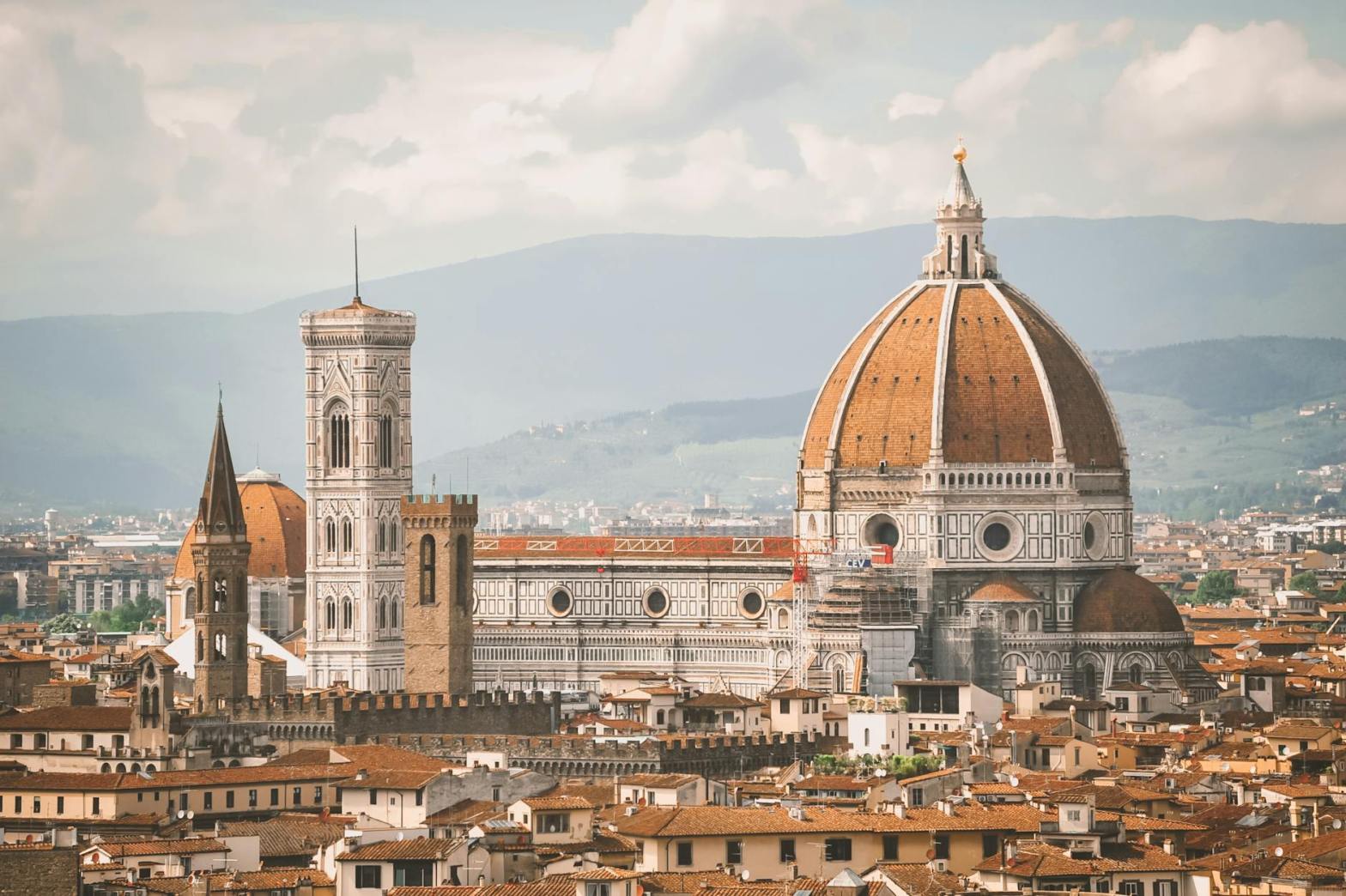






Discourse on architecture traverses the dual poles of form and function. Our present parley, however, is pitched at the word “architecture” itself and what such reflection establishes for our grasp of art, skill, progeny, and projects. The lexicography cartel, Big Lexi, would cull your wonder over architecture by defining it as the art, science, or even technology of building material structures to be inhabited or otherwise occupied. An architect as such a practitioner designs homes, workspaces, and community buildings such as courthouses and churches. “Architecture” is a compound word composed of the Greek “ἀρχή” and the root “-tecture” which resonates both with the Latin “tectum” and the Greek “τέχνη” in a complex verbal stew of meaning which will be address momentarily.

In its Greek origin and linguistic descendants, “ἀρχή” means both first in the order of being or existence and first in the order of governance. An archetype precedes all other types, from the Greek “τύπτω” meaning “to strike.” In the order of being archetype is the form against which all other types are literally struck against as in metallurgy or the mold against which all other types or forms are pressed into their common structure and design. This temporal priority is the primary sense of John 1:1 “In the beginning (ἀρχή) was the Word)” echoing Genesis 1:1. “In the beginning God made the heavens and the earth.” The second sense of ἀρχή cannot be separated entirely from the first, however, in John’s Gospel or elsewhere. Ἀρχή signifies priority in the order of governance as in monarchy and hierarchy, as what is prior in time and existence governs, in some sense, its subsequent effects.

Both these meanings of ἀρχή apply to our experience of architecture. Functional shelter turns the chaos of an approaching storm into a minor inconvenience and a filled cistern. Architecture is the first art because it forms the living space safe from the elements and enemies of man in which mere life strives to become the good life. The roof or “tectum” is the defining aspect here separating exposure to the heavens through this literal protection or covering. Architecture is the governing art because it shapes the wonder of a society. The underside of the roof becomes a ceiling or little low heaven governing hearth and home. Architecture can draw the mind and heart upward as with the gothic cathedral and establish the external and internal space for great cultural achievements.

Is it too far a step to assert that beautiful architecture is such fertile space, just as architecture deficient in beauty leaches life from soma and psyche alike? As embodied human beings our passions and not our powers of intellect and will remain most closely connected to our bodies. We do not feel an emotion without a bodily response. Perhaps architecture as an art, skill, or science is the appropriate analogue to the passions in that architecture must be indwelt and, in this way, consume its beneficiaries at the threshold. The real structure, not the blueprints, are the fruit of architecture just as notations on the staff are not music but merely its sign and structure. Yet unlike music which occupies the air for but a moment, the edifice of man marks the earth and resonates the order of creation through the limits of brick and timber.
Moving from architecture as archi-tectum to archi-τέχνη, it will be beneficial to consider what precisely an art, skill, or science is. Human acts whether voluntary and intentional or involuntary and, perhaps, instinctual, can become, over time through their successive occurrence, habitual. The term habit from the Latin “habere” is used, for one is understood to “have” or “hold” a ready disposition to an act, be it virtuous, vicious, or simply biting fingernails. These habits are worn by us, as with a religious habit, daily. They are the subroutines of our life and come to be known as a second nature. One is not born courageous or wise. One becomes so over time through trial and error followed by intentional reflection to the point that such virtues become our character, the ethos of what we do in a given situation.

The ability to cultivate τέχνη as a skill or habit to the point of virtuosity, of redefining or reframing our nature seems phonetically connected to the less aspirated “τέκνον” – the aorist middle substantive participle form of the Greek verb “τεκεῖν” meaning “child.” The Roman historian Suetonius in his account of 15 March 44 B.C. records the Greek “Καὶ σὺ, τέκνον” from the lips of Julius Caesar to his betrayer Brutus and not the Latinate “et tu, Brute” of Shakespearean fame. “You also, child,” the childless dictator charges his amicus inimicus.

τέκνον or τέχνη? To have a child and to develop a skill are similarly encounters with a divine power beyond our own and yet every skill, like every child, is ours yet not completely possessed. A skill can be recalled into oblivion by an untimely accident, mental incapacity, or simple old age. A child must grow into his or her own regardless of paternal tyranny. While τέχνη, at least, remains with us as a habit, to what end or purpose does it serve? Do we use our τέχνη and by extension technology to protect the human family and provide space for our real achievements such as leisure and worship or does neo-Promethean defiance enter into our efforts to advance technology—a monster τέχνη to replace logos?

Architecture similar to civil engineering must respond to the natural setting or limits of the world, for example the sun, weather, bedrock, weight of materials, and their structural properties. Digital technology must retain some limitations fitted to human nature if it is to remain an anthropological benefit, that is, suited to our redemption (See Anthropos, Season 1, Episode 4). The binding image for our intellectual and spiritual edification uniting “tectum”—“roof”, “τέχνη”—“skill”, and “τέκνον”— “child” is the vision of the New Jerusalem in which the very foundation and gates of the heavenly city are identified with the tribes of Israel and the Apostles of the Lord (See Rev 21:12–14).

BetterPears Market Mug Giveaway
Click Here to learn more

Be the first to know when the next episode of The BetterPears Podcast arrives!
Subscribe to The BetterPears Podcast


 BetterPears