







One of the great paucities of our current epoch is the fallen prominence of gravies in our lived culinary experience. The economic and sociological push to dine out of the home prior to the global pandemic left generations of young people scrambling to cook and bake for themselves just a few years ago. Either for its perceived use of excess energy or protracted preparation time, the culinary art of roasting meats was largely overlooked in this otherwise concocted cuisine renaissance. Roasts produce juicy broths which are thickened through the addition of flour or starch to become gravy. The production of gravy occurs while the roast is “resting” out of the oven prior to being carved. Served with a vegetable and starch, the roast competes the meal while the gravy and the added labor to prepare it now seem superfluous. We settle for broth.

Again, gravy is heavy broth, and so named likely on account of this weightiness and downward direction as the adjective “grave” denotes and the noun “grave” exemplifies. Graveness in the sense of gravitas bears, in addition, the same sense that thickness opposed to leanness in animals and humans signifies maturity and ascendency to one’s prime development. To be thin and lean is a sign of the precocious and precarious. The mature statesman or leader is said to carry a corresponding gravitas, which implies intentionality and presumably reflective intentionality hard won through previous errors and course corrections. Gravitas is exemplified by consistency in action yet a responsiveness to changing conditions which is the mark of prudence.

A grand Latinized word like “gravitas” is successful in conveying a sense of meaning while not betraying the stultifying mystique concerning gravity itself. We do not know why gravity as a phenomenon occurs. In school we are taught the scientific method which begins with observation and then proceeds through the development of hypotheses and their testing to either confirm or negate the proposed rationale for the originally observed phenomenon. While Newton, Galileo, and Einstein among many others contributed to the development of modern gravitational theory, it still only accurately predicts and explains the phenomenon, the observable effect, of gravitation. Modern gravitational theory is remarkably useful for civil and mechanical engineering, aeronautics, regular nautics, and space exploration. Still, the reason why two material bodies experience a mutually attractive force upon each other relative to their mass and distance, cannot necessarily be explained simply through the observational scientific method, if indeed something higher than the human observer causes gravity.

The ancients and medievals understood a science beyond physics which they appropriately named metaphysics. The “meta” signified two aspects. First, that the object of this science was beyond what was observable, that is, being itself, and not merely the accidents or appearances of existing things. Second, that the scope of this science was primarily the dominion of a higher being, which the Christians understood to be God and even the ancient pagan philosophers understood to be their own idea of the divine. Human insights into metaphysics will not be deductive from first principles but rather inductive or participatory at best. As to our present concern gravity, the ancient and medieval metaphysicians understood that the movement of the heavenly bodies are either directly moved by God, moved by God’s deputed intermediaries, or informed with their movement by God in their creation.

This discussion by the ancients and medievals of earthly bodies, the sublunar realm, is obscured by the overwhelming gravity of the earth, and so such thinkers tend to ascribe the third causal explanation, a formal inclination downward, to earthly material beings. Again, Newton and company are more helpful in the sublunar realm for grasping gravitation as a universal force. The heavens, however, are more useful for our current inquiry because the first two causal explanations gained greater traction on account of the consistent movement of the stars and planets. A thinker such as St. Thomas Aquinas held that, yes, God could move the heavenly spheres immediately, but it would be more fitting for His governance and glory to depute intelligences, that is, angels to carry out this work on His behalf.
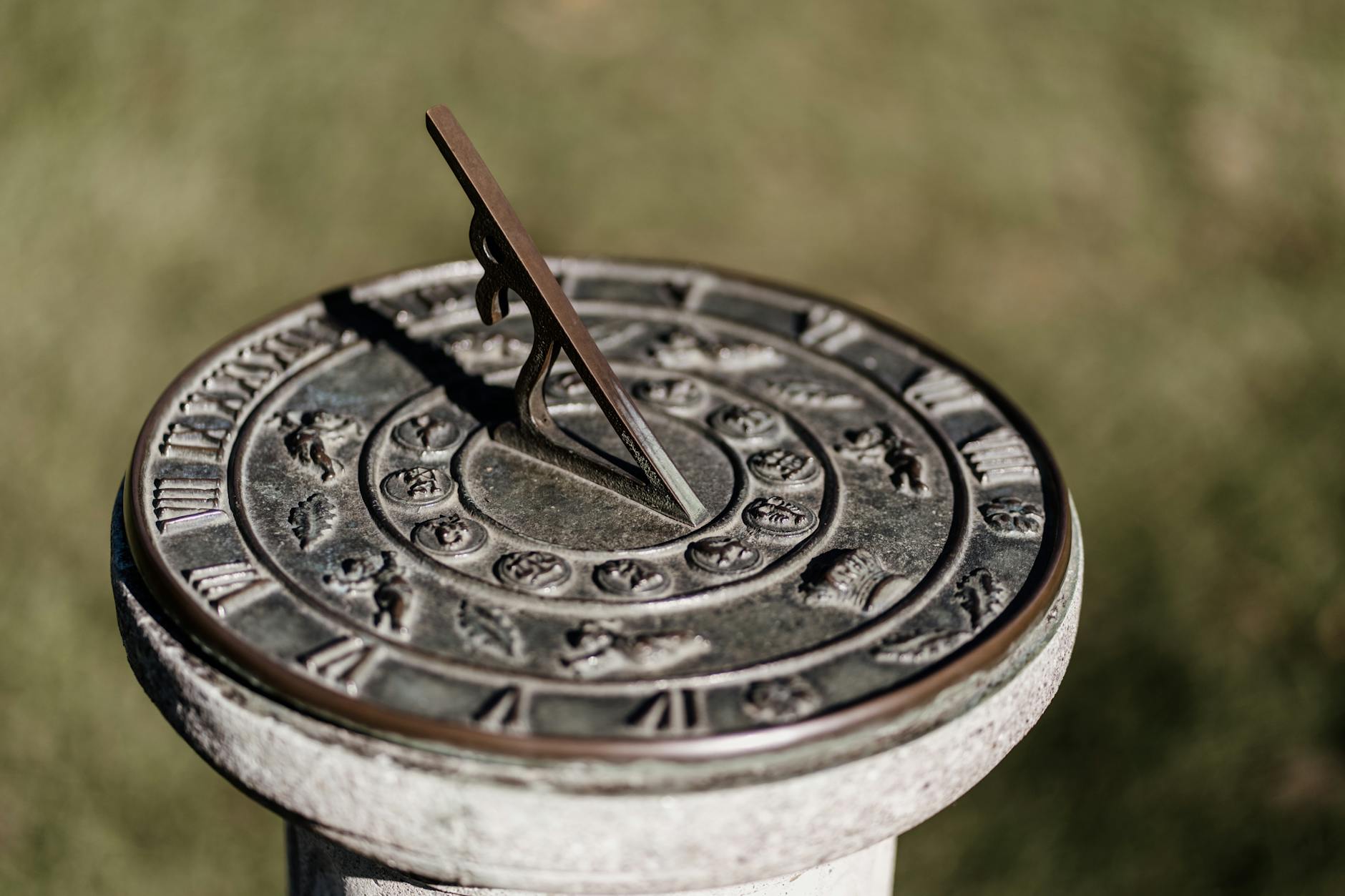
If true, God entrusting the constant and consistent exercise of gravitation across all space and time to angels should scare what of hell remains in you. Our weakness of intellect, will, and flesh stands in stark contrast to the unwavering obedience of gravitation to which you could set your sundial. For a long while now, we have made man the measure of all things, and in so doing we have lowered the bar of excellence. We cannot, it seems, be idealists seeking virtue and the common good when pragmatics, practicality, and the Realpolitik are so useful for attaining and retaining power.

We have cast aside all talk of angels and obedience and replaced the medieval cosmology with a functional deism, the Watchmaker God, who establishes the Laws of Nature and then conveniently does not attend to our open manipulation and eradication of these ordinances. Genetics is fair game insofar as gametes are spread open to our domination. Synthetic hormones can be used to alter our development and sterilize our future. Morality’s only limit seems to be what is possible and no longer what is good.
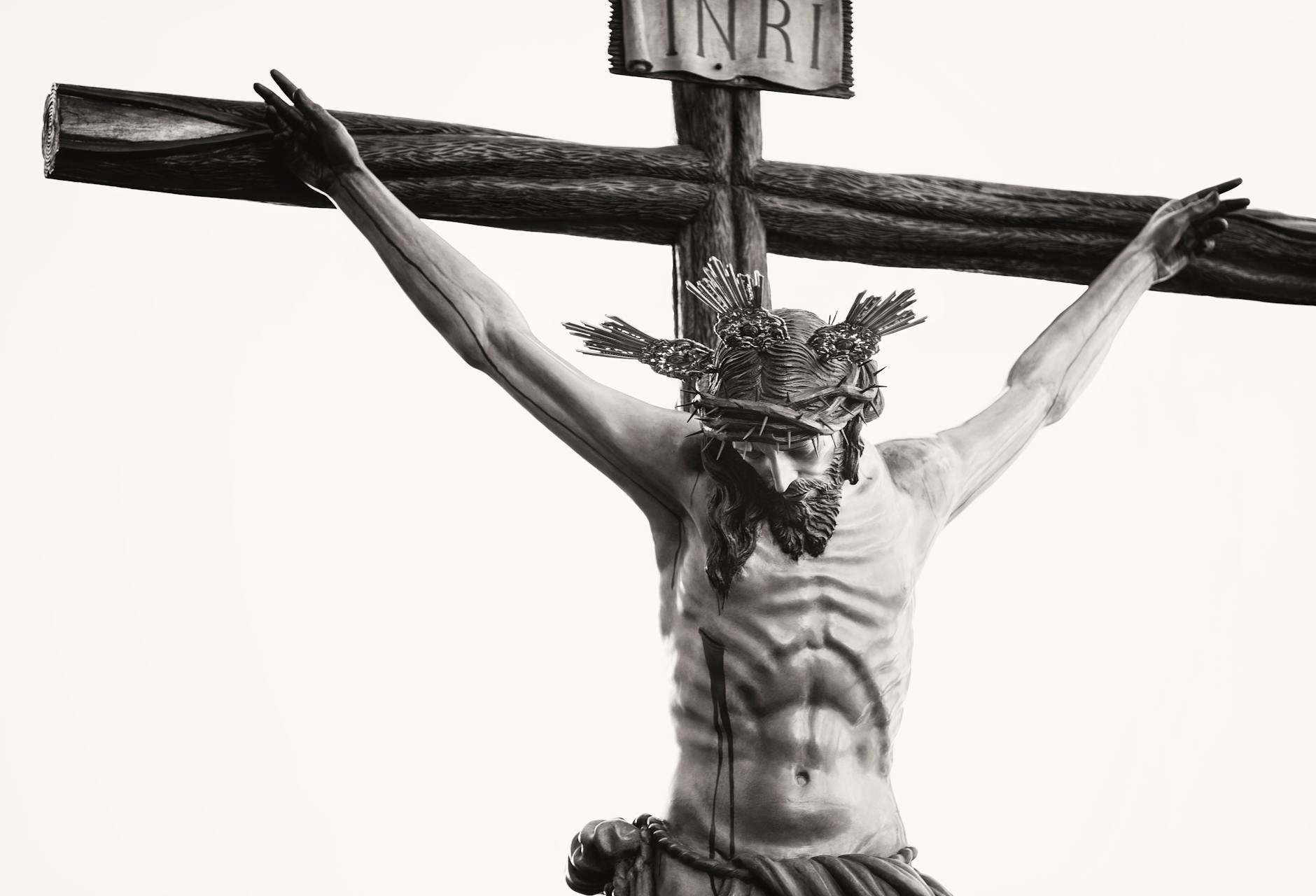
Yet all the while, angelic gravitation remains consistent across the wide expanse of space through the enduring passage of time. “To what end? To what end?” our infant human hearts cry out. We who were not there when God “laid the foundation of the earth” (Job 38:4). In our shortness of vision, we prefer to see angelic or divine intervention in the car crash averted or the failed assassin’s bullet, a tellus with a frustrated τέλος. More difficult it seems to keep in mind the gravity that keeps the sun burning and orients every sprouted plant to receive the sun’s rays. Gravity pulls water back to earth as rain to fill our cups, and gravity pressurizes our atmosphere to fill the cavity of our lungs. Gravity is an act of love for the human family so great that it can withstand our complete disregard, for it is founded on the love and obedience of the angels toward God. Such extreme love did not waver as the crucified Christ struggled to breathe His last, nor as the spearpoint pierced His side did it cease to pour forth water and blood (See Jn 19:34).
The angelic presence in the salvific work of Jesus Christ should not be merely assumed as it was contempt for the human family and the elevation of human nature above the angelic on account of the Incarnation that sparked the Lightbearer’s rebellion. The appearance of angels at the Resurrection and the efficacious work of angels, perhaps, in the crucifixion itself manifest the glory of God, the conformity of His creation to His Divine Will according to their proper mode.
The unerring consistency of angelic obedience can only heighten awareness of our own rebellion, our futile fallenness. If not for the invitation of Christ choosing us to follow Him, how could we stand, kneel, or even prostrate ourselves before the heavenly court. Still, that is the end, the purpose, the τέλος of all space, time, gravitation, and strife. We are called to attend the great wedding feast of the Lamb, to become the kind of human being who can enjoy His presence on account of His grace, His glory, and in some sense His gravy, which overcomes whatever is distasteful in us.


Be the first to know when the next episode of The BetterPears Podcast arrives!
Subscribe to The BetterPears Podcast


 BetterPears