
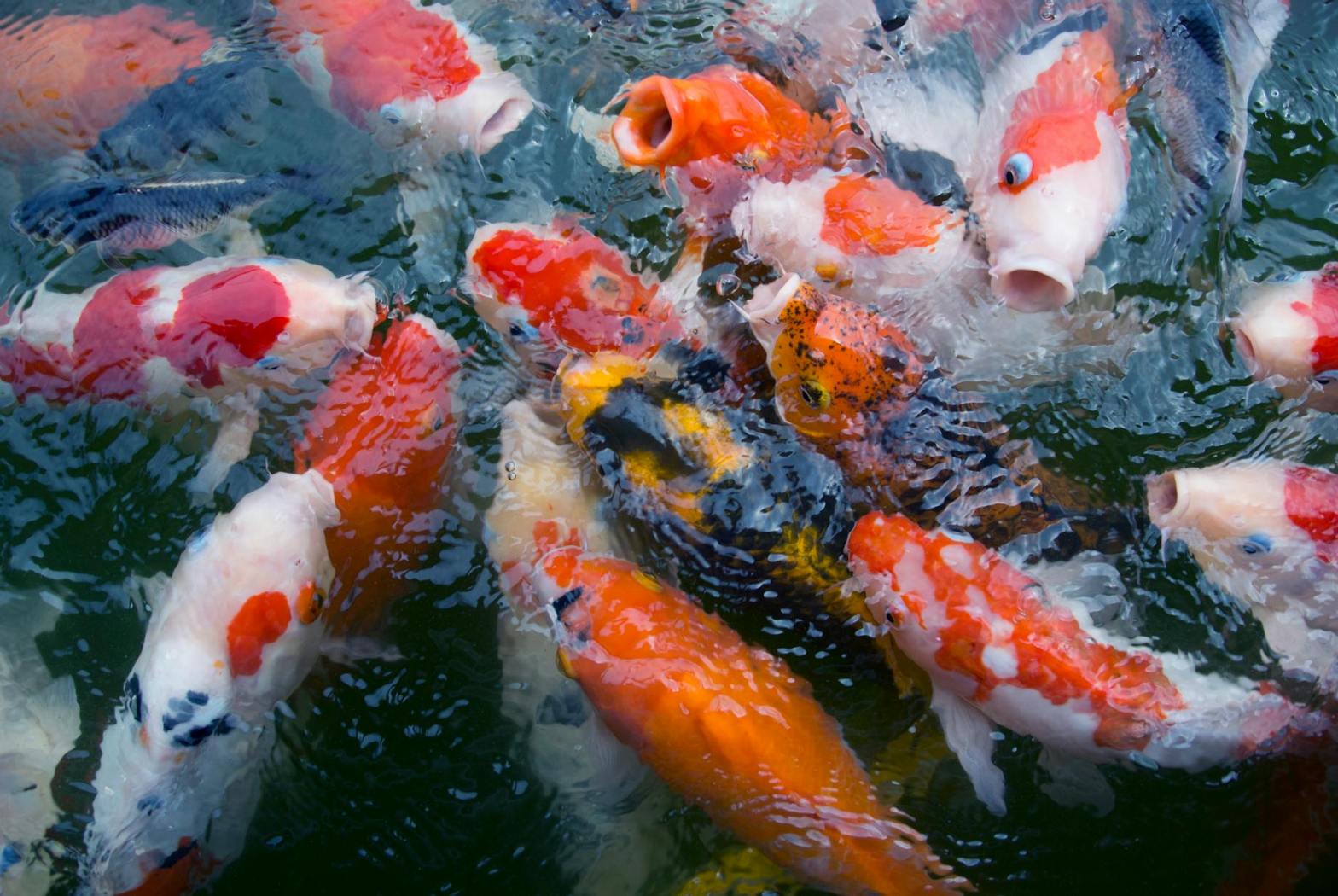





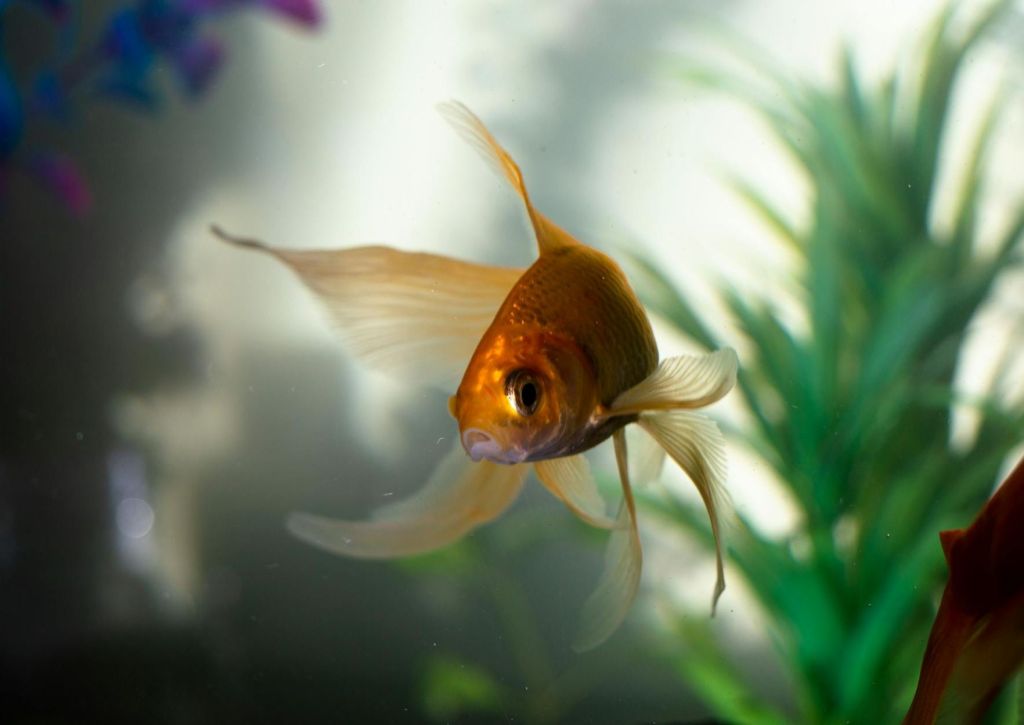
The common goldfish or more exotic, that is, expensive koi are members of the freshwater fish family, the Cyprinidae, and are commonly known as carp. There connection as Cyprinidae to the island of Cyprus as referenced in our episode on Beatitude (Season 2, Episode 9) is puzzling as Cyprus is an island of limited freshwater bodies. Nevertheless, the process of naming animals in continuation of the authority given to Adam (Gn. 2:20) appears appropriate in this case. What amusement and pastoral satisfaction can be drawn from the fishbowl frenzy or methodical mouthing of food by this finned fauna. The carp receives its common name, perhaps, from its insatiable grasping or seizing of food from the Latin verb “carpo” of “carpe diem” fame.
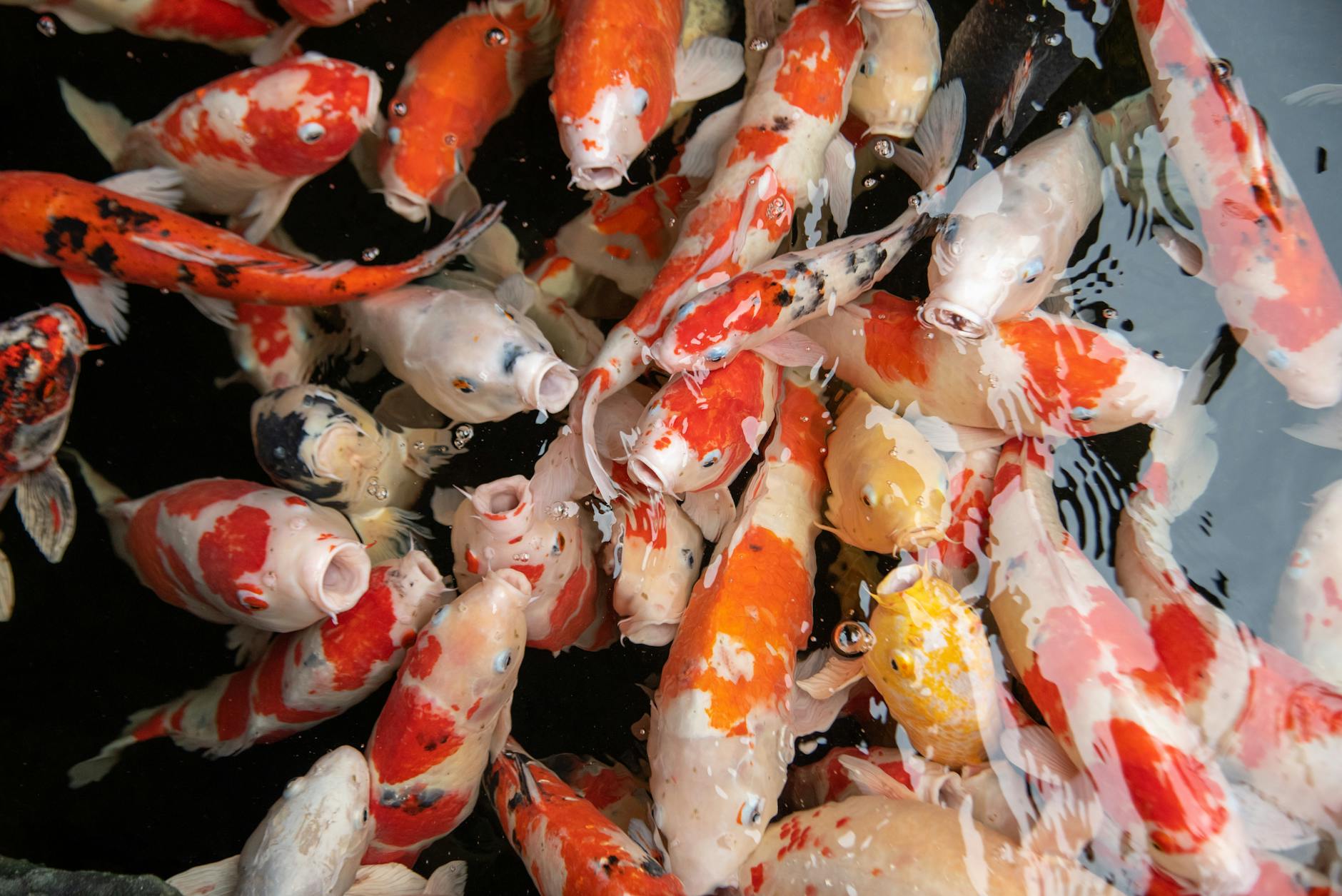
Unlike many, if not most, creatures which can regulate the quantity of its nutritive intake, the greedy carp, to the sorrow of many a small, well-meaning child, can overeat to sickness, even death. Indeed, this vignette of childhood loss offers context to the broader ligamental drama recounted in our very bones.

Carpal tunnel syndrome refers to a malady affecting the nerves that pass through the series of eight carpal bones comprising the skeletal wrist in humans. This anatomic taxonomy seems quite appropriate as the wrist along with attending fingers and thumb make human grasping possible. For the ancient Romans, we seize with our “carpus” or “wrist,” but for the Greeks “κᾰρπός,” also meant “fruit” which is an anthropological inquiry of its own.

Granted, fruit is a generic term, which we shall examine later in this season as a term describing intended enjoyment. Nevertheless, many things in primitive human life are enjoyed or enjoyable. Roasted fowl or game is certainly enjoyable over hunger. Useful tools are prized and often grasped. Spouses, progeny, and ancestors are also held close and prized. Perhaps for the early human gatherers, the discovery of fruit not tended and farmed but grown by the divine in obscurity was that singular boon which was acquired and enjoyed neither through hunting, fishing, nor human exchange but existed only to be grasped and taken into one’s self.

Returning to the Garden of Eden and that first commandment to be fruitful and multiply (See Gn 1:28), we must ask whether this expression is another hendiadys or “one through two” literary device in which the fruition and the multiplication are two expressions of the same reality, that is, intentional procreation, or whether fruitfulness includes the aspect of enjoying the created world which has been provided for our first parents. This second interpretation holds merit in that the enjoyment of the created world is further specified and limited. The command is not to carpete all the κᾰρπούς of every tree, for the fruit of the tree in the middle of the garden is explicitly forbidden to Adam and, through Adam, Eve.
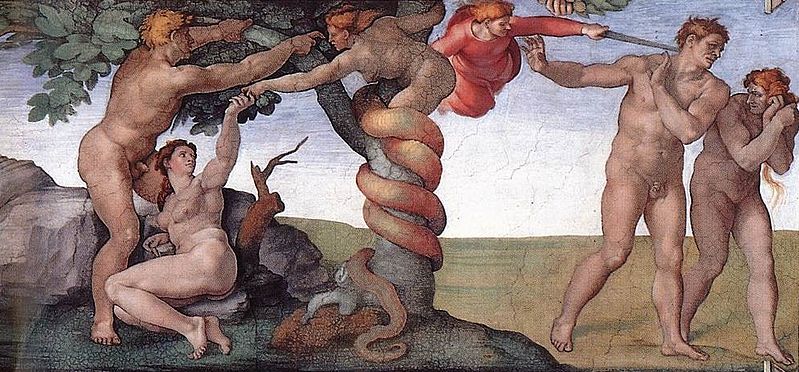
Insofar as the felix culpa of the First Couple hinged on a forbidden fruit, this theological truth and anthropological reality (See Anthropos) must be tempered to avoid certain errant historical extremes. The appeal of the fruit stated in Genesis 3:6, that it is pleasing to the eye (intellect), good for food (body), and useful for attaining wisdom (will) seems to correlate to the evils, the temptations of the world, in 1 Jn 2:16, “lust of the eyes, lust of the flesh, and the pride of life.” In this way, the seizing of the forbidden fruit both in the hand and in the mouth is a disordered seizure of authentic goods. What was at stake was not so much the good of the end sought but the malady caused in the agents, our first parents, by the sinful grasping. To be clear, the Church affirms the goodness of and desire to perfect the body, intellect, and will but recognizes that these perfections cannot be reached in a manner contrary to God in His largeness and laws. To properly order our loves is not simply to obey arbitrary rules disconnected from our final end but rather to participate in God’s order. To carpe diem in accord with right reason is to carpe Deum. Knowing and obeying the right ordering of loves, to enjoy the right thing in right order is no simple task. There will be failures, sins, and setbacks. To be honest and accurate, we cannot do this on our own.

All is not, however, lost, for unlike the greedy goldfish which consumes mere bread unto porcelain perdition, we may receive the fruit of the Tree of Life, given to us by One, who like the fish, did not fear the wind and waves, not a carp but a carpenter who offers His Body, the Bread of Life. May you find Him and seize Him and have life abundantly.


Be the first to know when the next episode of The BetterPears Podcast arrives!
Subscribe to The BetterPears Podcast


 BetterPears