
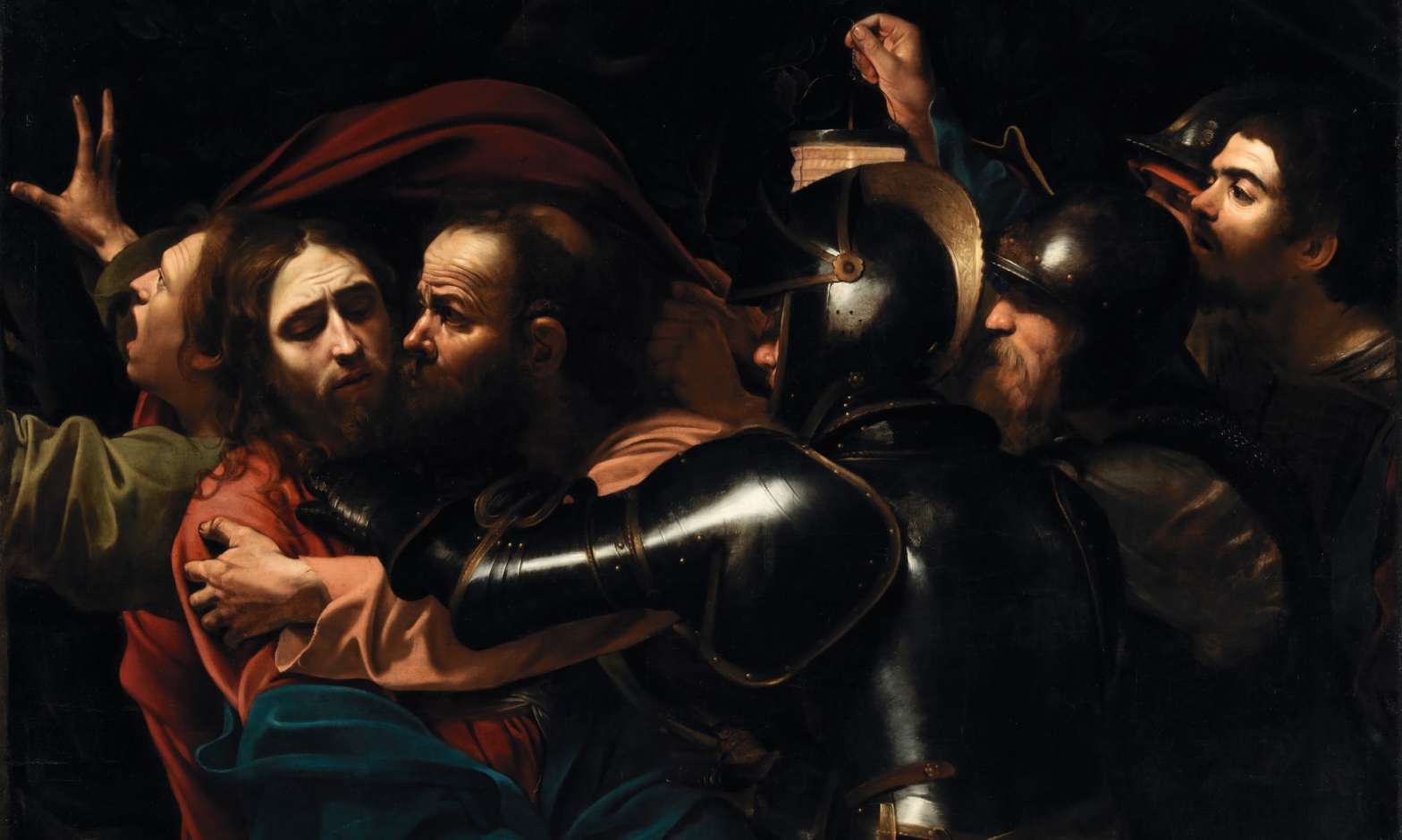






Hell, Infernum, Oblivion, Perdition. The expression for the possible state of life to come separated from God bears the vestiges of pagan cultures into which the early Church spread as well as the more abstract concepts of forgetfulness and loss. The word “perdition” is of particular interest as it pairs the action of giving, which is central to the human condition as a creature and steward, to the aspect of completeness and thoroughness.
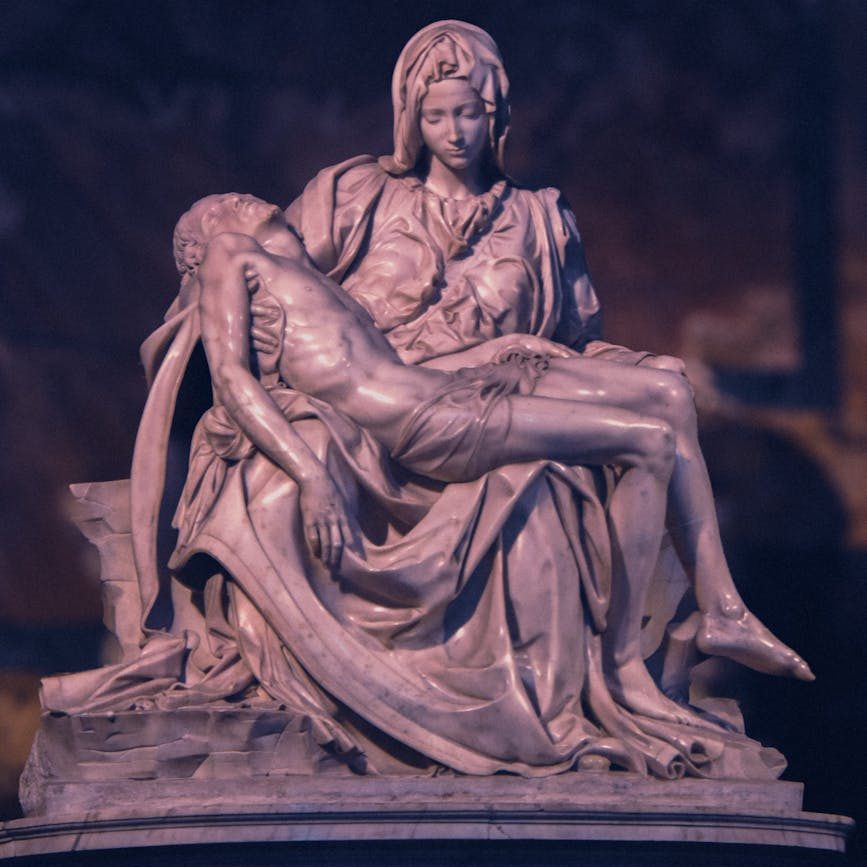
“Perdition” is composed of the Latin prefix “per” and “-dition” derived from the Latin verb “do, dare,” through the paradigmatic “-tio, –tionis,” 3rd declension feminine noun form. “Per” has a meaning of spatial origin, that is, the meaning “through,” as in “through an object,” and comes to mean “thorough” as descriptive of something entirely pervading. This leads to an extended meaning of “fullness” or “completeness.” For example, something that is perfect is thoroughly or completely made or formed; something permanent is thoroughly remaining, incorruptible.

This intensifying adverbial prefix “per” is then joined to “do, dare” a verb which begets an entire Latin noun case or inflection structure. The act of giving, in its anthropological origin distinct from its divine origin, supposes a giver (subject), a gift (direct object), and a receiver (indirect object), the last of which is conventionally expressed in the dative case, which is essentially the case related to giving, possession, or benefit.
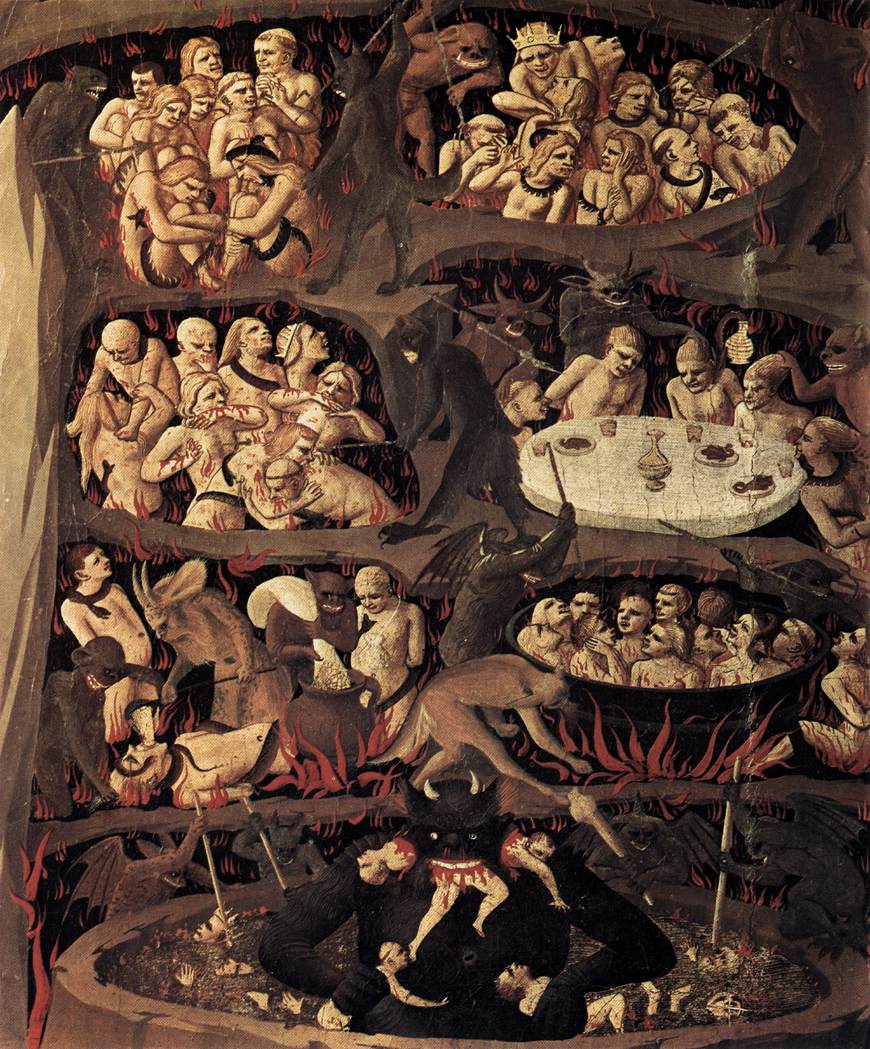
In the situation of eternal damnation often meant by the term “perdition,” our mental focus is often on the presumed indirect object of this exchange, whereby the condemned human being is given over by God to Satan. The “per” in “perdition” seems to signify the irrevocability of this definitive exchange. The image conveyed is rightfully unsettling as if God in His omnipotence and omniscience were somehow caught off guard by an uncharacteristic wager over a rebellious creature and had to forfeit or foreclose on the entire creative investment to this infernal creditor. God seems deficient in this portrayal, and the key to a resolution lies in the nature of punishment and its payment.

Cicero defines justice as “giving to another according to his due,” (Cf. De Natura Deorum, 3.38), which requires not only the moral resolve, i.e. the will, to enact this restoration but the wisdom to discern what is due to each party. One insight that the ancient Romans had into the nature of justice and punishments relative to justice is that punishments are given by the offender not received. A sentence is received but the paying of the punishment, the “poena,” is expressed through the verb “do, dare.” The idea is that a punishment is a surrender or removal of something improperly possessed by the offender, e.g. stolen loot, or something rightfully possessed by the offender such as wealth or liberty which by surrendering permanently or temporarily restores the balance of justice not only to the offended but to the community at-large which has also endured the injurious reality.

This distinction between receiving sentences and paying or giving punishments is central to our understanding of what forgiveness truly is. To “fore give” is for an innocent party to give the punishment prior to the offender giving the punishment. On the cosmic level of salvation history by uniting ourselves with Christ through baptism, we participate in the fore giving of the punishment of death due to us on account of our sin. Although He did not co-sign on our debauched transgressions, God has given Himself to the satisfaction of our capital debts. The victory of Jesus Christ over death, over captivity to sin and the devil is universal and unending, and yet as St. Paul commands we work out our salvation with “fear and trembling” (See Phil 2:12).

What is the accurate understanding of perdition if Jesus reigns? Perhaps the directionality of the acts of knowing and loving can provide some insight here. In the fundamental operation of the intellect, the knower knows the object known. The direction of knowledge is from the object revealing itself to the knower to the point that the object known comes to be in the knower in the mode of the knower. The tree or object perceived through the senses comes to exist in the intellect of the observer not according to the proper nature of a tree, i.e. a material being, but in the mode of the knower, i.e. as an immaterial image and form.

With love which can be attributed to the will, the lover loves the beloved or object of love, and the direction of love, in contrast to knowledge, is out of the lover toward the beloved. This applies to romantic love as well as familial love, friendship, and even patriotic love. This outward movement of love often begins with external gifts as extensions of self and progresses to intentional acts of love culminating in the very gift of self.
This self-donation, this self-giving love, can occur regardless of whether such love is divinely ordered. In the City of God, St. Augustine writes of two fundamental loves:
Two cities, then, have been created by two loves: that is, the earthly city by the love of self extending even to contempt of God, and the heavenly by the love of God extending to contempt of self (City of God, XIV, 28)
The love of self, to the contempt of God is the self-giving love that leads to perdition. Is it conceivable to imagine myself so caught up in my own projects, plans, and passions that I neglect or outright deny the love and movement toward God that is due to Him and necessary for me? Could this blindness extend to my presence before His very, that is vere, judgement seat? With the veil lifted and lifted from the Valle of Tears, would I deny Him for the love of my own efforts, a proxy for my love of self? Yes, I could conceive of such a blindness, such a loss, a perdition leading to perdition. I remain grateful for my fear and trembling, for gratitude is what rightly orders my love. Gratitude humbles me and orients me to receive God’s forgiveness, His movement toward me and my response toward Him in love, perdition rightly so and sown.


One response to “Perdition (Season 2, Episode 10)”
-

[…] a harvest of those hopeful souls packed down, otherwise lost, perditi (See Season 2, Episode 10 “Perdition”), save for the grace of God. To become a Christian is to believe that death can no longer […]
LikeLike
Be the first to know when the next episode of The BetterPears Podcast arrives!
Subscribe to The BetterPears Podcast


 BetterPears
One thought on “Perdition (Season 2, Episode 10)”