








The word “beatitude” invites the listener or reader almost instantly to think of the Beatitudes of Jesus Christ given during the Sermon on the Mount as accounted in Matthew 5:3–11 or the Sermon on the Plain according to Luke 6:20–26. Such passages of Holy Writ require careful consideration, not only of the original context of the sermon but also its reception as an authoritative teaching of Jesus ever since. This episode is no such exhaustive study.

For those so interested, I will recommend the work of Fr. Servais Pinckears, O.P. in Les sources de la morale chrétienne perhaps under its English translation The Sources of Christian Ethics. In addition to offering the key moral distinction between freedom of indifference and freedom for excellence, a key to any concerned with the nature of liberty, the work of Fr. Pinckears also treats the Beatitudes through the problem of how these ideal or idealistic moral statements somehow make the life of the faithful more attainable than under the Law of Moses. The Beatitudes along with the rest of the Sermon, elevate the moral law beyond the Second Tablet of the Old Law’s resonance with the natural law. The spiritual poverty (or simple poverty for Luke), purity of heart, or meekness identified in the Beatitudes seem more akin to the evangelical counsels of poverty, chastity, and obedience which are the foundation of those so called to religious life but not impressed upon the unwashed or at least not recently washed Christian masses.

In short, are the Beatitudes and furthermore beatitude itself, likened to a spiritual brass ring, that is, something optional despite being optimal? In the carousel of life, can you succeed by simply enjoying the ride and abiding by the minimal rules while some seated near the periphery might strive for something more, something we call beatitude? Admittedly, this schema warrants some initial sympathy for resisting the egalitarian sensibilities of our modern social planners. The bar of excellence is not lowered, and those not striving for such excellence do not, in turn, partake of its benefits. In this view, our “hunger and thirst for righteousness” (Mt. 5:6) is seemingly sated. Those taking the high road receive its rewards. Those remaining in the safety of the low country receive not this optimal fulfillment. All seems fine and good until we must square our understanding of beatitude with the Parable of the Laborers in Matthew 20:1–16 and the equal wage received by all despite the disparity of labor offered—a moral crossroad that brings us to the main insight of this episode.

What is translated for English readers as “happy” or “blessed” in the Beatitudes of both Matthew and Luke is the Greek term μακάριοι which Big Lexi, the lexicography cartel, will, without hesitation, translate as such leaving the reader to grapple further with this meaning. Is happiness a transitive or intransitive state or quality? Put more directly, is happiness a reflexive quality brought about by the one who is happy, or on the contrary, does happiness rely on either external conditions or agency? The English term “blessed” seems to assume such external agency by the adjectival use of the passive participle of the verb “to bless,” and yet a middle voice in a language like ancient Greek is orthographically similar to passive forms in describing reflexive action of the subject to itself. Thus, I can bless myself and so call myself blessed. Again the question remains, is happiness or beatitude an outward effect of an inwardly initiated reality or is happiness dependent on external conditions or agents?

A solution to this question can be harvested from the Great Scott, that is, the large version of Liddell and Scott’s Greek-English Lexicon. Yes, sometimes even Big Lexi bends to our desire for rich meaning, particularly in such a volume that has become rather antiquated. In the Great Scott under the entry for the root adjective μάκαρ is a gloss or citation to Hesiod’s Works and Days in which he uses the phrase ἐν μακάρων νήσοισι meaning “on blessed islands” or “on islands of the blessed.” In Hesiod’s text, the reference is to the islands provided by Zeus for some of the demigod veterans of the Trojan War. The fertile fields of the islands provided sustenance and secured prosperity. Over the centuries after Hesiod, the blessed isles of myth became associated with the island of Cyprus on account of its size, topography, and self-sufficiency, a veritable ancient Catan of the late Klaus Teuber’s design. Unlike the Minoans of Crete, the Cyprians were not infamous for the forced tributes imposed upon the mainland so encapsulated in the myth of the Minotaur and its diet of sacrificed Athenian virgins.
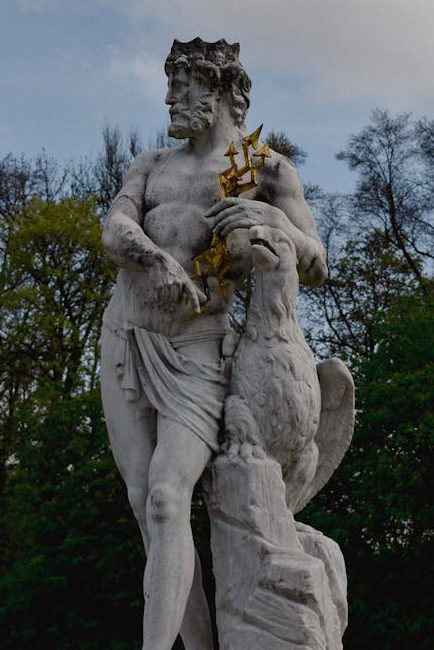
The gloss from Hesiod seems squarely to point to beatitude as a divine effect and the provision of all our needs. For the pagan Hesiod, father Zeus is the great provider and the needs provided are natural and worldly. From the lips of Jesus Christ beatitude is given by the Father who provides principally for our supernatural needs, although our natural needs do not remain neglected even before the resurrection. St. Paul’s words to the Romans are galvanizing here, “What then shall we say to this? If God is for us, who is against us? He who did not spare his own Son but gave him up for us all, will he not also give us all things with him?” (Rom. 8:31–32).

Further, the beatitudes are not relegated only to the clerical or religious state of life but offered to all as the destination of life eternal across the wide sea. The sea, in worlds ancient and modern, represents chaos, an antithesis to the God who orders all things in measure, weight, and number (See Wis. 11:20). It is not without intention that the term μακάριοι, first from the hand of Hesiod then on the quills of the evangelists, was in reference to a blessed island.

The journey of faith requires a dependency from God that rightfully replaces our dependence on terra firma, “the world” in the Johannine sense. Each day laborer, in a sense, makes this passage though at different hours. Further, the sea crossing is not the same for all. Some like St. Paul encounter their Cyprus in chains (See Acts 27:4) on the way to lead others in chains from Damascus (See Acts 9:1–6). Some are cradled in the voyaging vessel of the Church from infancy and must serve in the voyage before the mast. Still others, perhaps on different vessels heading to other destinations must step out of the boat amid the storm and waves and walk unalone on the water.


Be the first to know when the next episode of The BetterPears Podcast arrives!
Subscribe to The BetterPears Podcast


 BetterPears