





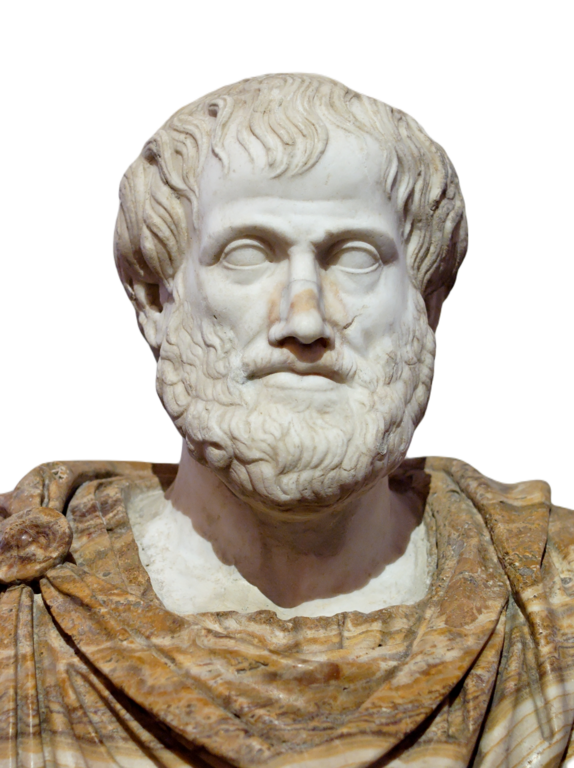
Through an uncommon chain of events, I happened to read the Greek text of Aristotle’s Poetics as an undergraduate student. As the critical apparatus of the text reveals the ancient witnesses of the work have been received only in fragments. What we read today in translation is more a patchwork of lecture notes than a translator is likely to admit. The ancient source fragments are relatively few compared to the many Greek ancient textual witnesses recovered from the four Gospels which will be addressed later in this episode. Aristotle’s Poetics is focused primarily on the form of making, doing, or poesis, that we know as drama and specifically tragic drama, for which he assigns the play of Oedipus as portrayed by Sophocles as the paradigmatic example. Comedy, what some consider the other half of the dramatic arts, is reserved by Aristotle to an additional treatment which was either never recorded or simply lost to the passage of time. In the text of the Poetics that we do have, the Philosopher does indeed offer a brief explanation for the etymological roots of comedy. He remarks that the early Greek comedians produced plays considered too distasteful for the city (πόλις) and so had to remove themselves to the countryside and wander surrounding unwalled villages known as κώμη. Their itinerant plays became known as comedies from this association with their venue (Aristotle, Poetics, III).

Comedians prior to Aristotle and those contemporary to him took two forms both of which led to their dismissal from the urbane establishments. On the one hand, there were the lewd comedians who traded in vulgarities and lascivious spectacles unfit for polite society. On the other hand, there were those comedians such as Aristophanes who programmatically critiqued the corruption and complacency of the political establishment and whose eleven extant satirical plays such as The Clouds, The Wasps, and Lysistrata were condemnatory of societal norms.

In his analysis of tragedy, Aristotle identifies the dynamism at play with the emotions of pity and fear. We pity the downfall of Oedipus wrought unknowingly by the actions he alone sets into motion, and yet we also fear that this same downfall may one day be our fate as well. On the whole, tragedy is associated with the irascible appetites or passions, that is, how we address perceived evils whether present or impending.
Comedy, in contrast, is associated with the concupiscible appetite and passions, specifically in addressing perceived goods which are desired, loved, and enjoyed both in an ordered and disordered manner. Whereas the lewd (and no longer extant) comedies of ancient Greek Athens focused on lascivious spectacle and gluttonous delights without moral reflection, the more circumspect comedian such as Aristophanes shines a light, as his name suggests, on the complacency of the aristocracy to settle for present goods, largely serving themselves, instead of striving for and suffering for what should be. Such political pragmatism hindered under the horizon of their baser desires served to constrict the limits of what good they sought to accomplish receding from nation to tribe, from tribe to family, and from family to an isolated self.

Comedy in its form as satire and criticism of corruption and complacency more directly requires confrontation with our concupiscence as disordered desire similar to tragedy confronting us with irascible fear and corresponding pity. Comedy as political statement is fundamentally comedy as a moral statement as politics and morality are primarily differentiated by the magnitude of scope, that is, the actions of society relative to the actions of the individual. If certain operations of the political regime are morally illegitimate, for example, in the collection of taxes, persecution of dissidents, or the devaluation of currency, can the individual participate as an agent of the regime even if the overall end of the regime is a perceived good, absolute or relative to probable alternatives? Comedy as political critique does not pose to the viewer the Oedipal question of whether my resolve to seek the truth of a pressing problem will unmask my own undoing for previous crimes. No, comedy as political critique forces us to confront our complacency with evil. Can we absolve ourselves with “I was just doing my job,” or “That is just how the world works”? Can we absolve ourselves by relinquishing our agency without denying by that abdication our human dignity?
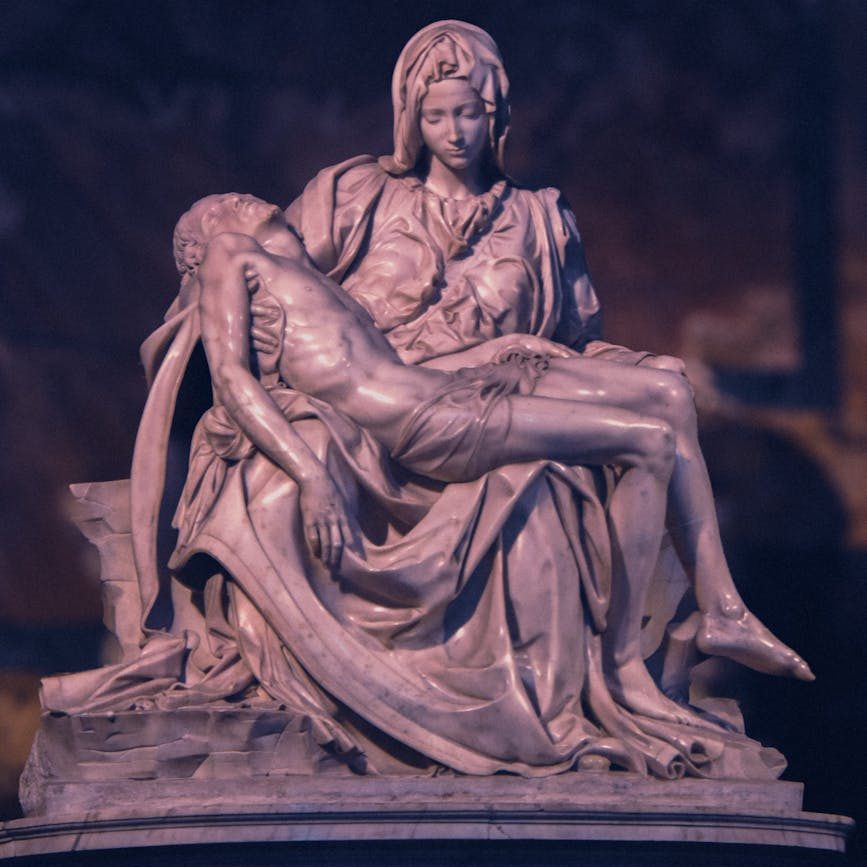
The Gospel witness of Jesus Christ, who reveals man, that is, human nature to himself, is perhaps an unlikely example of comedy opposed to tragedy. In the shorthand explanation of drama, a tragedy is a play in which the hero dies, and a comedy is a play in which the hero is married. It should be recounted that while each Gospel account records the true death of Jesus Christ, this redemptive sacrifice is the perduring marriage covenant with His Bride, the Church, a marriage which triumphs over death, both His and, please God, ours.

Further still there is a consideration of the word, “κώμη” , again the Greek word for unwalled village, which appears only three times in the New Testament and only in the Gospel according to John. “Kώμη” is used to describe both Bethlehem and Bethany (Jn. 7:42; 11:1; 11:30), both in the context of their proximity to the famously walled city of Jerusalem. Jesus in St. John’s account is unwelcome in the Holy City. He is charged with lewd behavior, dining with tax collectors and sinners and questioning the established norms and operations of the Pharisees and Sadducees, for example by healing on the Sabbath (cf. Jn. 9). Jesus is a comedian in both ancient senses but with a twist. Jesus holds profane table fellowship as the sacred high priest restoring rightful sons and daughters. Jesus upends the religious establishment as well as the tables of the money changers, as the one who established the heavens and the earth and gives Caesar and Herod their thrones.

The great theo-drama upon which human history hinges is not a tragedy ending in death espousing fear and pity but rather a comedy in which the Bridegroom pursues His Bride to the gates of Hades and, unlike Orpheus, returns with her. He saves her, heals her, cleanses her of all defilement. The comedic becomes cosmic cosmetic. All hail the King of Kings of Comedy!

BetterPears Market Mug Giveaway
Click Here to learn more

Be the first to know when the next episode of The BetterPears Podcast arrives!
Subscribe to The BetterPears Podcast


